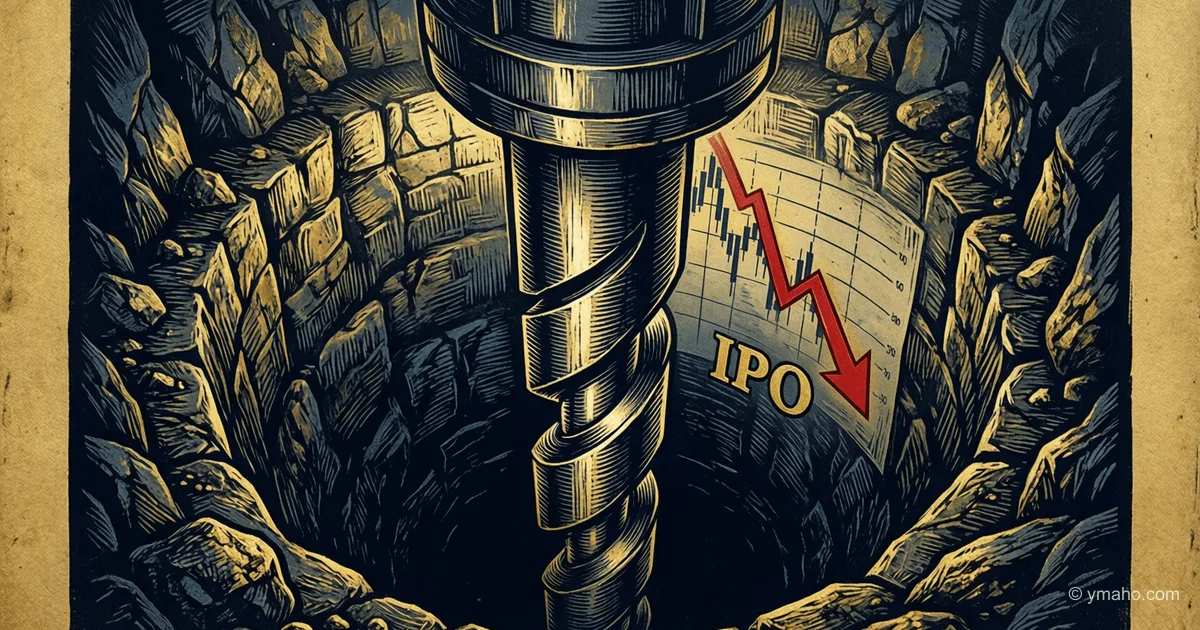
Deep Fission Startup Files for Nasdaq IPO to Build Underground Nuclear Reactors
Deep Fission plans to raise up to $156 million on Nasdaq, offering 6 million shares at $24 to $26 each. Proceeds will go toward developing a gravity-based nuclear reactor for data centers.
The Deep Trap: Why Deep Fission's IPO Is a Bet on Faith, Not Physics
The Gist: What's Really Happening
Deep Fission is filing for an IPO aiming to raise up to $156 million, valuing the company at roughly $1.66 billion. On paper, it looks like another shiny case at the intersection of AI energy and nuclear innovation. But the real story isn't on the surface—it's a mile underground, where the company promises to bury its Gravity reactor.
The non-obvious insight not plainly visible in the S-1: Deep Fission has quietly abandoned its key technological promise. Back in December 2025, the company publicly guaranteed reactor criticality by July 4, 2026. However, in the updated prospectus dated May 20, 2026, that date has completely disappeared. This isn't a typo. It's a signal that fundamental engineering has hit a ceiling that startup money can't fix.
Timeline and Context
To grasp the scale, look at the track record. In 2024, Deep Fission raised $4 million, then added another $30 million. In February 2026, before the IPO filing, it secured an $80 million round with participation from Blue Owl, which also signed a non-binding memorandum of understanding for future power purchases. On May 20, the company filed its S-1.
The key date now missing from the narrative is July 4, 2026. By that day, Deep Fission was required under a U.S. Department of Energy program to demonstrate a working reactor. Now the documents lack even an estimated timeline. Instead, the company boasts about drilling a first well 8 inches in diameter to a depth of 6,000 feet. But commercial deployment requires a diameter of 30–50 inches. This isn't just "difficult"; it's "no one in oil and gas has done this at such depths and scale."
Who Wins and Who Loses
Direct losers are retail investors who buy into the AI narrative. Deep Fission's financial position is deteriorating. Its accumulated deficit grew from $56.2 million to $88.1 million in just a few months. Cash decreased by $6.4 million over the last six weeks of reporting. The S-1 explicitly includes a "going concern" warning: without a successful IPO, the company will run out of cash within 12 months.
Winners are the underwriters—William Blair, Stifel, and Canaccord Genuity. In the current market climate, with Cerebras soaring 68% on its first trading day and AI infrastructure interest overheated, they'll earn fees regardless of whether the reactor flies. Existing shareholders also win, gaining liquidity and an exit from an illiquid position.
Silent loser is the SMR sector as a whole. Every time a story like this goes public and disappoints, it fuels skeptics. Oklo (OKLO) shares have already fallen 72% from highs—from $190 to $53.9—due to lack of revenue and regulatory delays. Deep Fission's IPO risks being another blow to confidence in the niche.
What the Media Isn't Saying
The main unspoken fact involves physics and geology. Deep Fission promises to use the pressure of a mile-deep water column to create the 160 atmospheres needed for reactor operation. Elegant. But the problem is maintenance. How do you retrieve the reactor for refueling after 5–7 years? The company vaguely mentions "special lifting mechanisms." In the oil and gas industry, lifting equipment from such depths is standard. But lifting an active nuclear core with its own residual heat and requiring continuous cooling during ascent—that's never been done.
Second point glossed over: Blue Owl invested $20 million, but that didn't prevent the bankruptcy warning. This means their due diligence didn't provide confidence that the company won't burn out within a year. That's a very bad sign for minority investors entering at the IPO.
Third: competitors. Oklo is building its Aurora reactor on the surface in Idaho. NuScale has been trying for years to get NRC approval. They don't need to prove that drilling a 40-inch diameter hole a mile deep is safe and cost-effective. Deep Fission takes on a unique technical risk without a unique commercial advantage. Their LCOE is stated at $50–70 per MWh. For surface SMRs, it's not much higher.
Forecast: Next 30 Days and 90 Days
30 days. The IPO will happen in June if market conditions allow. But I expect the offering to price at the lower end of the range ($24) or even below. Institutional subscription will be weak, as they see the same S-1 we do. The debut on Nasdaq under ticker FISN may be sluggish or negative. In the first 30 days, attention will shift to whether the company can confirm progress on test well drilling and, crucially, provide an updated criticality timeline.
90 days. Without a clear commercial operation timeline (currently absent), Deep Fission shares risk following OKLO's fate—a slow decline after initial hype. By September, it will become clear how seriously the Department of Energy is willing to support this project. My forecast: if within 90 days there's no news about expanding drilling diameter or new firm contracts (not just MOUs), the price will fall below $20.
Editorial Forecast
Asset: Deep Fission shares upon Nasdaq debut (ticker FISN).
Direction: Moderately negative in the first 24–72 hours after trading begins. I expect the price to open in the $22–24 range (below the midpoint of the stated range) and end the first day with a slight decline or sideways movement, without a rally like Cerebras.
Key Levels: Resistance at $26 (IPO upper bound), support at $21. A break below $21 in the first week would be technically very bearish.
Confidence Level: Medium (50% sideways/slight decline, 30% rise amid general AI enthusiasm, 20% fall).
Main Risk: A sudden announcement from the Department of Energy about a grant or expedited permitting specifically for Deep Fission. In the current political climate (U.S. push for energy independence for AI), this could trigger a short-term speculative spike to $30, completely invalidating the conservative forecast.
— Editorial Team