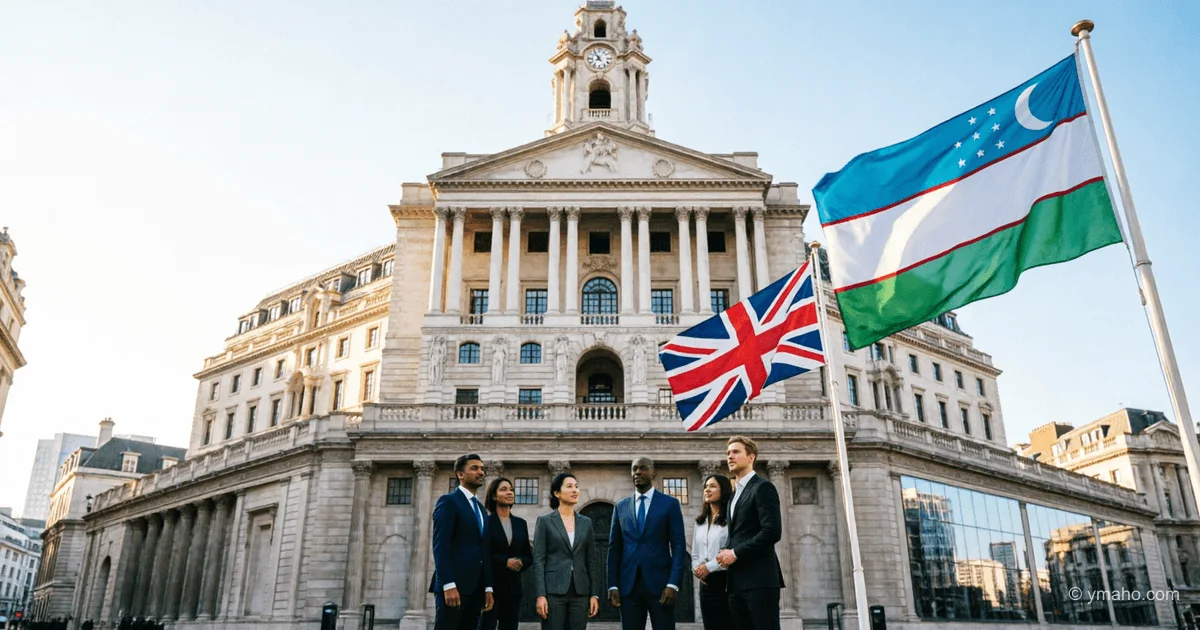
Uzbekistan's National Fund (UzNIF) Launches Dual IPO in Tashkent and London Worth $1.95 Billion
The offering of 30% of the fund's shares runs until May 12, with GDRs priced at $25 on the LSE. Major investors, including BlackRock and Franklin Resources entities, have confirmed preliminary orders worth $300 million.
UzNIF IPO: How Uzbekistan Enters the Global Capital Market
Introduction
The National Investment Fund of Uzbekistan (UzNIF) has launched an initial public offering that could be a turning point for all of Central Asia. This is the first-ever listing of a Uzbek state entity on an international stock exchange — a dual IPO simultaneously on the Tashkent and London Stock Exchanges. The global depositary receipt (GDR) price is set at $25, which, with a total share count of over 5 trillion, gives a market capitalization of about $1.95 billion. The state, represented by the Ministry of Economy and Finance, is selling approximately 30% of the charter capital, and anchor investors led by BlackRock and Franklin Resources have already confirmed orders for $300 million. Orders are accepted until May 12, with trading set to begin on May 18.
Event Details and Timeline
The official IPO launch took place on April 29, 2026. The order period runs until May 12: for international investors until 12:00 London time, for local investors until 17:00 Tashkent time. Final offering parameters, including the total size, will be announced on May 13, with conditional trading on the LSE starting the same day. Full trading on both exchanges begins on May 18.
The offering structure consists of two tranches. The domestic tranche is for institutional and retail investors in Uzbekistan and offers ordinary shares at 4.65 soum per share. The international tranche consists of GDRs for institutional investors outside the country, with one GDR representing 64,700 ordinary shares and priced at $25.
Retail individual investors in Uzbekistan receive a 5% discount on orders up to 12 billion soum (approximately $995,850 at the current exchange rate), reducing the price to 4.41 soum per share. For small orders up to 200 million soum (about $16,600), orders can be placed via the Jett mobile platform. Large institutional orders are accepted by local brokers — Alkes Research, Avesta Investment Group, and Bluestone Financial Group.
Key to the success of the offering is the pool of anchor investors who have signed cornerstone agreements. Funds managed by BlackRock, Franklin Resources, Redwheel, and treasury entities of the Allan & Gill Gray Foundation have committed to purchasing GDRs worth approximately $300 million at the offer price. UzNIF itself will not receive any proceeds from the sale — the funds go to the state budget through the Ministry of Economy and Finance.
The fund was established in August 2024 and holds minority stakes (ranging from 25% to 40%) in 13 strategic state-owned companies in Uzbekistan, including Uzbekistan Airways, Uzbektelecom, and enterprises in the energy and banking sectors. As of December 31, 2025, net asset value stood at $2.44 billion.
Impact and Significance
This IPO goes far beyond a routine emerging market listing — it sets several precedents.
For Uzbekistan, this is a historic breakthrough. The country, with a population of about 38 million, has been pursuing economic reforms under President Shavkat Mirziyoyev since 2016, but has never before brought state assets to the open international market. The listing serves both as a test of the maturity of national institutions and a powerful signal to foreign investors about Tashkent's serious reform intentions.
For the Central Asian region, Uzbekistan becomes a pioneer. No other country in the region has conducted a privatization listing of comparable scale with a London listing. The success of the Uzbek IPO could pave the way for similar deals from Kazakhstan and other neighboring states seeking to diversify their capital sources.
A structural feature of the offering is a strict dividend policy requiring the fund's portfolio companies to allocate at least 50% of net profit to dividends until 2030. For institutional investors, especially in a climate of declining global interest rates, this creates a predictable and attractive cash flow.
The privatization roadmap strengthens the investment case. By the end of 2028, individual IPOs of six companies from the UzNIF portfolio are planned. For current fund shareholders, this means potential value realization through a series of partial exits from portfolio assets.
The 5% discount for retail investors on orders up to 12 billion soum encourages broad public participation in privatization, fostering a retail investment culture that was virtually absent in Uzbekistan until now.
Reactions from Key Players
International institutional investors have responded confidently. The total cornerstone agreements of $300 million cover about 15% of the estimated IPO size, given the stated market cap of $1.95 billion and the sale of 30% of shares. BlackRock's participation — the world's largest asset manager — serves as a quality certificate for the offering and reduces perceived risks for other international buyers.
Local authorities and fund management convey optimism. Marius Dan, CEO of Templeton Global Investments for Central Asia, stated: "We continue to work intensively with our portfolio companies to improve operational efficiency and financial discipline, implement high corporate governance standards, and create long-term value across the entire portfolio."
The global coordinator, Jefferies International Limited, chose a fixed-price structure rather than a range with bookbuilding, indicating confidence in demand. An additional over-allotment option of up to 15% of the international tranche provides flexibility in building the order book.
The market reacts with cautious interest. On one hand, the fund's valuation of $1.95 billion represents a discount of about 20% to the net asset value of $2.44 billion, typical for holding structures with minority stakes. On the other hand, investors consider country risks and the limited liquidity of the Uzbek market.
The legal infrastructure attracts reputable advisors: Cleary Gottlieb, White & Case, Dentons, and the depositary for the GDR program is Bank of New York Mellon. This lineup creates an institutional framework comparable to listings of companies from more mature jurisdictions.
Forecast and Conclusions
The success of the UzNIF dual IPO will be determined by several factors.
Short-term indicator — the filling of the order book. If the offering attracts demand significantly exceeding supply, especially from international institutional investors, it will confirm the correctness of the valuation and deal structure. A confident start of trading on the LSE on May 18 will be a signal for future listings.
Medium-term factor — the execution of the dividend policy. The promise to allocate 50% of portfolio companies' net profit to dividends must be backed by actual financial results. This requires transparent reporting from state-owned companies and real improvement in corporate governance.
Long-term outlook is tied to the implementation of plans for individual IPOs of six portfolio companies by the end of 2028. If at least some of these listings take place on Western exchanges, Uzbekistan will cement its reputation as a new destination for direct and portfolio investment in Central Asia.
Risks remain significant. Uzbekistan's political system retains tight control, and reforms could slow or reverse. The limited liquidity of the local market means that the main price benchmarks will be set in London, where Uzbek GDRs risk being lost among thousands of names more familiar to Western investors.
Nevertheless, the very fact of conducting an offering of this scale — with BlackRock, Franklin Templeton, and a listing on the LSE — makes UzNIF a landmark case. For global investors seeking undervalued assets beyond traditional emerging markets, Uzbekistan offers a rare combination: undervalued state assets, a reform agenda, and direct access via a regulated London platform with $300 million in anchor demand as insurance against a failed book. Whether this bet pays off will be seen after trading begins on May 18.
— Editorial Team









