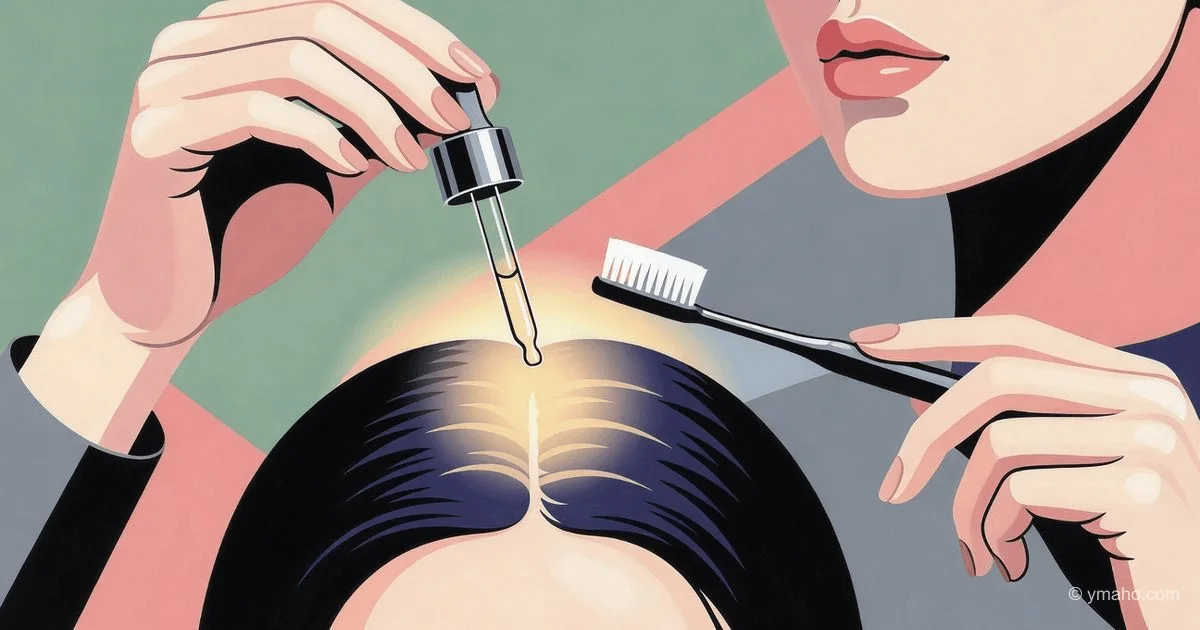
Japanese Trend 'Time Guarding' and Care for 'Third Parts' of the Body
Analysts at ampule predict a boom in 'reverse aging' (removal of old cells) and pre-step care in 2026. Also gaining popularity is the 'third part of the body' — care for previously ignored areas: the oral cavity, scalp, and intimate areas.
Analytical Digest: 'Third Part of the Body' — Why 2026 Will Be the Year We Start Caring for Everything Except the Face
The beauty industry is undergoing its most radical geographic shift in 20 years. What analysts at ampule and Japanese trend departments at @cosme call the 'third part of the body' and 'proactive body part care' is actually an acknowledgment that the 'face-centric' beauty model has exhausted itself. The 2026 consumer no longer wants to apply 10 layers of serums to their cheeks while ignoring their scalp, oral cavity, neck, décolleté, and intimate areas.
The key insight that Western media miss: this trend did not come from Europe or the US. It came from Japan, where @cosme officially declared 'Proactive Body Part Care' one of six key trends for the first half of 2026 back in November 2025. Japan was followed by Korea, and then the global market. This is no longer just a 'trend' — it is a structural overhaul of the entire beauty industry.
[Essence]: What Is Really Happening
The keyword defining this trend is 'skinification' — transferring skincare principles and formats from the face to the rest of the body. According to a Spate report, skinification is growing 25% year-over-year, making it one of the main market drivers in 2026. What does this mean in practice? It means the scalp now gets its own serums with peptides and exosomes, the neck and décolleté get their own retinoid creams, and separate lines with probiotics and soothing ingredients emerge for intimate areas.
But the 'third part of the body' is not just about skin. The Japanese trend includes three main zones: the oral cavity (oral microbiome — we have already analyzed this separately), the scalp (scalp health), and intimate areas. @cosme notes that the word 'sp〇t care' appears in reviews 2.5 times more often than the previous year. And users no longer just say 'I have wrinkles' — they specify exact areas: 'nose root,' 'side of nose,' 'nose tip,' 'line next to the bridge of the nose.'
Parallel to this, the trend of 'longevity' in care is developing, which Beautystreams called 'Press Reset' in its Cosmoprof 2026 report. This is not about masking signs of aging, but about maintaining cell regeneration, protecting telomeres, and stimulating NAD+. The longevity wellness market is projected to grow from $784 billion in 2024 to $1.8 trillion by 2034. This means that care for the 'third parts' of the body is not just hygiene, but an investment in long-term health.
Timeline and Context
The journey from 'face' to 'body' took about three years, and the key milestones here are not Western influencers, but Japanese trend departments and Asian B2B reports:
- 2023-2024 (Groundwork): The first standalone scalp products (shampoos with probiotics and peptides) appear on the market. Western experts begin saying that 'the scalp is an extension of the face.'
- End of 2024 (Asian Launch): @cosme (Japan's largest beauty platform with millions of reviews) creates a 'trend forecasting department' to analyze data and predict the next wave.
- November 2025 (Official Announcement): @cosme publishes 'Trends for the First Half of 2026.' Keywords: 'Proactive Body Part Care,' 'Immersive Beauty,' 'Expanding Skin Protection Market.'
- March-April 2026 (Global Validation): At Cosmoprof Worldwide Bologna in Italy, Beautystreams presents five global trends for 2026, including 'Press Reset' (longevity) and 'Biotech-y' (biotech ingredients). April 2026: Forbes publishes a major analytical piece on longevity biotech.
- June 2026 (Current Moment): The market reaches a boiling point. The 'third part of the body' becomes mainstream.
Who Wins and Who Loses
Winners #1: Scalp care manufacturers. This is the fastest-growing subcategory. The global hair care market is projected to reach $104.2 billion in 2026, with scalp products driving growth. Trends include synbiotic shampoos (with pre-, pro-, and postbiotics), peptide serums to block DHT (dihydrotestosterone), and devices for microcurrent scalp massage.
Winners #2: Neck & décolleté product manufacturers. The neck and décolleté age faster than the face but have traditionally received less attention. Now they have their own serums with retinol, peptides, and collagen.
Winners #3: Brands with a portfolio of 'biotech' and 'longevity' ingredients. Ingredients for 'third part' care include exosomes, PDRN, peptides, polyphenols, and NAD+ stimulants (e.g., sunflower sprout extract). The biotech skin ingredient market will reach $8.5 billion by 2032.
Losers: Manufacturers of 'one-size-fits-all' solutions. Brands selling simple 2-in-1 shampoos or basic moisturizing body lotions without active ingredients are losing share. The consumer no longer wants to 'wash' — they want to 'restore the microbiome,' 'protect telomeres,' 'stimulate regeneration.'
Unexpected loser: Classic makeup brands. The trend toward full-body care means consumer budgets are shifting toward functional, treatment-oriented products. A shopper who used to spend $100 on mascara and foundation may now spend that money on a scalp serum and a probiotic intimate gel. Makeup becomes 'optional,' care becomes 'mandatory.'
What the Media Are Not Saying
Insight #1: 'Third part of the body' is a marketing euphemism for 'sexualizing care.'
Notice the composition of the three zones: oral cavity, scalp, intimate areas. What unites them? They are located at the 'border' of the body — where the 'public' zone ends and the 'private' zone begins. Care for these areas has long been taboo or minimized (just 'wash'). Now the industry is legitimizing the conversation about them — and doing so through 'wellness' and 'proactive health' marketing.
But behind this lies commercial interest: these zones are a completely 'green field' for new product categories. Unlike the face, where competition is saturated (hundreds of anti-wrinkle creams), the scalp care and intimate hygiene markets with 'smart' formulas still have few players. This is an opportunity to occupy a niche with high margins (60-70%) and growing demand. Manufacturers call it 'proactive body part care.' Analysts call it a 'blue ocean.'
Insight #2: The longevity and 'third parts' trend is a response to an aging population and rising chronic diseases.
Japan is the country with the oldest population in the world. That is where demand first arose for care that does not just 'mask age' but supports biological tissue function. @cosme reports that 81.6% of consumers are willing to increase spending on age care, and even among 20-year-olds, this figure reaches 68.4%. This is not a 'fad' — it is demographics.
When you care for your scalp, you are not just fighting dandruff. You are supporting follicle blood supply, slowing androgenetic hair loss (which affects 50% of women over 50), and reducing the risk of inflammation that can impact cognitive health. When you care for your oral cavity, you reduce the risk of systemic inflammation linked to heart disease and diabetes. The 'third parts' of the body are not about aesthetics. They are about functional health and prevention.
Forecast: Next 30 Days and 90 Days
Next 30 days (June 2026):
Expect analytical reports from Mintel and Spate on the growth of the 'scalp care' and 'body longevity' categories. These reports will be cited in leading industry publications (Happi, Premium Beauty News) and spur investments in startups in this area.
Also in June, we will see the first collaborations between face brands (e.g., La Roche-Posay, Vichy) and their 'body extension' lines. Vichy already launched the Longevity Clinic in February 2026; other brands will follow suit.
90 days (by fall 2026):
There will be a consolidation of formats for 'third part' care. We will see the emergence of multi-zone products — for example, 'balm for lips, nipples, and cuticles' (already precedents among indie brands), or 'spray for oral cavity and scalp' (through common antimicrobial components).
The first 'personalized protocols' for full-body care will appear on the market — based on analysis of the scalp, oral, and intimate microbiome. These will cost from $200 for diagnostics and $50-100 per month for products.
Final forecast: By the end of 2026, the term 'proactive body part care' will be firmly entrenched in the beauty industry lexicon. We will stop saying 'facial care' and start saying 'body care.' And brands that do not adapt their portfolios to the 'third parts' of the body will lose market share as quickly as brands that missed the shift from creams to serums 10 years ago. The beauty industry is finally becoming a health industry — from head to toe.
— Editorial Team