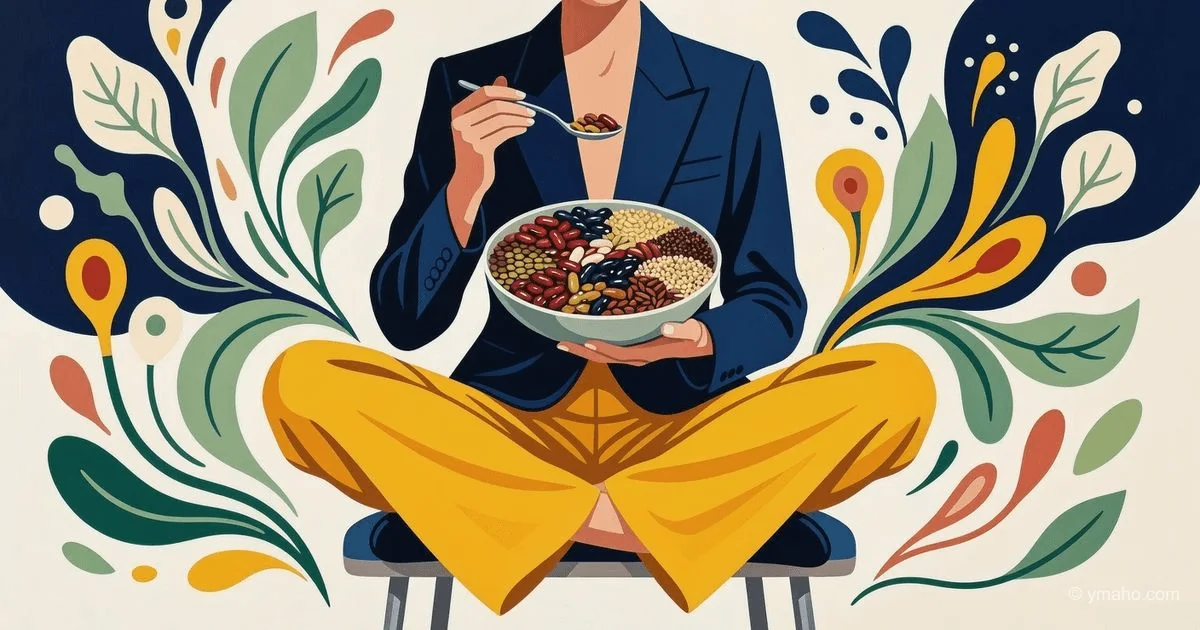
The Popular 'Fibermaxxing' Diet: Fiber as the New King of Nutrition Science
TikTok is being swept by a trend to maximize fiber intake. Dietitians confirm that consciously adding legumes, whole grains, and nuts to your diet helps with weight control and improves hormonal balance.
Analytical Digest: Fibermaxxing — Why Health Care Has Turned into a Competition to Eat Fiber
The healthy eating industry has fallen into another 'maxxing' trap. What TikTok presents as a revolutionary trend called 'fibre maxxing' is actually a symptom of deep fatigue with complex diets and expensive nutraceuticals. The 2026 consumer has finally grown tired of paying $150 for superfood powders and wants something simple, understandable, and — lo and behold — genuinely beneficial.
But behind this apparent simplicity lies a complex industrial dynamic. PepsiCo has already called fiber 'the new protein.' This is not just a marketing ploy — it's an acknowledgment that the segment of functional products targeting the microbiome will skyrocket. However, as with the protein boom of 2023-2025, the race for maximum dosages carries risks that influencers with bowls of chia pudding on their avatars keep quiet about.
The Essence: What's Really Happening
Fibermaxxing is not a diet in the classic sense. It's a philosophy of 'enhancing' your usual diet without strict restrictions. Unlike keto or paleo, you don't need to eliminate entire food groups. You just add legumes, whole grains, vegetables, seeds, and nuts where they could already be. This makes the approach sustainable and psychologically comfortable.
But the core of the trend runs deeper. It's a reaction to decades of 'dietary fast food' — ready-made solutions sold as a 'magic pill.' After the failure of many extreme diets and disappointment in expensive supplements, the market has returned to basics: fiber is the only nutrient that nearly 90% of the Western population is deficient in. The average fiber intake in the US is about 15 g per day, against a recommended 25-38 g. That's a massive market gap.
Functional food manufacturers took this as a call to action. If fiber was once an invisible filler in 'healthy bars,' it is now the star of the packaging. Prebiotic sodas, fiber-fortified chips, and yogurts labeled 'high fiber' have flooded the shelves of Whole Foods and Target. But this is where the main contradiction lies, which the media carefully avoids.
Timeline and Context
What we see now is the result of three successive waves that have overlapped:
- 2023-2024 (The Protein Era): The market is gripped by 'proteinmaxxing.' Protein is added everywhere — from cereals to ice cream. Consumers internalize the mantra 'more is better.' The market overheats, leading to fatigue from 'meaty taste' in sweet products and digestive issues from excess whey protein.
- 2025 (Scientific Breakthrough): The gut health trend goes mainstream. Research convincingly shows that fiber (prebiotics) is critical for feeding 'good' bacteria. The Global Prebiotic Association (GPA) notes a shift from abstract probiotics to specific diets. By late 2025, TikTok is flooded with educational content about the link between the microbiome and immunity and mental health.
- January-March 2026 (Validation by Giants): PepsiCo CEO Ramon Laguarta publicly states, 'I think fiber will be the next protein.' At the Expo West 2026 trade show (the main event for the natural products industry), fiber is recognized as the top trend of the year. McDonald's also includes this trend in its 2026 forecasts.
- April-June 2026 (Current Moment): Fibermaxxing reaches peak hype. But simultaneously, dietitians begin to sound the alarm. It turns out that 40% of Gen Z and 45% of millennials are actively trying to improve gut health by following advice from unqualified bloggers. The market fills with 'fiber junk' — products with added isolated fiber that has no proven benefit.
Who Wins and Who Loses
The winners are not producers of 'clean' products, but giants of ultra-processed food that managed to repackage their sweets and sodas. PepsiCo and Nestle were the first to understand: it's easier to add inulin or chicory to chips and call them 'a source of fiber for gut health' than to change the production chain to produce legumes.
Here the market is paradoxical. Consumers think they are eating more vegetables. In reality, they are buying 'prebiotic soda' like Olipop or Poppi, where the fiber content (though above zero compared to Coke) is still negligible for real effect, as GPA analysts note: doses in such products are often below scientifically validated thresholds for prebiotic action.
Losers are classic dairy and bakery producers that failed to adapt. Their 'regular' yogurt or loaf without a 'high fiber' label is seen as outdated and unhealthy. Traditional confectionery factories are incurring losses because their products suddenly became associated with 'lack of fiber.'
The biggest loser is a holistic approach to nutrition. By trying to 'max' one nutrient, consumers forget about variety. If your diet consists of the same type of fiber (e.g., only inulin from soda and bars), you don't get the diversity of plant fibers that ensures microbiome health.
What the Media Isn't Telling You
Insight #1: Isolated fiber is not the same as fiber from whole foods.
This is the biggest deception of the trend. When a TikTok blogger eats a bowl of black beans, they get a complex matrix: soluble and insoluble fiber, resistant starch, polyphenols. This ecosystem feeds different types of bacteria.
When you drink 'fiber soda' or eat chips with inulin, you get one isolated type of fiber (usually inulin or chicory), which ferments quickly and can cause bloating, gas, and even an inflammatory response in predisposed individuals. Studies show that escalating doses of long-chain inulin can trigger a pro-inflammatory cytokine cascade in some participants. Consumers don't understand the difference between 'fortified with fiber' and 'naturally high in fiber.'
Insight #2: 'Fibermaxxing' doesn't work for people with Irritable Bowel Syndrome (IBS).
99% of influencers stay silent about this. About 10-15% of the Western population suffers from IBS. For them, a sharp increase in fiber, especially fermentable types (like legumes or inulin), is a direct path to pain, diarrhea, or constipation. This is called FODMAP sensitivity. Dietitian Samantha Snashel from Ohio State University warns: 'If you suddenly increase your fiber intake, your digestive system will have a strong reaction.'
For such people, fiber is not 'maxxed' but strictly dosed. The trend ignores personalization, creating a culture of blame: if your stomach hurts from beans, you're 'not healthy enough.' The supplement and functional food industry, riding the hype, sells a solution that for a significant portion of consumers is a problem.
Forecast: The Next 30 Days and 90 Days
Next 30 days (June 2026):
Expect devastating investigations from authoritative outlets like the Wall Street Journal or The Guardian revealing that 'prebiotic sodas' contain fiber doses that have no statistically significant health impact but do wonders for the price (3-4 times more expensive than regular soda). The GPA is already flagging the misuse of the term 'prebiotic' on products without proven efficacy. This will spark a wave of skepticism and the question: 'Am I paying for real benefit or just marketing?'
90 days (by fall 2026):
The market will split into two camps. The first is 'dirty fibermaxxing': cheap processed products with added cheap fibers (inulin, polydextrose). They will lose the trust of the discerning consumer.
The second is 'clean fibermaxxing': brands that will compete on recipe complexity — blends of 5-10 types of seeds, quinoa, legumes, and fermented grains. We will see a return to 'grandma's' methods: sourdough, sprouting grains to increase fiber bioavailability and reduce FODMAP load.
Main forecast: The term 'maxxing' will begin to fade from active vocabulary by the end of the year, as happened with 'clean eating.' It will be replaced by the term 'fibre diversity.' Consumers will stop counting grams and start counting the number of unique plant sources per week (30 plants a week — the old new trend from the Blue Zones). The industry will shift from selling a 'portion' to selling 'microbiome diversity.' And then we will see a true revolution in nutrition, not just another race for numbers.
— Editorial Team