Korean Body Scrubs Become a Must-Have: Sluff Draws Inspiration from Korean Bathhouse Culture
American brand Sluff launches a line of body exfoliants rooted in the traditions of Korean bathhouses (jjimjilbang). The products reflect the growing popularity of Korean skincare rituals aimed at intense yet gentle full-body exfoliation.
Analytical article based on provided data and requirements.
Analytical Review: "Good Gross" Instead of Gentle Chemistry
How Sluff Reinvents Physical Exfoliation and Challenges the Dermatological Establishment
Introduction: The Return of "Grandma's Loofah" in the Age of Acids
While the beauty industry has spent the last decade insisting that chemical exfoliation (AHA, BHA, PHA) is the only correct and safe way to renew skin, a new brand emerges saying, "You've been doing it all wrong." Sluff, launching on May 12, 2026, is not just another body care line. It is an ideological manifesto in favor of physical exfoliation, rooted in the millennia-old traditions of Korean bathhouses (jjimjilbang).
What is truly interesting to an analyst: Sluff was created by former beauty editor for Vogue, W, and The Cut, Christine Han. A person who spent years reviewing expensive acid toners and peels suddenly launches a rough viscose mitt and charcoal soap for $48. This is not just a business—it's a public renunciation of the ideology that raised an entire generation of beauty journalists. It's the moment when an insider says, "Alex, I'm going into the shadows." And the industry freezes.
The numbers confirm: the global chemical exfoliant market is overheated. But consumers are tired of waiting for results. Acids take weeks to work. Sluff promises visible results in one session: "You'll see dead skin roll off under your fingers like an eraser." This is not a ritual; it's "instant gratification"—what the TikTok generation values most.
[The Core]: What's Really Happening
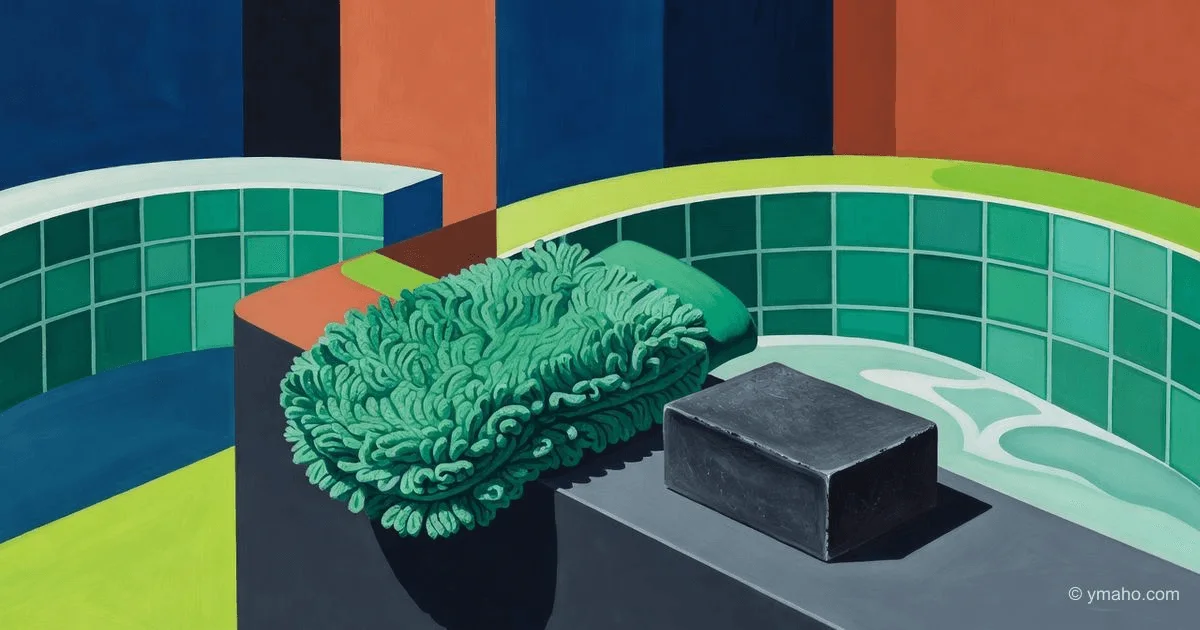
From a cultural anthropology perspective, Sluff isn't selling skincare. They are selling an authentic experience that was previously unavailable to Western consumers outside specialized spas. Korean bath culture is not just about washing. It's the "seshin" ritual: an intense, sometimes aggressive scrubbing massage with a green viscose mitt (the famous "Italian towel") that leaves you feeling "reborn."
The key word here is "good gross." The brand isn't afraid to call things by their name. When you use the Sluff mitt, dead skin cells, remnants of SPF, self-tanner, and moisturizers roll into gray balls before your eyes. It's disgusting. But that instant visual confirmation of effectiveness—the "wow factor"—is exactly what chemical peels lack.
Non-obvious insight (what press releases don't say): Sluff is not actually an "opponent" of chemical exfoliation. They are a precursor. Look at the ingredients of the Pre-Sluff Bar: activated charcoal and pumice. Its job is to remove the "film" of emollients and creams from the skin's surface, as mentioned above. The fact is that most modern products (SPF lotions, moisturizing serums) create an occlusive film on the skin. Acids try to penetrate this film—and often fail. Sluff simply strips this film mechanically. This means that after using Sluff, any acid or moisturizer works 2-3 times more effectively. Sluff doesn't kill chemical exfoliation. It prepares the ground for it.
Timeline and Context: How a Vogue Editor Solved the Layering Problem
The choice of date—May 12, 2026—is genius. It's the moment when Western consumers have accumulated "ballast" on their skin after winter and are preparing for summer (bodies need to be smooth for the beach). But it's also a moment of exhaustion from complex routines.
Here's the timeline leading up to this launch:
- Founders' childhood: Christine Han (Baltimore) and Esther Nordlinger (Seoul) share a common memory: the steam of a Korean bathhouse, a green mitt, and the feeling of "squeaky clean."
- Christine's career: Years working at Vogue, W, and The Cut. She saw thousands of press releases about "revolutionary" acids. But none gave her the feeling she remembered from childhood.
- The problem (2024-2025): The market is oversaturated with "layering." People apply toner, serum, cream, SPF, oil. Skin is overloaded. Products stop absorbing. No results, yet the basket price rises.
- Early 2026: Quiet teasers from Christine on her Instagram.
- May 12, 2026: Official launch of Sluff with the "Sluff It Kit" for $48 (introductory price $43 with promo). Instant resonance in publications like WWD, NewBeauty, Yahoo, Trend Hunter.
Important contextual nuance: Sluff launches on the wave of the growing trend for "sensorial beauty" and disappointment in "clean beauty" (which, as it turns out, often doesn't work as promised). Consumers want to feel the product working. A mitt that creates friction provides that feeling.
Who Wins and Who Loses
Winners:
- Sluff and its founders: Christine Han and Esther Nordlinger created a brand with zero celebrity budget (no influencers in the classic sense), but with total audience trust. Christine is "one of us," she's from the industry, she understands how consumers are deceived. This gives incredible credibility. Their $48 kit is not "affordable care"; it's an "investment in truth."
- Keratosis Pilaris (KP) sufferers: People with KP suffer because chemical lotions (with urea and lactic acid) often irritate the skin without solving the plug problem. Sluff solves the problem mechanically, simply cleaning out the follicles. It's a victory of physics over chemistry.
- Self-tanner lovers: One of the main problems with self-tanner is uneven fading and patches. Sluff perfectly prepares the skin before application (removing dead cells that would otherwise absorb DHA unevenly) and also perfectly removes the old tan layer before a new application.
Losers:
- Scrub brands with microbeads (plastic or abrasive—St. Ives, Tree Hut, Frank Body): Their time is passing. Consumers are beginning to understand that apricot kernels or sugar scratch the skin, creating micro-tears. A viscose mitt provides controlled friction. It cleans without actively damaging (if you don't press too hard). Sluff steals the audience from "sweet" scrubs, promising the same tactility but with "Korean" authority.
- Chemical body peel brands (Nécessaire, Soft Services, First Aid Beauty): Their problem is waiting. A consumer applies a 10% AHA lotion for a week and sees minor improvement. A consumer uses Sluff once and sees dramatic improvement. Yes, acid moisturizes deeply, and Sluff doesn't. But consumers don't think in those categories. They think in terms of "before and after." Sluff wins the "instant gratification" round.
- Spas that profit from the "Korean body scrub" service: Previously, you had to go to a specialized bathhouse, pay for entry and massage (around $60-100 plus tip) to get this feeling. Now you can do it at home for $43-48 an infinite number of times. Spas lose their unique selling proposition.
What the Media Isn't Saying
The official story goes: "An effective, safe physical exfoliant suitable for sensitive skin." But let's break down three details that enthusiastic reviews gloss over.
- Risk of "dependency effect." A NewBeauty reviewer honestly admits that even on clean skin, "pills" formed. Question: what exactly was the mitt stripping if the skin was freshly washed? Partially, the top layer of healthy epidermis that shouldn't have been removed. If you use Sluff more than once a week (and the brand doesn't forbid it, though it recommends starting with light pressure), you risk thinning the hydrolipidic barrier and ending up with dryness, flaking, and increased sensitivity. "Smooth skin" in the moment = damaged barrier in the long term. Sluff is a tool, not a daily routine, but the marketing doesn't clearly state this.
- Sterility issue. The mitt is textile. It sits in the warm, humid environment of the shower. Bacteria and fungi love such conditions. If you don't thoroughly dry the mitt after each use (swap for a dry one or wash it), you risk introducing infection (folliculitis, body acne). The Chinese experience (where such mitts are popular) says: wash them after each use in hot water. Sluff should have included at least two mitts (replaceable) or given clear care instructions. The current description lacks this.
- Price point: $48 for "water and charcoal." The Pre-Sluff Bar is soap. Yes, with activated charcoal and pumice. But the cost of such soap is about $1-2. The mitt (even good quality) is $2-3 wholesale. The lotion is $5. Sluff's margin is around 80%. You're not paying for ingredients. You're paying for Christine Han's nostalgia for Korean bathhouses and her editorial reputation. It's a luxury price tag in the mass-market segment, disguised as "honesty."
Forecast: Next 30 Days and 90 Days
Next 30 Days (June – July 2026): The "Viral Disgust" Phase
In the coming month, TikTok will be flooded with videos of the Sluff process. The format is perfect: a close-up of a hand with a mitt rolling off gray balls. It's impossible to look away. Sluff will have its "moment." The brand's key task in this period is to manage expectations. If influencers start rubbing their skin until it bleeds for views, the brand will face a wave of backlash from dermatologists. They've already stated: "start with light pressure." This advice needs to be strictly enforced through comment moderation and collaborations with professionals.
Next 90 Days (August – September 2026): Line Expansion and the Battle Against Fakes
By the end of summer, the consequences will become clear. First: Sluff will expand its range. Expect a "Sluff Mitt for Face" (a softer mitt for the face) and separately sold Pre-Sluff Body Wash (liquid body wash instead of bar soap—more convenient). Second: cheap clones will appear on Amazon for $15 (Chinese manufacturers will copy the mitt design and call it "K-Beauty Scrub Mitt"). Sluff will need to aggressively protect its intellectual property (though changing the mitt design is difficult) or lower its price.
Third, and most importantly: democratization of the approach. Sluff will prove that "physical exfoliation" isn't dead; it was just waiting for its moment. We'll see Estée Lauder or L'Oréal acquire a small brand with similar technology or release their own version of a "smart mitt." But the main change will happen in the consumer's mind: they will stop fearing friction. And then the market will split: gentle PHA tonics for daily use and Sluff for "deep cleaning" once a week. Sluff won't destroy the chemistry industry. It will make it respect mechanics. And for a brand that came out of the Vogue editorial office, that's already a victory.
— Editorial Team