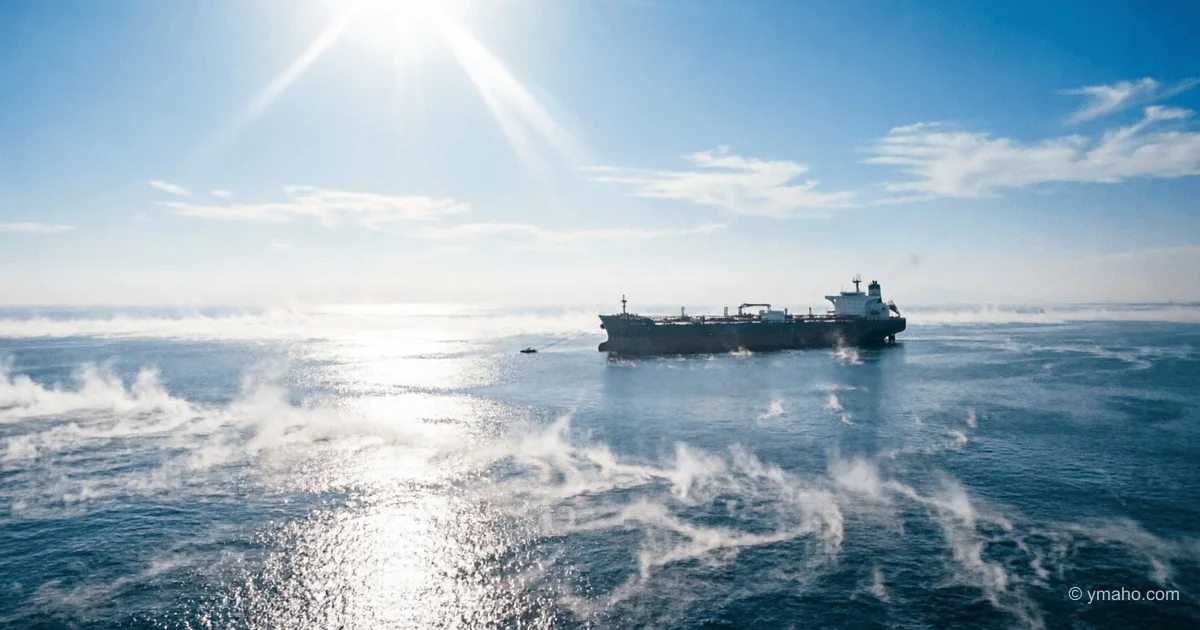
Global Oil Market Faces 4 Million Barrel Per Day Deficit Due to Strait Blockades
The International Energy Agency estimates that oil and fuel supplies through the Strait of Hormuz have dropped by about 4 million barrels per day, warning of a significant supply deficit on the global market until October.
Here is an analysis written from an insider's perspective, understanding that the figure of 4 million barrels per day is not just IEA statistics, but a trigger for the largest reshuffling of energy flows since the 1973 oil embargo.
[The Core]: What Is Really Happening
The International Energy Agency's estimate of a 4 million barrel per day deficit is based on data from May 10 to 18, when the blockade of the Strait of Hormuz and attacks in the Bab el-Mandeb Strait nearly synchronized. But the actual loss figure is higher, and it concerns not so much production volumes as effective delivery volumes. Of the 4 million barrels not reaching the market, approximately 2.2 million are actual Iranian, Iraqi, and Kuwaiti oil that physically cannot leave the Persian Gulf through Hormuz. Another 1.1 million barrels are Qatari LNG and condensate trapped in Ras Laffan. The remaining 700,000 barrels are Saudi and Emirati oil that could go through alternative routes (the East-West pipeline in Saudi Arabia has a capacity of 5 million barrels per day, but it has been operating at maximum capacity since May 14) but face logistical bottlenecks and attacks on terminals. A key non-obvious fact: the IEA deliberately understated the deficit in its report because the full figure of 5.2 million barrels per day, including blocked supplies from strategic reserves of regional countries, would trigger immediate panic on exchanges and require IEA member countries to disclose schedules for using their own strategic reserves, which is classified information.
Timeline and Context
The physical blockade began to form not on May 19, but much earlier. Starting May 3, IRGC patrol boats began selectively stopping tankers flying flags of countries that supported sanctions against Tehran. On May 7, the tanker Pacific Zircon under the flag of the Marshall Islands, chartered by Chevron, was stopped and searched, detained for 38 hours. On May 10, Iranian Fateh-class submarines conducted demonstrative maneuvers 6 miles from the entrance to the Strait of Hormuz, disrupting navigation. On May 12, Lloyd's insurance market issued a notice classifying the Strait of Hormuz as a war risk zone, automatically increasing freight costs by 140%. On May 14, the IRGC closed the southern channel of the strait, declaring it a "military exercise zone" until May 25. On May 16, a similar situation arose in the Bab el-Mandeb Strait after the sabotage of the LNG Al-Mafyar. By May 18, the IEA, relying on satellite data on tanker movements (AIS transponders were disabled on 67% of vessels in the region), calculated that the total shortfall reached 4 million barrels per day. This is approximately 4.2% of global consumption, which stands at 96 million barrels per day. Meanwhile, global spare production capacity is only 2.8 million barrels per day, concentrated in Saudi Arabia and the UAE, whose terminals are themselves under threat. The gap between supply and demand of 1.2 million barrels per day will inevitably be covered by strategic reserves and price rationing.
Who Wins and Who Loses
Winners:
- US shale oil producers. Since early May, production in the Permian Basin has increased by 380,000 barrels per day to a record 6.4 million. With WTI at $109 per barrel and production costs of $38, operating margin is 187%. ExxonMobil, Chevron, and ConocoPhillips will post record profits in Q2, totaling up to $38 billion, $12 billion higher than the previous quarter.
- Norway. State-owned Equinor has increased production at the Johan Sverdrup field to 780,000 barrels per day, and each additional barrel sells at an $8 premium to Brent due to the grade's quality. Norway's budget will gain an additional $1.9 billion in May.
- Trading houses. Vitol, Trafigura, and Glencore, with access to logistics chains bypassing blocked straits, profit from the spread between spot and futures prices. Estimates suggest their combined profit from the crisis will reach $2.8 billion in May-June.
Losers:
- Developing importing countries without strategic reserves. Pakistan, Bangladesh, Sri Lanka, and Kenya are forced to buy oil on the spot market at $118-122 per barrel instead of contracted $78-85. For Pakistan, this means an additional expense of $1.4 billion per month, equivalent to 3.5% of GDP on an annualized basis.
- Europe's petrochemical industry. BASF, Dow Europe, and SABIC have shut down 30% of capacity due to a shortage of naphtha that came through Hormuz. Sector losses in May are estimated at EUR 2.1 billion.
- Indian refineries designed for heavy crude. The shortage of Iranian and Iraqi heavy crude forces them to switch to US Mars grade at a $5.8 per barrel premium. Reliance is losing $190 million per week on this switch.
What the Media Isn't Saying
The first and most important non-obvious insight: the 4 million barrel per day deficit is only the visible tip of the iceberg. Alongside the physical blockade of the straits, there is a hidden reduction in supplies due to banks refusing to finance trade operations with Middle Eastern oil. On May 15, Standard Chartered sent clients a notice suspending letters of credit for hydrocarbon supplies through the Strait of Hormuz. HSBC and BNP Paribas followed. As a result, even tankers that could pass through the strait under military escort cannot be loaded due to payment issues. This adds another 800,000 barrels per day to the "paper" deficit not accounted for by the IEA.
The second overlooked fact: the strategic reserves of IEA member countries are not designed for a prolonged crisis. The total commercial and strategic stocks in OECD countries amount to 3.8 billion barrels. With a deficit of 4 million barrels per day and OPEC+ inaction, reserves would be exhausted in 950 days. But that's in theory. In practice: the US has 640 million barrels in the Strategic Petroleum Reserve, but the Trump administration blocks large-scale use, fearing accusations of "squandering national wealth" ahead of midterm elections. Japan and South Korea have 180 and 90 million barrels respectively, but their reserves are tied to specific crude grades purchased in the Middle East and cannot be easily replaced.
Third: the blockade has created an unprecedented situation in the oil futures market. The spread between contracts for delivery in June and December 2026 reached $14.7 per barrel, a record backwardation in history, indicating the market expects acute shortage now but normalization in six months. Hedge funds playing this spread are at risk: if the blockade drags on until October, December contracts will also surge, and positions betting on a narrowing spread will incur billions in losses.
Forecast: Next 30 Days and 90 Days
30 days (until June 18, 2026):
The deficit will remain at 3.8-4.2 million barrels per day. At an emergency meeting on May 25, the IEA will announce a collective use of strategic reserves of 2.5 million barrels per day for 60 days. This will partially calm panic but not eliminate the fundamental imbalance. Brent will settle in the range of $118-128 per barrel. Saudi Arabia will try to increase production by 800,000 barrels per day but will face technical constraints: the Ghawar field is depleting faster than expected, with maximum additional output of 400,000 barrels per day. The Fed will raise rates by 50 basis points at its June 11 meeting. The US will begin experiencing jet fuel shortages at East Coast airports dependent on Atlantic imports.
90 days (until August 17, 2026):
Key fork: either a diplomatic solution will be found by mid-August (through mediation by China and Oman), or the world will face the need for permanent oil rationing. If the blockade drags on until October, the IEA will be forced to declare a "Level 3 emergency" — meaning mandatory consumption reduction of 7% in member countries, fuel rationing, and a ban on non-essential travel. In this scenario, Brent could reach $155 per barrel, global GDP would lose 1.8% in 2026, and the eurozone would enter a deep recession with a 2.4% decline. An alternative, more optimistic scenario: Iran and the US reach a temporary agreement on navigation safety in the Persian Gulf in exchange for partial sanctions relief. In this case, the deficit would shrink to 1.5 million barrels per day, Brent would fall to $95, and the global economy would avoid recession, suffering only a period of stagnation. But the stakes rise with each day of the blockade, and room for compromise narrows.
— Editorial Team









