Perfume That Smells Like Sunscreen: Vacation Launches Gelée Fragrance
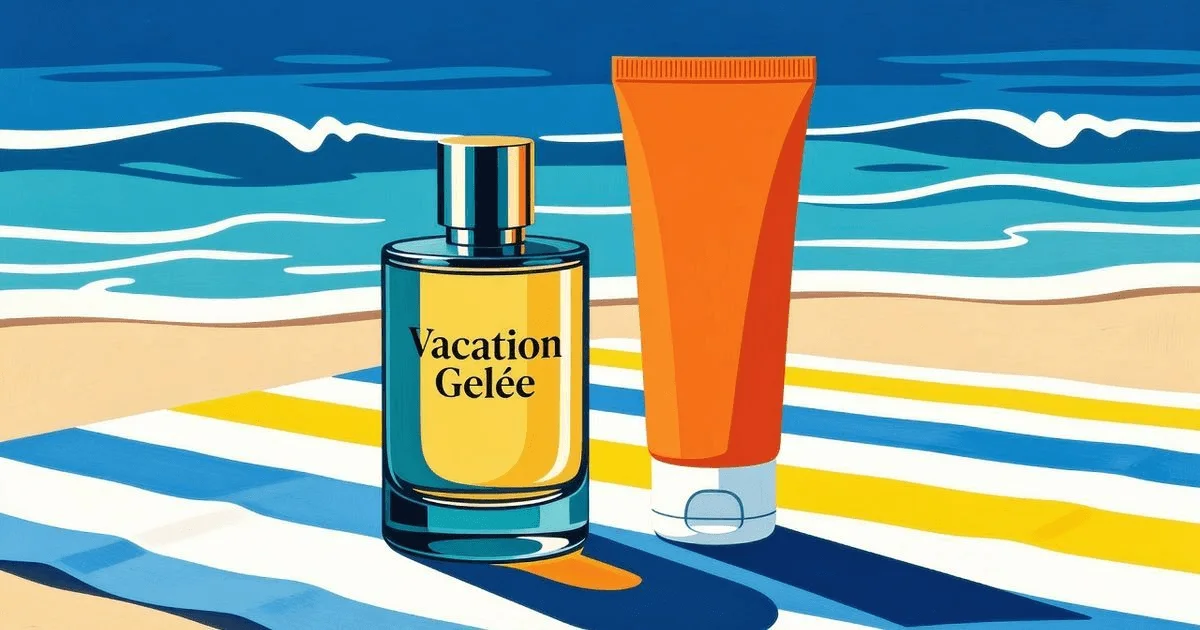
Vacation, a brand inspired by vacation aesthetics, releases Gelée, a fragrance that smells like the iconic orange sunscreen gel. This is part of a growing trend of nostalgic and sensory scents that evoke pleasant beach vacation associations.
Analytical article based on provided data and requirements.
Analytical Review: Nostalgia as a Business Model
How Vacation Turns the Smell of Sunscreen into a Luxury Asset and Changes the Rules of the Perfume Game
Introduction: When Morning Smells Like a Pool, Not Coffee
While niche perfume houses argue over who best interprets the scent of rotting leaves in an autumn forest, the American brand Vacation is doing something radically different. In April 2026, they launched a collection of five fragrances dedicated to the 100th anniversary of the iconic orange tanning gel Bain de Soleil Orange Gelée. And this is not just another flanker to an existing line.
What is truly interesting to an analyst here: Vacation is not inventing a new smell. They are selling a feeling, or more precisely, they are selling access to someone else's but highly desired memory. Perfumery no longer competes on notes. It competes on the ability to evoke a specific emotion in 0.3 seconds — the time it takes the brain to process a scent and link it to a memory.
The numbers speak for themselves. Nivea Sun Eau de Toilette, selling for £22.50, has garnered 54.7 million views on TikTok under the #PerfumeTok tag and is constantly selling out. This is not just hype. It is an indicator that the category of "solar fragrances" is moving from a niche segment into the mass mainstream. Vacation, offering its set for $79, sits right between affordable nostalgia (Nivea) and luxury artisanal (pretentious perfume houses).
[The Core]: What Is Really Happening
From a marketing strategy perspective, Vacation is making a revolution that I call "monetizing a sensory anchor." The orange gel Bain de Soleil is not just a sunscreen. It is a cultural artifact. Created in 1925 on the French Riviera, it peaked in popularity in the 1970s and 1980s, becoming a symbol of carefree, glamorous vacations. For Gen X and Millennials, the smell of this gel is an instant portal to childhood, family trips to the sea, the feeling of warm skin and salty wind.
The insight analysts miss: this is not just a nostalgia trend. It is a demographic shift. Gen X (people aged 45-60) is currently at the peak of its purchasing power. They are the ones paying $79 for a set of five 0.3 oz bottles. And they are not paying for perfume — they already have their Chanel No. 5. They are paying for the chance to get back 15 minutes of their youth.
The perfumers brought on board understand this on a deep level. Dakota Green, co-founder of Vacation, describes the reaction of fans of the original product: "Their eyes instantly light up when they remember its luxurious feel and scent that transports you to another place." It is this "spark in the eyes" that Vacation is bottling. But there is a difference: in 1985, you could buy the gel itself for $9.99 (the price Vacation sold it at Target during a celebration week — a marketing move referencing the "good old days"). In 2026, for access to the same smell, but without SPF protection, you pay eight times more.
Non-obvious insight (what press releases don't say): The Vacation Gelée fragrances are not actually an exact replica of the original gel. Look at the notes: the original gel had a scent of bergamot, clove, saffron, sandalwood, and patchouli. But in the collection, each of the five perfumers created their own interpretation. Gelée Tropiques by Adriana Medina, for example, contains a mango accord, monoi (tiare oil), and tonka bean tint. This is no longer a "copy" — it is a "variation on a theme." Vacation is not selling one smell, but a spectrum of emotions associated with that smell: from beachy (Minérale with sea salt and driftwood) to sweet dessert (Vanille with vanilla and ylang-ylang). This is a "category capture" strategy: whatever you are looking for in the "solar fragrances" segment, you will find it at Vacation.
Timeline and Context: 100 Years in a Bottle
Understanding why this launch happened now and in this way requires looking at the timeline of the past two years.
- 2019: The original Bain de Soleil Orange Gelée was discontinued by its owner (then Merck KGaA). The market lost an iconic product.
- 2022: Founding of Vacation Inc. The brand launches with "retro sunscreens," including the famous "Vacation" EDT with notes of pool water and swimsuit fabric.
- 2024: Vacation launches the "Orange Gelée Revival Project." They assemble a council of 11 devoted fans of the original product and, together with fragrance designer Carlos Huber (founder of ARQUISTE Parfumeur), recreate the formula — this time with SPF 30 instead of the original SPF 4. The product instantly goes viral.
- April 16, 2026: Sales launch of the anniversary fragrance collection for the 100th anniversary of the original gel. Price: $79.
- April 26 – May 7, 2026: "Gelée Week" at Target, where the tanning gel itself is sold at the historic price of $9.99.
- April 30, 2026: Full-size bottle of Gelée Eau de Toilette (30 ml) becomes available.
- May 7, 2026: Birthday celebration at the Hollywood Roosevelt Hotel in Los Angeles.
Notice the structure: first, the reincarnation of the physical product (gel), then a nostalgic promotion in mass retail (Target with a 90s price), and only then the fragrance collection as the crown. Vacation built a pyramid: mass access -> emotional engagement -> premium monetization of emotion.
Who Wins and Who Loses
Winners:
- Vacation Inc.: The brand has just turned a one-time viral success (resurrecting the gel) into a long-term fragrance platform. If before they were "a sunscreen brand with a cool smell," now they are "a perfume house with a history." This increases the company's valuation for potential acqui-hire or investments by an order of magnitude. Moreover, perfumery is a product with giant margins (cost of a bottle ~$5-7 vs. price of $79).
- Consumers seeking mental escapology: In a world where airfare has risen 30% in the last two years and a vacation on the French Riviera has become an unaffordable luxury for the middle class, $79 for a "beach in a bottle" is a bargain. You don't fly to Cannes. You buy a bottle of Gelée Azure with notes of orange blossom and clove. It's affordable therapy.
- Archival perfumers (Rodrigo Flores-Roux, Caroline Sabas, etc.): They get not just a fee for their work. They get a place in pop culture narrative. Creating a mass-market fragrance that will be discussed on TikTok is a stronger "case" for their portfolio than another niche flanker for $300 that sells 5,000 units.
Losers:
- Traditional "beach" fragrances (Tom Ford Soleil Blanc, Estée Lauder Bronze Goddess): These cost from $150 to $300 and are positioned as "luxury." Vacation shows that you can sell the same emotion (coconut, tropical flowers, warm skin) for $79 in a more authentic, playful package. The consumer starts asking, "What am I paying the extra $100 for? For the Tom Ford logo?" This devalues "luxury positioning" in the category.
- Brands making "abstract" fragrances: The era of mysterious bottles with vague names like "Molecule 04" is coming to an end. The consumer no longer wants "intellectual" perfume. They want perfume they can say, "This smells like childhood at the sea." Vacation bet on hyper-referentiality, and that bet paid off.
What the Media Isn't Saying
The official story goes: celebrating the centennial of an iconic product, an ode to nostalgia. But there are three details omitted by enthusiastic reviews in Byrdie and other publications.
- Stealth marketing disguised as a "fan project." The phrase "created with input from a council of 11 devoted fans of the original product" sounds like a bottom-up success story (crowdsourcing). In reality, it is a clever legal and marketing move. Fan involvement in development (advice, testing) gives the brand "immunity" from criticism. Anyone who says "this doesn't smell like the original" will be hit with the argument: "The fan council approved the formula." This turns potential haters into co-authors.
- Alcohol content — a huge amount. Look at the ingredients of all Vacation perfumes: Alcohol Denat. is first. This means the "longevity" of the scent, which reviews of Nivea complain about (2 hours wear), will be no better here. You pay $79 for an "ode" that will evaporate by the time you walk from the bedroom to the kitchen. This is normal for colognes, but for a "centennial fragrance collection" it's odd. Alcohol cheapens production but makes the product closer to eau de toilette than perfume.
- The "orange gel" wasn't orange. The product description says "Signature orange-tinted formula." This was done so the gel wouldn't look white on the skin. But if you apply it excessively, especially on pale skin, the "orange tint" can be noticeable. The brand says "rubs in clear on all skin tones," but dermatologists know: any colorants in SPF (even tinted fragrances) are a potential risk for allergy sufferers and people with rosacea. In the pursuit of "80s aesthetics," Vacation ignores modern hypoallergenic standards.
Forecast: Next 30 Days and 90 Days
Next 30 Days (June – July 2026): The "Viral Layering" Phase
Over the next month, TikTok will be filled with videos using the hashtag #VacationLayering. The trend: mixing fragrances from the collection with each other (Gelée Vanille + Gelée Minérale = "vanilla beach") or with other perfumes (e.g., with Kiehl's Original Musk, as a Byrdie reviewer does). This will create endless content, as each user searches for their "unique combination." The key success metric for Vacation is not the number of sets sold, but the number of UGC videos. If they launch a #My100YearGlow challenge, they will win June.
Next 90 Days (August – September 2026): Market Saturation and the "Quiet" Analog
By the end of summer, one of two scenarios will become apparent. Optimistic: Vacation releases a limited edition Gelée No. 6 with a new perfumer (possibly a collaboration with a viral TikTok perfumer). This will sustain the hype.
Pessimistic (and more likely): the market becomes saturated. Every other person already has a "solar" scent (or a cheap dupe from Zara). In August, post-summer depression sets in, and "beach" scents become irrelevant. Sales drop 40-50%. Vacation shifts marketing to "winter getaway": "Wear Gelée Tropiques, turn on the heater, and imagine you're in the Maldives." The problem is, this won't work as well as in June.
The main risk is the emergence of a "killer" from mass market. Nivea has already shown it can do the same for £22.50. If Nivea expands its line to three or four variations of its "solar" scent, Vacation will be squeezed between budget Nivea and luxury Tom Ford.
But in the long term, Vacation is betting on the right horse. The trend toward "nostalgia scents" is not a passing fad. It is a reaction to an anxious future. In a world where tomorrow is frightening, the only thing people are willing to pay for is a guaranteed good yesterday. And Vacation just sold them that yesterday for $79. This is not perfumery. It's a tranquilizer in a pretty box.
— Editorial Team