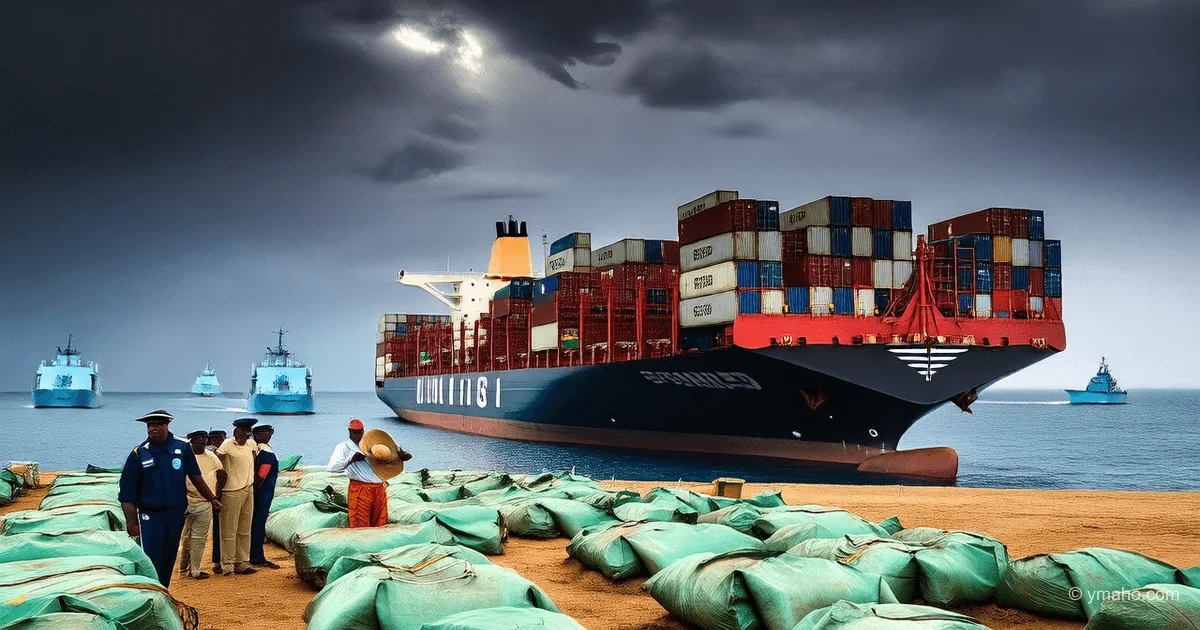
Russian Security Council Secretary Shoigu Calls on UN World Food Programme to Intervene in Persian Gulf Crisis
Sergei Shoigu stated that the conflict in the region threatens 45 million people with starvation due to disrupted supplies of fertilizers and food, and insists on the need for active intervention by the UN WFP.
Sergei Shoigu's call for the UN World Food Programme to intervene is not just another appeal for humanitarian awareness. It is a finely calculated geo-economic move that combines military logistics, Russian export interests, and an attempt to seize the global agenda from Washington.
The Essence: What Is Really Happening
Speaking at a meeting of SCO security council secretaries in Bishkek, Shoigu cited a figure of 45 million people threatened by starvation due to the blockade of fertilizer and food supplies through the Persian Gulf. He urged the UN WFP to "be the first to stand with placards saying 'Stop this'."
At first glance, this is standard humanitarian rhetoric. But understanding the context reveals that Russia, the world's second-largest fertilizer producer with about 20% of global trade, finds itself in a unique position. The conflict has blocked the Strait of Hormuz, through which about a third of global fertilizer exports—some 16 million tons annually—pass. Meanwhile, Russia itself extended fertilizer export quotas until December 2026, limiting supplies to 20 million tons for the period from June to November. In effect, Moscow is simultaneously restraining exports and positioning itself as the savior of global food security. This is a classic double gambit.
Timeline and Context
The chain of events unfolded rapidly. After US and Israeli strikes on Iran on February 28, the Strait of Hormuz was effectively blocked. By mid-March, fertilizer prices, especially nitrogen-based ones, began to rise sharply. According to the World Bank, the fertilizer price index rose more than 12% in the first quarter of 2026, and by May reached levels not seen since 2022.
Urea—the most common nitrogen fertilizer—rose from $474 per ton in February to $726 in March and $857 in April. That is more than a twofold increase in two months. Qatar's Ras Laffan LNG plant, damaged by Iranian strikes, halted supplies of feedstock for urea production. Saudi Arabia and the UAE, major exporters of sulfur and phosphates, are physically unable to ship products through the blocked strait.
In late April, Russia extended export quotas until December. In early May, the World Bank released a forecast predicting a 31% rise in fertilizer prices in 2026, with urea up 60%. On May 13, Shoigu made his appeal to the UN. All these events are links in the same chain, not isolated news.
Who Wins and Who Loses
Russia is the main situational beneficiary. With the Strait of Hormuz blocked and its own export restrictions in place, Russian producers can sell fertilizers at prices double those before the war. For the Russian budget, under pressure from sanctions and military spending, every extra dollar per ton of urea means billions in additional revenue. At the same time, Moscow maintains reputational cover: quotas are explained by concern for the domestic market, and the appeal to the UN by concern for the hungry.
China also benefits, but more subtly. Beijing began early release of state fertilizer reserves for the domestic market back in March. As a country with the largest agricultural sector and vast reserves, China can weather the crisis better than others.
All food-importing countries lose without exception. India, Bangladesh, Brazil, and sub-Saharan African nations will face a double blow: rising fertilizer prices and reduced food availability. The World Bank forecasts that inflation in developing economies will reach 5.1% in 2026, and if oil prices settle above $100 per barrel, it could rise to 5.8%.
Countries in the Persian Gulf also lose—not only from direct conflict damage but also from losing market share that they likely will not regain. Buyers who find alternative suppliers now may not return to former sellers after the war ends.
What the Media Leave Out
The first non-obvious insight concerns the true role of Russian quotas. The media present them as a measure to protect the domestic market. In reality, they are a price management tool. Russia exports 20 million tons while domestic consumption is about 5-6 million tons. Quotas hardly limit exports—they merely create the appearance of a shortage that supports high global prices. If Russia wanted to stabilize the market, it could increase the quota—but it does not.
The second point: Shoigu's statement is not addressed to the UN. It is addressed to Global South countries that are panicking and seeking alternative suppliers. Russia signals: "We are here, we have fertilizers, and we are ready to discuss humanitarian supplies." But humanitarian supplies, according to the Russian government's wording, are not subject to quotas. This means Moscow can selectively supply fertilizers to friendly countries, bypassing its own restrictions and strengthening political influence.
The third and deepest insight is the energy math. Ammonia production, the basis of nitrogen fertilizers, depends 80-90% on natural gas. European fertilizer producers are shutting down not because of the Persian Gulf war but because of high gas prices that make their products uncompetitive. When the Gulf conflict ends and the Strait of Hormuz reopens, European plants will not restart—costs are too high. This means that even after the war, the fertilizer market will remain structurally skewed in favor of producers with cheap gas—Russia, Iran, Qatar. The crisis has only accelerated this tectonic shift.
Forecast: The Next 30 and 90 Days
Next 30 days (by June 16). Urea prices will continue to rise, testing the $900-950 per ton level. Russia and China will maintain export restrictions. The UN WFP will likely begin emergency purchases of fertilizers for African countries but will face fierce competition from commercial buyers. Shoigu and other Russian officials will continue rhetoric about the humanitarian crisis while simultaneously increasing export revenues. The key figure—$700 per ton of urea, the 2022 level—has already been breached and will likely become the new floor.
Next 90 days (by August 16). Here, the path depends on two factors: whether the Strait of Hormuz opens and what the harvest in the Northern Hemisphere will be. Baseline scenario (55% probability): the strait remains partially or fully blocked, fertilizer prices settle above $800 per ton. Farmers in Asia and Africa reduce fertilizer application by 20-30%, leading to a 10-15% drop in winter crop yields in the 2026-2027 season. Global food prices will begin to rise with a lag of 6-9 months.
Negative scenario (30%): the conflict expands, damaging production facilities in Qatar and Saudi Arabia. Global fertilizer production capacity shrinks by 10-12% for up to three years. Urea reaches $1,200 per ton. Starvation threatens not 45 million but 80-90 million people. Food riots erupt in the most vulnerable countries.
Catastrophic scenario (15%): Russia imposes a complete ban on fertilizer exports, citing the need to ensure domestic food security. This triggers global panic in the fertilizer market. The global nitrogen fertilizer deficit reaches 25-30 million tons, leading to a 5-7% drop in global grain production in the next agricultural year. The world has not seen this since 1974, when fertilizer prices hit an all-time high in real terms.
The paradox of the situation is that Shoigu's appeal to the UN WFP is absolutely rational. The crisis is real, the threat of starvation is real, and the figure of 45 million is not pulled out of thin air—it is confirmed by both the World Bank and relevant UN agencies. But at the same time, this appeal serves as cover for the largest operation in recent history to reshape the global fertilizer market. When the conflict ends, Russian and Chinese companies will control a market share that Persian Gulf producers have lost, possibly forever. The humanitarian crisis and geo-economic redistribution go hand in hand—and that is what most media leave out.
— Editorial Team









