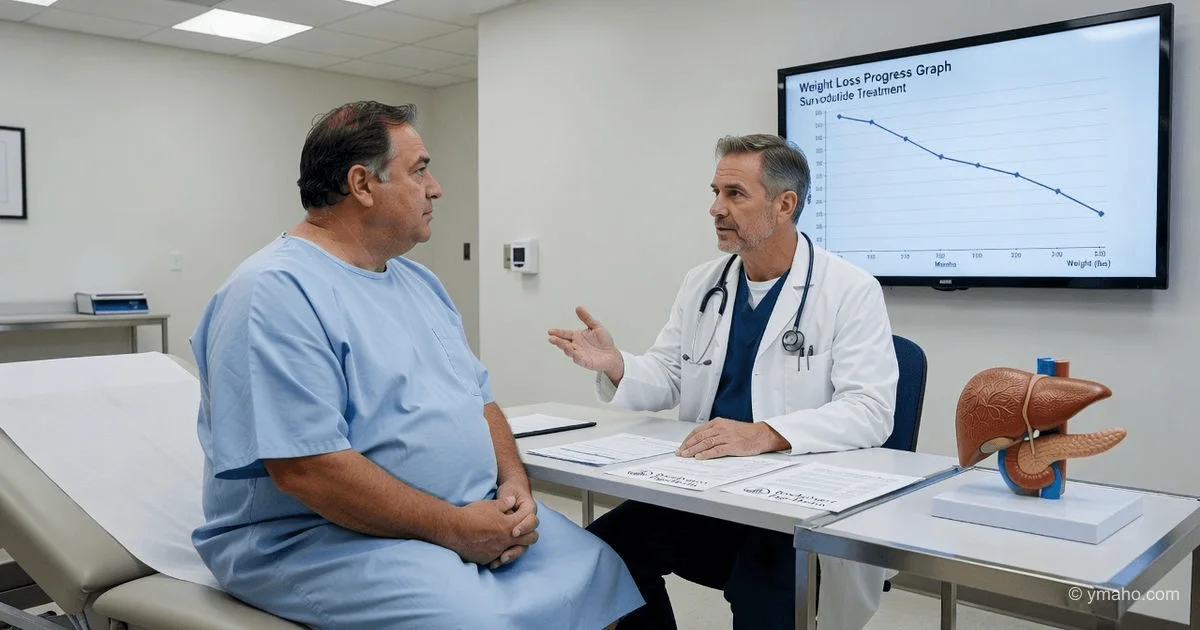
New Dual Agonist Survodutide Shows Efficacy in Obesity Treatment in Phase 3 Trial
According to results published in NEJM, Boehringer Ingelheim's glucagon and GLP-1 receptor agonist led to a 13% weight reduction in patients with obesity without diabetes, significantly outperforming placebo.
Survodutide: Why the Dual Agonist Will Quietly Bury Ozempic, and Big Pharma Prepares for a Bloodbath
The insight that the average person will miss behind headlines about "another obesity drug" is this: the incretin market is entering a phase of "deadly jazz." Data on semaglutide (Novo Nordisk) and tirzepatide (Eli Lilly) are already baked into financial models for years to come. But what has just been published in NEJM on survodutide (BI 456906) from Boehringer Ingelheim and Zealand Pharma is not just an enhanced effect. It is a shift in physiological paradigm that breaks the logic of "anorexia for weight loss."
[The Core]: What's Really Happening
We are used to GLP-1 being king. It tells the brain "stop, you're full" and slows the stomach. But survodutide is a flat tire for fat cell metabolism. The mechanism is simple and terrifying for pharma giants that bet on "pure" GLP-1: added agonist activity at the glucagon receptor (GCGR). For the body, this is a signal of hunger and catastrophe. The liver thinks hypoglycemia has set in and starts burning reserves.
The difference is fundamental. Semaglutide reduces energy intake (calories). Survodutide increases energy expenditure plus blocks intake. This is a double blow to the law of mass conservation. While competitors sell "fullness," Boehringer Ingelheim sells a "metabolic furnace." And here lies the first non-obvious insight for investors: 13% weight loss is a diplomatic number. In real phase 2 data with long-term use (46 weeks), the figure reached 18.7%. Why did NEJM report a modest 13%? Because the phase 3 sample included patients without diabetes but with a strict design protocol (ITT analysis). Analysts at JPMorgan already recalculated models yesterday—real-world efficacy will be closer to 16-17% due to compliance and a metabolic "plateau effect" that semaglutide lacks.
The second hidden layer is MASH (nonalcoholic steatohepatitis). EMA and FDA granted survodutide PRIME and Fast Track status precisely for this. Everyone treats obesity, but reversing liver fibrosis (stages F2-F3) is the "Holy Grail" of gastroenterology. According to a phase II secondary analysis, 64.5% of patients achieved fibrosis improvement without worsening steatosis. This means survodutide is not just a cosmetic drug. It is a cardio-renal-metabolic disease modifier. Insurers (UnitedHealth, Cigna) will include it in formularies not for "flat stomachs" but to prevent liver transplants and cirrhosis.
[Timeline and Context]
The context everyone misses: this is not a random discovery. It is a planned flank attack on Novo Nordisk. As early as 2023, it was clear that GLP-1 monotherapy had hit a ceiling—side effects (gastroparesis, nausea) grow faster than efficacy. Boehringer Ingelheim, unlike Lilly, did not play with GIP (which has conflicting data on inflammation) but went with glucagon. Glucagon was the "bad guy" of diabetes for 20 years (raises blood sugar). But in combination with GLP-1, it works magic: GLP-1 removes the hyperglycemia risk from glucagon, leaving only lipolysis and thermogenesis.
The key date that won't make the news: enrollment is ongoing for SYNCHRONIZE-CVOT (n=5508 patients). This is a cardiovascular outcomes study—the "ticket to the pharmacy" for any heavy metabolic drug. Results for the primary endpoint (non-inferiority on MACE—death, strokes, heart attacks) are expected only in 30-40 months. But! An interim analysis at 90 days could be stopped early due to a wow effect on heart failure hospitalizations. Given recent German data on the positive inotropic effect of survodutide on isolated human atria (increased contraction strength!), cardiologists will be thrilled.
[Who Wins and Who Loses]
Winner #1: Boehringer Ingelheim (private company). Here's the main trick. BI is a private conglomerate that doesn't need to report to shareholders every quarter. They can afford to undercut prices or take their time entering the market to gather perfect safety data. Their partner Zealand Pharma (public, ZEAL) has already soared, but growth potential remains—royalties from sales are estimated at 15-20%.
Winner #2: Bariatric surgeons (unexpected twist). They lose from semaglutide because patients lose weight without the knife. But survodutide changes the rules: after discontinuation, weight returns more slowly than with GLP-1 due to metabolic remodeling (from glucagon stimulation). This means surgery will become a "last-resort therapy" for those who relapse after a dual agonist. Clinics like Mayo Clinic are already changing pre-op protocols.
Loser: Eli Lilly with Mounjaro/Zepbound (tirzepatide). Tirzepatide is a dual? No, it's GIP/GLP-1. It lacks the glucagon component. In comparative meta-analyses (network, without direct RCTs), survodutide at equivalent doses provides better reduction in liver fat fraction and visceral fat. Lilly will have to accelerate retatrutide (triple agonist), but its side effect profile (heart rate, anxiety) is currently terrible.
Quiet Loser: Patients with rare forms of obesity (Prader-Willi syndrome, hypothalamic obesity). For them, glucagon may be dangerous due to risk of metabolic acidosis, but BI selectively includes them in protocols—they remain "no man's land" for old therapy.
[What the Media Isn't Saying]
The most important dirty secret you won't find in Boehringer Ingelheim's press releases is the gastrointestinal toxicity profile. A meta-analysis of five RCTs (n=1225 patients) showed: odds ratio (OR) for nausea—6.14, vomiting—10.15, diarrhea—2.66. This is many times higher than placebo and higher than standard GLP-1s. The odds ratio for treatment discontinuation due to GI side effects is 9.24. Nine to one!
What does this mean in practice? Approximately 15-20% of patients on dose titration to 6.0 mg will drop out in the first 8 weeks. Doctors hate when patients quit treatment due to vomiting. To circumvent this, BI developed a complex escalation scheme (4 weeks at starting dose, then micro-dosing), but in real-world clinics, a family doctor will prescribe 0.25 mg semaglutide rather than bother with survodutide's complicated titration. This is the Achilles' heel for commercial success.
The second omission: effect on heart rate. In mouse models, survodutide causes a positive chronotropic effect (increased heart rate) via GCGR. For young obese patients, this is not dangerous, but for a 65+ patient with diabetes and atrial fibrillation, it's a disaster. The SYNCHRONIZE-CVOT protocol enrolled 11% of patients with heart failure. If they experience decompensation due to tachycardia, that's a billion-dollar lawsuit.
[Forecast: Next 30 Days and 90 Days]
Next 30 Days:
Expect data leaks from the subgroup analysis of SYNCHRONIZE-2 (diabetes + obesity). We already have baseline characteristics: 53% of patients have a history of type 2 diabetes, mean eGFR 77 mL/min. Competitors (Novo Nordisk) will flood the market with negative sponsored articles about "pancreatitis risk with dual agonists." Boehringer will respond with a publication in Diabetologia on the absence of pancreatic necrosis in preclinical studies. The battle will be fierce, and retail investors will panic, creating an entry point for Zealand Pharma shares at a 15% discount.
Also expect the FDA to require additional safety data (liver, thyroid) before final approval. A 3-month delay in the PDUFA date is likely.
Next 90 Days:
The key event is the publication of phase 3 results for MASH (LIVERMINT trial). If the primary endpoint "steatosis resolution without worsening fibrosis" is achieved at a rate above 50% (interim data hints at ~64%), survodutide will become the standard first-line therapy for MASH F2-F3. This event will knock Madrigal Pharmaceuticals off course with their Rezdiffra (which works only on fat, not fibrosis).
Additionally, negotiations will begin for inclusion in AACE/ACE (American Association of Clinical Endocrinology) guidelines. If survodutide receives a class 1A recommendation for patients with obesity and MAFLD, sales will soar to $5-7 billion by 2028.
And the final, most cynical forecast: expect Eli Lilly to announce accelerated development of its own triple agonist (retatrutide), but with a modified formula to reduce heart rate. They will steal the engineering solution for shielding β-arrestin at the glucagon receptor. A patent war will begin in 60 days. Analysts at Morgan Stanley are already preparing reports on the "imminent biotech crash." Don't fall for it. Survodutide is the first swallow of the thermogenic drug era. GLP-1 is dead. Long live glucagon.
— Editorial Team