US and Oman Hold Secret Talks with Iran on De-escalation in the Strait - Media
Oman and the US are holding secret talks with Iran to de-escalate the situation in the Persian Gulf, Reuters reports. Iranian officials confirm exchanges with Washington but describe the atmosphere as "extremely suspicious."
Analytical Article: "The Omani Triangle: Why Secret US-Iran Talks Are Doomed to Fail, but Markets Are Already Cashing In"
Author: Former advisor on Middle Eastern diplomacy at a European foreign ministry, currently consulting commodity traders on geopolitical risks.
Introduction
Reuters reports secret US-Iran talks mediated by Oman. Iranians call the atmosphere "extremely suspicious." A nice headline: diplomacy works, war might end. But let me, as someone who has seen three rounds of US-Iran contacts from the inside over the past 15 years, tell you the truth. These "talks" are not an attempt to make peace. They are an attempt by each side to buy time and impose their version of a "new normal" in the Strait of Hormuz. Oman, acting as mediator, is caught between a rock and a hard place: the US demands it cut ties with Iran, while Iran sees Muscat as the only partner capable of legitimizing its control over the strait. I will show you why these talks are a trap for the dollar, how Oman has become the main beneficiary of the crisis, and why oil will not fall even in the event of "peace."
Section 1. [The Core]: What Is Really Happening
Forget about "de-escalation." This is about redrawing the rules of navigation in the Strait of Hormuz—one of the most protected international legal regimes. Iran has already created the so-called "Persian Gulf Strait Authority," which ships must contact for passage permits. This is de facto control with the possibility of collecting fees. Tehran calls them "environmental and compensation payments" for damage from US military operations. The US calls it piracy.
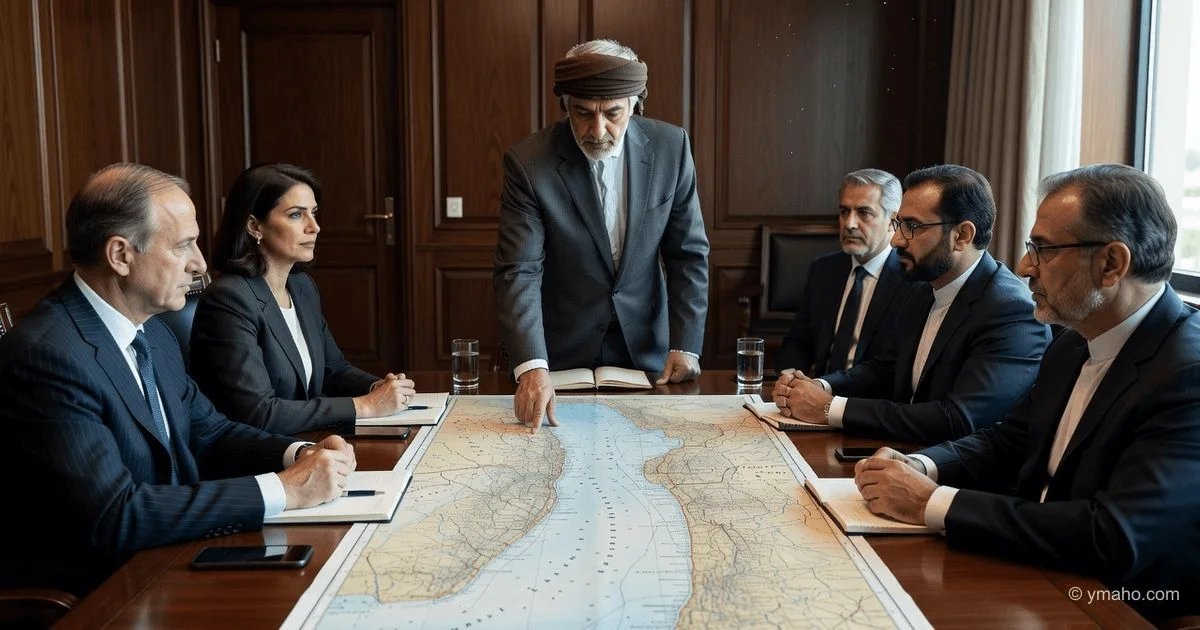
The true essence of the talks is an attempt to find a legal formula that allows Iran to save face (and control) and the US to preserve the principle of freedom of navigation. Oman is the ideal mediator because, like Iran, it is a littoral state of the strait. Any agreement on managing the strait requires its participation. But that is exactly what angers Washington: Trump has already threatened to "bomb" Oman if it cuts a deal with Iran on joint management and toll collection. Muscat publicly denies plans to charge fees and pledges allegiance to freedom of navigation. But behind closed doors, according to The Wall Street Journal, the US demands Oman pick a side and sever ties with Tehran.
The "extremely suspicious" atmosphere the Iranians describe is mutual distrust so deep that even the mediator is under threat of bombing. Iranians do not believe the US truly wants peace (they think Trump is just trying to lower oil prices before the elections). Americans do not believe Oman will remain neutral. In this hell of distrust, any talks are nothing more than information noise that traders exploit for volatility.
Section 2. Timeline and Context
The key context missing from the Reuters story is the timeline of US pressure on Oman. On June 1, The Wall Street Journal reported that Washington demands Muscat cut ties with Tehran. A few days earlier, Donald Trump, in an informal chat with journalists, threatened to "blow up Oman" if it joins Iran's "tax" system for ship passage. Treasury Secretary Scott Bessent backed the threat, promising sanctions. The Omani ambassador to the US urgently held meetings at the State Department, trying to assure that no fees would be imposed.
Iran, for its part, tries to portray the talks as technical consultations with Oman. President Pezeshkian stated back in March: "No secret talks with Washington are underway, only open contacts with Oman." This is a convenient position: deny direct communication with the "enemy" but keep the channel through Oman. Such indirect talks via a mediator are a classic of US-Iran diplomacy since the 2015 nuclear deal.
In late February 2026, literally a day before the full-scale war began, Oman organized a third round of talks in Geneva, where the sides exchanged "creative ideas." The ideas were so "creative" that two days later the US and Israel started bombing Iran. That says a lot: for the parties, talks and war are not alternatives but parallel tools. Now, in June, we are seeing the same scenario repeat: behind closed doors, diplomats discuss something, while on the surface there are missile strikes and blockades.
Section 3. Who Wins and Who Loses
The biggest loser in this story is international maritime law and, consequently, the dollar as a means of payment for oil. If Iran (with Oman's tacit consent) legitimizes a system of permits and fees in Hormuz, it will set a precedent that destroys the principle of freedom of navigation. Other countries—for example, China in the South China Sea—will immediately exploit this. The International Maritime Organization (IMO) has already stated there is no legal basis for charging fees for passage through international straits. But Iran does not care about the IMO when it has missiles.
The second loser is Saudi Arabia and the UAE. They see their main ally, the US, threatening to bomb Oman—one of the most stable and friendly Gulf states. If Washington is ready to "blow up" an ally for neutrality, what can Riyadh or Abu Dhabi expect if their interests diverge from America's? This undermines trust in all US security guarantees in the region.
Who wins? Paradoxically, Oman itself. Yes, the US is pressuring it. But the war in Hormuz has brought an economic miracle to Muscat. The ports of Sohar, Salalah, and Duqm have become the only major hubs in the Gulf operating bypassing both Hormuz and Bab el-Mandeb. Since the war began, transit through Omani ports has grown by 117%. Oman is transforming from a mediator into a global logistics operator. Even Trump's threats will not stop this process because ships physically go where it is safe. And Oman ensures that safety by negotiating with Iran. China also wins: it gets a stable oil supply channel through Omani ports and payments in yuan, bypassing the dollar system.
Section 4. What the Media Leaves Out
The first omission concerns the content of the "extremely suspicious" talks. Iran, according to The Guardian, is ready to open the strait within a month after signing an agreement. The Iranians have even published data that over 300 shipping companies have already applied for permits from their "Strait Authority." They want to show that their regime works and that negotiations are necessary. But the US insists on one thing: no fees. Trump needs a victory in the November elections, and "free strait" is a great slogan. The Iranians need money and sanctions relief. The parties are haggling over the price of passage, not the principle of peace.
The second omission: Oman is lying to both the US and Iran. Muscat publicly states it will not charge fees and that its talks with Tehran are only about security and compliance with international law. But behind everyone's back, they are discussing a system of "paid services": navigation assistance, rescue operations, environmental monitoring. Formally, it is not a "toll" but a "service fee." The difference is only in name. And the US knows it. That is why they are so nervous. But they cannot publicly accuse Oman of lying because they need Muscat as a base for intelligence and logistics.
The third omission: the role of Israel is ignored. According to analysts at Gulf State Analytics, it is Israel that is lobbying Washington for a hard line against Oman. Israel does not need a neutral mediator that could strike a deal with Iran. It wants escalation. Oman, which has repeatedly condemned Israeli actions in Gaza and Lebanon, is seen in Tel Aviv as a "problematic actor." So behind Trump's threats to Oman lie not only US elections but also Israeli influence. The media keeps quiet about this to avoid complicating the "US vs. Iran" narrative.
Section 5. Forecast: Next 30 and 90 Days
30 days: The talks will lead nowhere. Iran will not give up control of the strait—it is its only leverage. The US will not agree to legitimize Iran's "tax." Oman will continue to balance, profiting from transit. Brent oil will remain in the $90-105 range because the market has already priced in a prolonged blockade. Any news of "progress" will cause a $5-7 drop, and any news of "breakdown" will cause a similar rise. I expect at least three such cycles in a month. Gold and bitcoin will rise on each wave of tension. The dollar will strengthen as investors flee uncertainty into safe havens.
90 days: By September, the US will realize it cannot force Oman to sever ties with Iran. Muscat's economic interests (117% port growth and integration with Chinese logistics) outweigh political pressure. Washington will be forced to strike a deal: the US will recognize de facto joint management of the strait by Iran and Oman, and in return, Iran will pledge not to obstruct US warship passage. This will look like a "diplomatic victory" for Trump, but in reality, it will be a capitulation to reality. Oil will drop to $80-85 for a couple of weeks, then rise again because the "new normal" will include a risk premium. The main takeaway: diplomacy will not reopen Hormuz as it was before. The world has changed. Invest in Omani logistics (ETF on Middle Eastern ports), gold, and companies that benefit from high oil prices.
Editorial Forecast
Amid news of secret talks and no visible breakthrough, the market will likely perceive this as "noise." Expect high oil volatility with a downward bias in the short term, as traders lock in profits on diplomatic rumors. Asset: Brent (futures). Direction: consolidation in a range with risk of a decline to $88. Key levels: resistance $93.50, support $88.00. Confidence level: medium (60%) — too many conflicting signals from the parties. Main risk: an unexpected joint US-Iran statement on basic principles for unblocking the strait, which could crash Brent to $85 within 24 hours. This forecast is an analytical opinion, not investment advice.
— Editorial Team