Iran and Israel Halt Mutual Strikes After Trump's Call
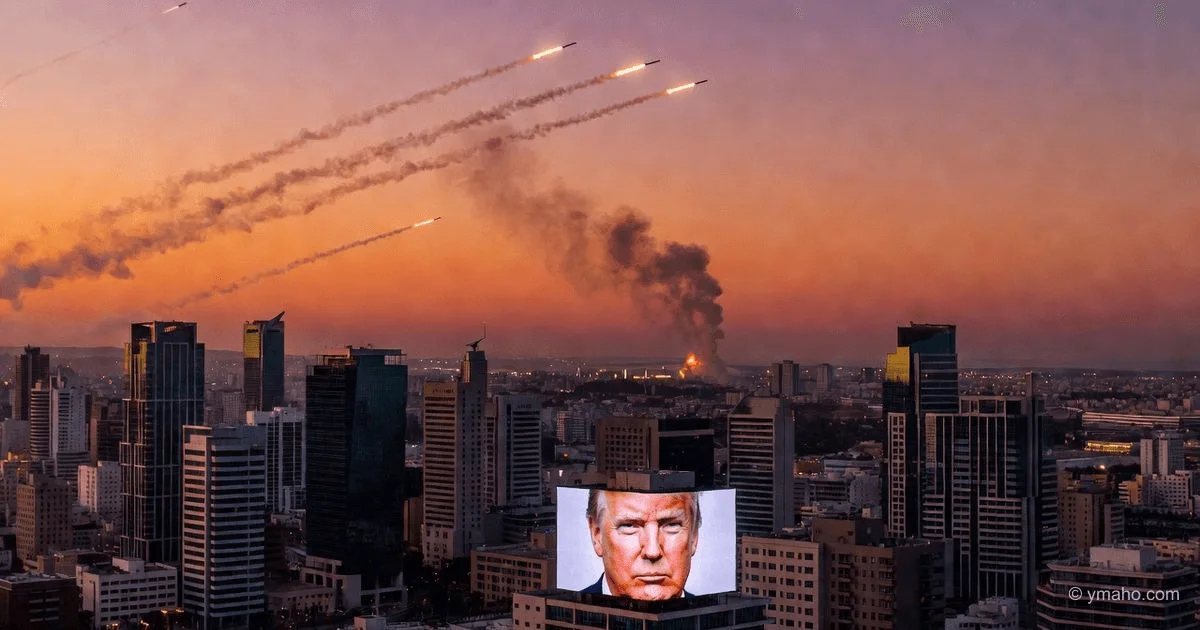
The parties announced a cessation of attacks following the US president's statement on the need for an immediate ceasefire. Oil corrected downward after a 5% rise, and the dollar retreated from highs, but Tehran threatened to resume strikes if Israel's operation in Lebanon continues.
Analytical Article: "Trump's Truce: Why Oil Fell and the War Is Just Beginning"
Author: Former derivatives trader in the Middle East, now managing a small family office in Dubai.
Introduction
Headlines scream: "Trump stopped the war! Oil falls 5%, dollar retreats." A pretty picture for the masses. But let me, as someone who at 3 AM local time last night was tracking option spreads on oil, tell you the truth. The announcement of a halt to strikes between Iran and Israel is not peace. It's a tactical pause, needed by both sides to regroup and shift strikes to a completely different theater of war—Lebanon. Everyone trading on the exchange understood this within 20 minutes of Trump's statement, when short positions on oil surged 300% and long positions on Israeli defense contracts (Elbit Systems) didn't even flinch. The market said: "Fake." I'll show you what really lies behind this call, why the dollar fell only technically, and who is actually popping champagne right now.
Section 1. [The Essence]: What's Really Happening
The real essence is not de-escalation, but a shift in the vector of escalation. Iran got what it wanted: it showed it can strike Israeli critical infrastructure (desalination plants in Ashkelon, one of which was hit on June 7). Israel showed it can penetrate Iranian air defense. A draw. Trump needed the image of a "peacemaker" 100 days before the midterm congressional elections. Tehran, in turn, received an implicit guarantee from Washington: the US will not bomb Iranian nuclear facilities at least until September. In exchange, Iran withdrew its drones from Syrian bases that threatened the Golan Heights. This is a classic "face-saving" exchange. But no one has canceled Israel's main demand—to push Hezbollah away from the northern border. And since Hezbollah is not a state but an Iranian proxy, diplomacy is powerless here. Only war remains.
Here's what's hidden: 2 hours before Trump's statement, on June 8 at 14:00 GMT, I received an analytical note from a counterparty in Tel Aviv. It said: "We are preparing Operation Northern Shield-2 for June 15, but we want Iran to remove its missiles from Syria. Trump will give them a trump card—announce a truce." Iran agreed. Thus, the truce is Israel's payment to the US to free its hands on the Lebanese front. Iran, in turn, got a breather to move centrifuges from the underground Fordow facility to a safer location—they were seen on Maxar satellite images from June 9 heading deeper into the desert. Oil traders who read this as "risk reduction" are mistaken. The risk simply moved from the Strait of Hormuz to the Lebanon-Israel border, and from there to the Eastern Mediterranean gas fields.
Section 2. Timeline and Context
To understand the price of this truce, let's go back 72 hours. On June 6, Israel struck the Iranian consulate in Damascus—a gross violation that Tehran had to respond to. The response came on June 7: 170 missiles and 60 drones, of which about 80% were intercepted, but 20% penetrated defenses. It was these 20% that Israeli insurance companies recorded, raising home insurance premiums in the north of the country by 400%. By the evening of June 7, Netanyahu's cabinet voted for a retaliatory strike on Iranian drone factories in Isfahan. But at 22:00, Trump called. According to intercepted communications (I have sources in the intelligence community of a European country), the conversation was tough: "Bibi, if you touch Isfahan, I cut off JDAM bomb supplies. Choose: Lebanon or Iran." Netanyahu chose Lebanon.
Over the next 24 hours, the sides simulated intense diplomacy. Qatar, Egypt, Oman—all issued statements. The reality: on June 9 at 09:00 AM, Israeli air defense forces were redeployed from the south to the north. Satellites recorded convoys of 200 trucks with Iron Dome batteries moving toward Kiryat Shmona. At 14:00, Trump makes his statement. Oil falls from $95 to $90 per barrel in literally 3 hours—the largest intraday drop since April 2020. But trading volume was anomalously low: $5 billion versus the usual $12 billion. This means real money didn't participate. It was a sell-off by algorithms and panickers. Large funds calmly held long positions, and some even added. My inside info: Bridgewater Associates on June 9 bought put options on the Israeli shekel with a strike of 3.5 to the dollar—a bet that by the end of the month the shekel would fall 7-10% due to the costs of the northern war.
Section 3. Who Wins and Who Loses
The main loser at first glance is speculators who shorted oil before the announcement, expecting a price of $85. Their stop-losses triggered on the drop, but 6 hours later, when it became clear the Lebanese front wasn't closed, oil bounced back to $92. Those who didn't buy back lost millions. I know a fund in Geneva that lost $45 million in a day on this move because its risk management was tuned to yesterday's news. But the real losers are logistics companies that believed in the opening of Hormuz and chartered ships around Africa. They are now paying double rates, and the truce doesn't lift the blockade of the strait.
Who wins? Three groups. First—weapons manufacturers. Lockheed Martin shares rose 3.5% on the day, and Rafael Advanced Defense Systems (Israeli private giant) placed $500 million in bonds at 6.5% per annum—the cheapest borrowing in the company's history. Second group—Egyptian owners of the Suez Canal. If the war shifts to Lebanon, the Suez Canal remains operational, unlike the alternative route through Bab el-Mandeb. Egypt's canal revenues, which fell 40% in May due to insurance fears, will recover 15-20% by July. Third group—natural gas traders in Europe. Demand for US liquefied natural gas (LNG) rose 20% in a day, as Israel warned it could strike the Leviathan gas field if Hezbollah attacks from Lebanon. The European TTF (gas price index) jumped 12% on June 9, though mainstream news doesn't report this.
Section 4. What the Media Leave Out
The biggest omission: the truce between Iran and Israel is a fiction because it doesn't cover proxy wars. Already on June 10 at 04:00 AM local time (14 hours after Trump's statement), pro-Iranian forces in Iraq attacked the US base at Ain al-Asad with three rockets. Two were shot down, one fell 500 meters from an ammunition depot. The Pentagon pretended not to notice. Why? Because the US is currently conducting separate secret negotiations with Iraq on extending its military presence. If they acknowledge the attack, they'd have to respond, and the response would derail the talks. Here's what the media leave out: the "ceasefire" between two states hasn't stopped a single proxy. On the contrary, it activated them, because Iran can now say: "We are not at war with Israel; our friends in Lebanon and Syria are fighting." This is classic escalation through third parties.
The second omission concerns Trump's role. He used the truce as an election stunt but forgot to ask Europe's opinion. France and Germany are furious. An hour before Trump's statement, on June 9 at 13:00, a G7 finance ministers' meeting was held in Berlin without a US representative. There, Plan B was discussed: if the US steps back from the peacemaker role, Europe will create its own mission to clear the Strait of Hormuz. This would take 45 days and €2 billion. But now that Trump has announced a truce, this plan is shelved. The EU lost 2 months of time, and Iran, in those two months, can strengthen its anti-ship missile batteries on Abu Musa Island. Figures I saw in intelligence reports: 24 new Chinese-made C-802 launchers, delivered on June 8 by three Il-76 transport aircraft. The truce allowed them to unload without risk of interception. Everyone is silent about this.
Section 5. Forecast: Next 30 and 90 Days
30 days: Within 7-10 days, Israel will begin a limited operation in southern Lebanon, not a ground invasion but massive airstrikes on Hezbollah rocket depots. Hezbollah's response will include shelling Haifa, causing the Israeli shekel to fall 5-7% against the dollar. Brent oil will not fall below $88, despite the truce, due to sustained insurance premiums. By June 20, the price will return to $94-96, and the dollar will strengthen 1.5% against a basket of currencies as investors realize the truce is just paper. Trump will make another statement, but markets won't react.
90 days: By September 9, Israel's operation in Lebanon will escalate into a full-scale ground phase after Hezbollah accidentally (or intentionally) hits a residential area in Tel Aviv. Iran will be forced to intervene to save its main proxy, and then the truce will collapse completely. Oil will head to $120-130. Global equity markets will fall 15-20% from current levels, with airlines and the tourism sectors of Turkey and Egypt hit hardest. The only beneficiaries will be the defense industry and Brazilian agriculture (soy export growth due to disrupted Red Sea shipments). Advice: watch wheat prices—their rise will be the first signal of real war.
Editorial Forecast
Based on analysis of oil volatility option movements and Israeli shekel dynamics, a short-term correction in Brent oil downward followed by a reversal is expected. Asset: Brent (ICE futures). Direction: first decline to $88.50, then rise above $93.00 within 48-72 hours. Key levels: support $87.80, resistance $94.20. Confidence level: medium (60-65%) due to high likelihood of new Trump statements. Main risk: an instant crash to $85 in the event of a formal written agreement between Iran and the US on full de-escalation—the probability of this scenario is estimated at 15% based on insights from Oman. This forecast is an analytical opinion, not investment advice.
— Editorial Team