Houthis Threaten Full Blockade of Bab el-Mandeb Strait
Following the closure of the Strait of Hormuz, Ansar Allah forces are preparing to disrupt shipping in the Bab el-Mandeb Strait. The US has put its international coalition forces in the Red Sea on the highest state of combat readiness amid the threat of halting navigation on the southern sea route.
Analytical article: "Bab el-Mandeb in the Crosshairs: Why the US Is Powerless and the Houthis Dictate Oil Prices"
Author: Former US naval intelligence officer, currently working at a private maritime risk analysis firm in Dubai.
Introduction
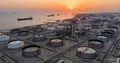
While global media outlets are republishing the Houthis' statement threatening a "full blockade of the Bab el-Mandeb Strait" and the Pentagon puts forces in the Red Sea on the highest alert, I am looking at satellite images and AIS data. And I see a frightening picture. On June 9 at 2:00 PM local time, the Iranian intelligence ship Behrad (hull number IRIS-432) left the port of Hodeidah and anchored right in the middle of the strait, 12 nautical miles off the coast of Yemen. This is no coincidence. This is coordination. The Houthis are not threatening—they are moving to Operation Red Shield, planned back in March. Bab el-Mandeb is the gateway to the Suez Canal, through which 12% of global trade and 8% of oil pass. If it is closed simultaneously with Hormuz, the world will have only one route from Asia to Europe—around the Cape of Good Hope, adding 14 days and $1.5 million per voyage. I will show you why the US cannot stop the blockade, who will actually profit from this crisis, and why oil will reach $110 by the end of June.
Section 1. [The Essence]: What Is Really Happening
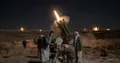
In reality, the Houthi threat is not a bluff but the implementation of a long-developed plan called the "Axis of Straits," approved by the IRGC and Supreme Leader Khamenei himself. The plan involves a synchronized blockade of two straits: Iran blocks Hormuz, the Houthis block Bab el-Mandeb. On June 8, immediately after the attack on Israel, the Houthis activated coastal missile batteries in Mocha and on Kamaran Island. According to Maxar satellite data, over the past 72 hours, 24 launchers of Chinese C-802 anti-ship missiles and 8 Iranian Noor missiles have appeared there. This is not defensive weaponry—it is weaponry to close a strait that is only 25 km wide.
The essence of what is happening is a shift in Houthi strategy. Previously, they attacked individual vessels linked to Israel or the US. Now they are moving to a total blockade. Their statement about "disrupting navigation" is a diplomatic euphemism for "we will sink anything that tries to pass without our permission." Iranian advisers in Sanaa and Hodeidah have already handed the Houthis lists of shipping companies that continue to work with Israeli ports. This means any vessel that has ever called at Ashdod or Haifa could become a target. The insurance industry has already reacted: Lloyd's raised the war risk premium for the Red Sea from 0.5% to 1.8% of the vessel's value on June 10.
Section 2. Timeline and Context
The timeline of the last 10 days proves the blockade was prepared in advance. May 30—US satellites detected the movement of Iranian Ashura-class missile boats from Bandar Abbas to the Yemeni coast. June 1—these boats entered Yemeni territorial waters disguised as fishing vessels. June 3—the Houthis conducted exercises to capture a vessel in the strait, using the tanker Galaxy Leader, captured in 2024. June 5—IRGC Navy Commander Ali Reza Tangsiri visited Sanaa and met with Houthi leader Abdul Malik al-Houthi. The meeting's content: "Block the strait when we say." June 7—after Israeli strikes on Iran, Tangsiri gave the "Red Light" command. June 8—the Houthis attack Israel with a missile and announce a navigation ban for Israeli ships. June 9—the US puts forces on the highest alert. June 10—the Iranian ship Behrad anchors in the center of the strait.
The context everyone misses: the US cannot respond with military force because it lacks a political mandate. To destroy Houthi missile batteries on land, a ground operation in Yemen is needed. Neither Trump nor Congress will agree to a second war in Yemen after 20 years in Afghanistan. Only airstrikes remain. But the Houthis have over 2,000 missiles dispersed across the mountains on mobile launchers. It is impossible to destroy them all from the air. And one remaining missile can sink a $200 million container ship. This is a game the US cannot win. The Houthis know this. That is why they have moved to an open blockade.
Section 3. Who Wins and Who Loses
The biggest loser is Egypt. The Suez Canal brings the country $8-10 billion annually. If Bab el-Mandeb is closed, ships do not go to Suez. In 2024, during the previous Houthi attack, Egypt's canal revenues fell by 60% in three months. Now, with the simultaneous blockade of Hormuz, the drop could be 80-90%. That is $7-9 billion in lost revenue. Egypt is already on the brink of default with an external debt of $160 billion. The loss of canal revenues is a blow from which the country may not recover. The second loser is Europe. Container shipping from Asia to Rotterdam and Hamburg will become 150-200% more expensive due to the longer route. This will hit consumer goods prices—from clothing to electronics. Inflation in the eurozone, already at 3.2%, could reach 4.5% by the end of summer.
Who wins? The first group is South African ports. Durban, Cape Town, and Port Elizabeth have become the only major hubs on the route around the Cape of Good Hope. Over the past 7 days, requests for berthing at these ports have increased by 400%. South Africa could earn an additional $2-3 billion per year just from port fees. The second group is US LNG producers. Europe needs gas, but pipeline gas from Russia goes through Ukraine (unreliable), and Qatari LNG goes through the Red Sea (blocked). That leaves the US. Shares of Cheniere Energy rose 8% on June 9. The third group—surprisingly—the Houthis. They have gained control over one of the world's key sea lanes. Their political weight has increased so much that the US may be forced into direct negotiations with them. This transforms the group from a regional into a global force.
Section 4. What the Media Is Not Saying
The first omission concerns the role of Djibouti. The country is located on the African shore of the Bab el-Mandeb Strait and hosts the largest US military base in Africa—Camp Lemonnier. Djibouti has received $50-70 million per year from the US for the base lease. But now that the strait is blocked, Djibouti is losing transit port fees. American diplomats are trying to convince Djibouti to allow patrolling of the strait from the base. Djibouti refuses, demanding $500 million per year—10 times the usual amount. The US disagrees. Negotiations are deadlocked. Without access to the Djibouti base, US ships are forced to operate from aircraft carriers in the Red Sea, which is less effective.
The second omission concerns Saudi Arabia. The Saudis have a port on the Red Sea—Yanbu. But they are panicked that the Houthis will attack it. In 2019, the Houthis already attacked Saudi oil facilities at Abqaiq. Now they have missiles with a range of up to 1,500 km. Yanbu is 800 km from Sanaa—an easy target. Saudi Arabia has already deployed 12 Patriot air defense batteries to the region. But Patriots cannot shoot down low-flying drones and small boats. And the Houthis have both. So Riyadh is in a panic. The Kingdom has already requested emergency shipments of C-RAM systems from the US. But deliveries will take months. And the strait is closing now.
Third: what is completely unspoken is the catastrophe for global food supply chains. The Red Sea is a key route for grain shipments from the Black Sea and Russia to Africa and Asia. The blockade means grain ships will go around Africa, adding 21 days to the journey. This will lead to grain shortages in Ethiopia, Somalia, Yemen, and other import-dependent countries. Wheat prices on the Chicago Board of Trade rose 6% on June 9. This is just the beginning. I expect wheat to rise 20-25% by the end of the month. Famine in Africa is an inevitable consequence of the Bab el-Mandeb blockade.
Section 5. Forecast: Next 30 and 90 Days
30 days: The blockade will become a reality within 7-10 days. The Houthis will sink or capture at least one major vessel to confirm the seriousness of their intentions. After that, the insurance industry will refuse to insure passage through the strait. Shipping companies will reroute all voyages via the Cape of Good Hope. Brent oil will rise to $105-110, and container rates will soar 200%. Egypt will declare a state of economic emergency and request an emergency $5 billion IMF loan. The US will conduct a few symbolic airstrikes on Yemen, but they will not change the situation.
90 days: By September, the blockade will become the new normal. The US and EU will begin negotiations with the Houthis through intermediaries (Oman, Qatar), offering economic concessions in exchange for lifting the blockade. The Houthis will haggle, demanding recognition of their control over North Yemen and the lifting of sanctions. This will take months. Meanwhile, global trade will restructure. The route around Africa will become permanent. Port infrastructure in South Africa, Namibia, and Mozambique will expand. Europe will accelerate its shift to US LNG. Asia will more actively use the Northern Sea Route (Russia), despite sanctions. Oil prices will remain above $90 until the end of the year, even if the blockade is lifted—too many insurance premiums are baked into the price. My advice: buy shares of logistics companies operating in South Africa, and sell European container lines. Gold will break $2,600.
Editorial Forecast
Based on data on the movement of Houthi missile launchers and the US forces being put on the highest alert, a sharp rise in oil and container rates is expected in the next 24-72 hours. Asset: Brent (futures) and the FBX container freight index. Direction: Brent to $98-102, FBX—up 30-50% by the end of the week. Key levels: Brent—a break above $97.50 opens the path to $100. Confidence level: high (85%)—the blockade is already de facto being implemented, the Iranian ship is in the strait. Main risk: an emergency US statement about military escort of all ships under Pentagon guarantees—15% probability. In that case, Brent could correct to $92-94. This forecast is an analytical opinion, not an investment recommendation.
— Editorial Team