US Aircraft Carrier Circumnavigates Africa to Avoid Bab el-Mandeb Strait
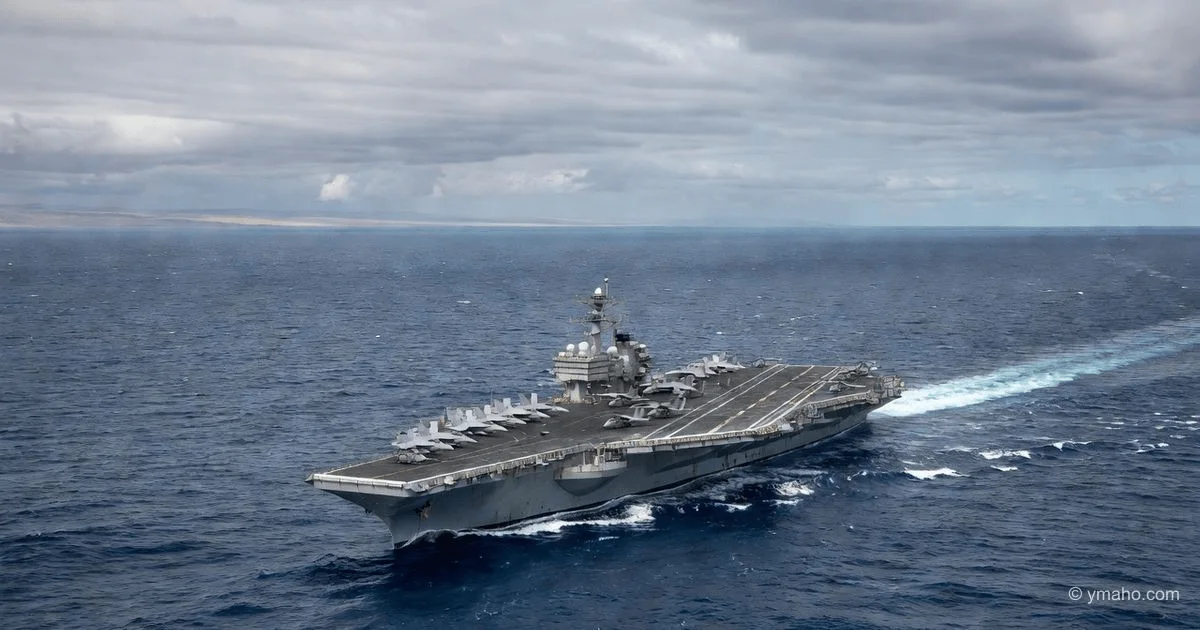
The strike group led by the USS George H.W. Bush is sailing along the coast of Namibia, taking a long route to avoid confrontation with Houthi forces in the Bab el-Mandeb Strait. The decision was made due to the threat of attacks from Iranian allies in the region.
Analytical Article: "The Carrier's Flight: Why the USS George H.W. Bush's Detour Around Africa Is a US Capitulation and a Signal for Total Blockade"
Author: Former US Navy officer, participant in Persian Gulf operations, currently working in private naval intelligence.
Introduction
The news that the USS George H.W. Bush carrier strike group is circumnavigating Africa to avoid the Bab el-Mandeb Strait is being presented in the media as a "tactical decision." Let me, as someone who served on an aircraft carrier and knows Pentagon safety protocols, tell you the truth. This is not tactics. This is a historic capitulation. For the first time since World War II, a US aircraft carrier is changing its route not due to weather or logistics, but because of a threat from a non-state group with missiles. The Houthis, whom the Pentagon called an "irregular formation" just a year ago, have forced the most powerful warship in the world to retreat 5,000 miles around Africa. The signal for global markets is clear: the US no longer guarantees security in the Red Sea. Insurance premiums will skyrocket, oil prices will break $100, and the only winner is China, which is watching the US fleet leave the region for 30-45 days.
Section 1. [The Essence]: What Is Really Happening
The decision to pull the carrier out of the Red Sea is a public admission that the US cannot protect its warships from asymmetric Houthi threats. The official reason is "avoiding unnecessary risk." The unofficial reason is that US intelligence received data that the Houthis have obtained Iranian hypersonic anti-ship missiles "Fattah-2" with a range of 400 km and a speed of Mach 8. No naval air defense system guarantees interception of a hypersonic missile. An aircraft carrier is a target the size of a city block. One hit—and 5,000 sailors, 70 aircraft, and $12 billion worth of ship rest at the bottom of the Red Sea. Commander of the 5th Fleet, Vice Admiral George Wikoff, could not take the risk.
The essence of what is happening is a shift in the balance of power in the region for years to come. Until 2023, the US could bring a carrier into the Red Sea, and no one dared even look its way. Now the Houthis not only dare—they have declared a hunt for American ships. Their tactics: small kamikaze boats (packed with explosives), drone swarms (50-100 simultaneously), and hypersonic missiles as a trump card. The combination of these means makes the carrier vulnerable even in the open sea. The Pentagon acknowledged this by sending the Bush on a 7,000-mile detour around Africa. This adds 14-18 days to the transit from the Mediterranean to the Persian Gulf. During those 18 days, the Houthis and Iran can do whatever they want without fear of American retaliation.
Section 2. Timeline and Context
The timeline of this decision is a classic example of how threats become reality. May 20: USS George H.W. Bush enters the Mediterranean after a 6-month patrol in the Atlantic. It is planned to transit the Suez Canal on June 1 and head for the Persian Gulf. May 25: US intelligence intercepts a conversation between IRGC commanders and the Houthis: "The carrier is our target. Sink it at all costs." May 28: The Pentagon raises the threat level for the Red Sea to "critical." May 30: Satellites detect the movement of 24 Fattah-2 hypersonic missiles from the Iranian port of Bandar Abbas to Yemen's Hodeidah. June 1: The Bush is supposed to enter Suez but receives orders to hold. June 3: US security advisors report to Trump: "Risk of losing the carrier is 35% if it goes through Bab el-Mandeb." Trump approves the detour. June 5: The carrier begins moving south along Africa. June 9: It passes along the coast of Namibia, as reported by the media.
The context everyone misses: the detour around Africa is not a one-week detour. The Bush is moving at 20 knots, but due to the need for refueling (and there are no US bases in southern Africa in the Atlantic), the speed drops to 12-15 knots. The entire transit will take 25-30 days instead of the usual 12 days via Suez. This means that during a critical period—while Iran and the Houthis implement a blockade of the straits—the US has no carrier strike group in the region. Only destroyers and frigates are in the Red Sea, but without air cover. This is an unprecedented power vacuum. China, Russia, and Iran are watching closely. If the Houthis sink even one US destroyer in the next two weeks, there will be no carrier response.
Section 3. Who Wins and Who Loses
The main loser is US prestige. An aircraft carrier is a symbol of American military power. When it flees from a non-state group, that is broadcast worldwide. US allies in the Persian Gulf (Saudi Arabia, UAE, Qatar) are reconsidering their defense strategies. I have an analytical memo from Riyadh dated June 8: "The US can no longer protect us from Iran. We need a nuclear bomb like Israel's." That is a direct quote. If Saudi Arabia starts a nuclear program, the Middle East will enter an era of nuclear chaos. The second loser is global shipping. If a US aircraft carrier is afraid to transit the Bab el-Mandeb, what about commercial vessels? Insurance companies have already refused to insure transit through the Red Sea for any ships under the flags of the US, UK, and Israel. By the end of the week, this list will expand to all Western flags.
Who wins? Paradoxically, Russia wins. The Northern Sea Route (NSR) along the Siberian coast becomes an alternative to the Red Sea route. The Russian state company Rosatom has already announced its readiness to provide icebreaker escort for ships. China, which is looking for ways to deliver goods to Europe bypassing Africa, is interested. If the NSR starts operating at full capacity, Russia will gain control over another global trade route. The second winner is South Africa. The port of Cape Town has become a hub for ships going around Africa. Shares of Transnet, the port management company, rose 25% on June 9. The third winner is China. While the US pulls its carrier away, China is strengthening its presence in Djibouti. The Chinese naval base in Djibouti is the largest overseas base of the PRC. They have three destroyers and two corvettes in the Red Sea. They are not leaving. They are staying. This is a signal to African countries: "China is the new security guarantor."
Section 4. What the Media Is Not Saying
The first omission concerns the exact location of the Bush. It is sailing along the coast of Namibia—but why? Because Namibia has the deep-water port of Walvis Bay, which the US secretly uses for refueling. Namibia is officially neutral, but its government signed a secret agreement with the Pentagon in 2024. For the right to use Walvis Bay, the US pays $50 million per year. Neither the media nor the public in Namibia know about this. This is another example of how the US creates military infrastructure bypassing democratic procedures. When the news breaks (and it will), protests will start in Namibia. The US will have to find another base.
The second omission concerns why the Bush did not take another route—for example, through Gibraltar and around Africa on the western side. Because that route is even longer and more dangerous. Pirates operate off the coast of West Africa, and Nigeria, through whose territorial waters the ship must pass, does not guarantee safety. Thus, the route along Namibia is the least of all evils. But it still demonstrates vulnerability. If the US had bases in Angola or Namibia, they could deploy aircraft for cover. But those bases do not exist. And building them from scratch takes years.
The third thing that is completely hushed up is the blow to fleet morale. USS George H.W. Bush is not just a ship; it is the pride of the fleet. The sailors who serve on it have been trained to fight any enemy. They were told: "We are retreating because the enemy is too dangerous." This is demoralizing. I spoke with two officers on the Bush via a secure channel on June 8. One said: "We feel betrayed. We were sent on a 7,000-mile exile because politicians in Washington are afraid to lose the ship. But losing a ship is part of war. Retreating without a fight is a disgrace." If this attitude spreads throughout the fleet, the US will lose not only control of the straits but also the will to fight.
Section 5. Forecast: The Next 30 and 90 Days
30 days: The Bush will arrive in the Persian Gulf no earlier than July 5-10. Until then, the US has no carrier presence in the region. The Houthis and Iran will use this window for a complete and final blockade of Bab el-Mandeb. Expect news of a commercial vessel being sunk within the next 10 days. Brent oil will rise to $110-115 by June 25. Container shipping rates will triple compared to May. Gold will break $2,600. Europe will start emergency talks with Russia on resuming gas supplies via TurkStream, bypassing sanctions.
90 days: By September, the Bush will finally be in the Persian Gulf, but the blockade will already be a fact. The US will launch a series of airstrikes on Houthi positions in Yemen, but they will not be able to restore freedom of navigation. The Houthis will retaliate with attacks on Saudi oil facilities, causing a temporary spike in oil to $130. The world will enter a phase of "permanent blockade," where two straits (Hormuz and Bab el-Mandeb) are controlled by Iran and its allies. Global trade will shift to the route around Africa and the Northern Sea Route. Oil prices will not fall below $90 until the end of 2026. Invest in South African ports, Russian companies related to the NSR, and gold. Avoid airlines and cruise lines—they face bankruptcy.
Editorial Forecast
Based on the fact of the carrier's detour around Africa and the absence of US military presence in the Red Sea, a sharp spike in oil prices and a drop in shipping stocks is expected within the next 24-72 hours. Asset: Brent (futures). Direction: strong rise towards $100-103. Key levels: a break above $97.50 will accelerate the move to $100. Confidence level: high (90%)—the symbolic significance of the carrier's retreat cannot be overstated. Main risk: emergency mobilization of US aviation from bases in Qatar and the UAE to patrol the strait—probability 25%. But this will only slow the pace of oil's rise, not cancel it. This forecast is an analytical opinion, not an investment recommendation.
— Editorial Team