Russian Central Bank to Raise Minimum Capital for Banks from 2028
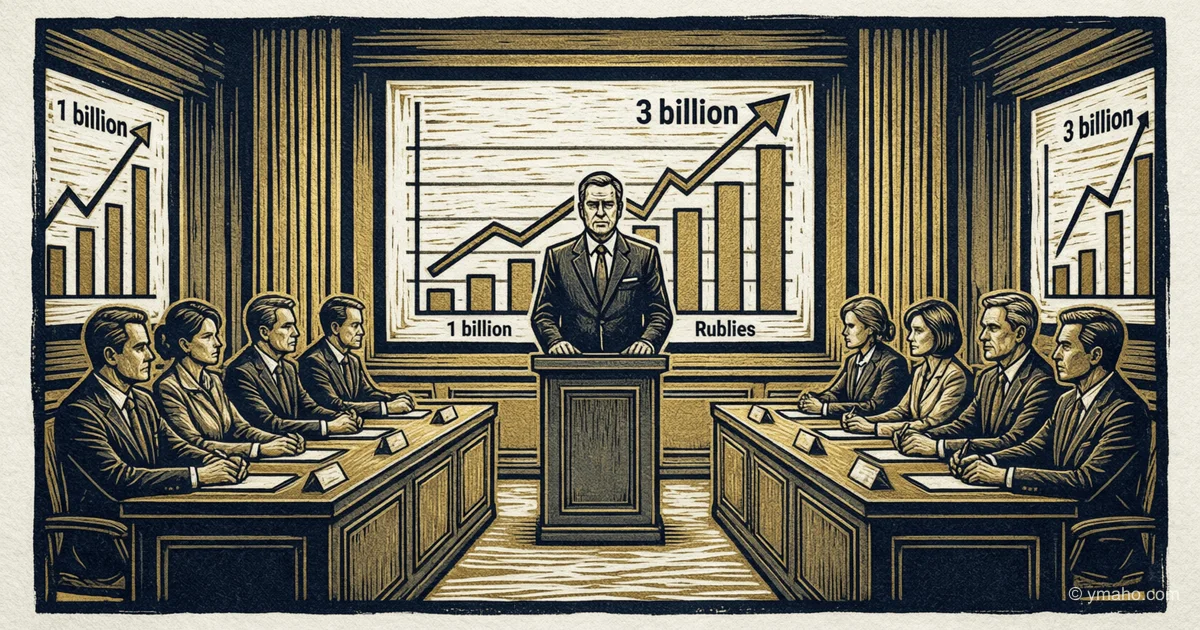
Bank of Russia Governor Elvira Nabiullina announced an increase in the minimum capital for banks with a universal license from 1 billion to 3 billion rubles. The transition period is scheduled for 2028-2030, which will lead to further consolidation of the banking sector.
Banks under pressure: why the Central Bank is tripling capital requirements — and who is really at risk
Elvira Nabiullina has officially announced what has been whispered behind closed doors for the past six months: the minimum capital for banks with a universal license will rise from 1 billion to 3 billion rubles by 2030, and for banks with a basic license — from 300 million to 1 billion rubles. The transition period is 2028–2030.
The official line: "enhancing the stability of the banking system." But behind this lies a far more cynical and precise calculation. Let's break down what is really happening, who will benefit from this "purge," and who will lose their license or be forced to sell for a pittance.
[The Gist]: what is really happening
The Central Bank does not hide the main point — the increase is roughly aligned with the inflation accumulated since 2018, when the current requirements were set. Over eight years (2018–2026), accumulated inflation in Russia has been estimated at around 50-60%. But the regulator is raising capital not by 1.6 times (adjusting for inflation), but by 3 times. Why?
Non-obvious insight: This is not so much about inflation as it is about "washing out" weak players that the Central Bank does not need in the new financial architecture. The true goal is to reduce the number of banks with a universal license to 100–120 (currently around 150) and keep only those capable of self-funding in the market without constant regulatory support.
The sector of banks with a basic license is the most vulnerable. They are allowed fewer operations (e.g., restrictions on lending to large businesses), but now the bar for them also jumps to 1 billion rubles. According to analysts, about 15-20 of the current 50-60 banks with a basic license do not meet this threshold or are in a "gray zone."
The Central Bank is playing the long game: three years for transition (2028–2030) is enough time to either earn profits, find an investor, or quietly exit the market through a merger or license revocation.
Timeline and context
March 5, 2026 — Nabiullina first announced plans to raise capital for small banks at the annual meeting of credit institutions. At that time, she mentioned "indexation to accumulated inflation."
May 22, 2026 — The Central Bank disclosed specific figures: 3 billion and 1 billion rubles respectively. The transition period is from 2028 to 2030.
May 25, 2026 — Nabiullina publicly confirmed these plans, emphasizing that most players already meet the new requirements.
May 26-27, 2026 — The news is actively discussed in professional circles; banks begin internal gap analysis (the shortfall between current capital and new standards).
Who wins and who loses
Winner #1 — Sberbank and VTB. The largest state-owned banks are capitalized well above the norm. Sberbank, according to Q1 2026 data, has capital (under IFRS) of about 7 trillion rubles — a 500-fold buffer against the new standard. VTB has about 2.5 trillion rubles in capital. They will not just survive — they will gain new customers from those being squeezed out by regional banks.
Winner #2 — Regional banks with a capital surplus. For example, banks from the list of systemically important institutions that hold capital 2-3 times above the minimum. Their shareholders can rest easy, and lending rates for SMEs in their regions will not rise sharply.
Loser #1 — Small banks with a universal license whose capital is in the range of 1–3 billion rubles. There are about 20–25 of them. Each needs to find an additional 2 billion rubles (about $25 million at an exchange rate of ~80 rubles/$). For many, this is an insurmountable sum: either shareholders inject money, the bank is forced to downgrade to a basic license and lose part of its business, or it must find a buyer.
Loser #2 — Banks with a basic license. Capital below 1 billion rubles. Their task is to prove their viability to the regulator. If they cannot increase capital within 3 years, their license will be revoked. Many are now actively seeking investors or discussing mergers.
Loser #3 — Shareholders of troubled banks. Investments in the shares of such banks will be devalued. In the event of license revocation, depositors will receive insurance (up to 1.4 million rubles per person), but shareholders get nothing.
What the media is not saying
The main omission: "consolidation" is a euphemism. This is about a banking sector cleanup that will begin in 2028, but preparations are already underway.
Note Nabiullina's words from March 5: "banks that fall under the new requirements will be able to increase capital through profits... and as a last resort, change the type of license; there will be enough time for that." The Central Bank forecasts banking sector profitability in 2026 at 3.3–3.8 trillion rubles. Average return on equity (ROE) is about 18–20%. For a bank with capital of 1 billion rubles, net profit per year is about 180–200 million rubles. To accumulate the missing 2 billion rubles, such a bank would need 10 years, assuming all profits go to capital and not dividends.
But only 3 years are given (2028–2030). That is, if a bank does not have a strong external investor or a super-profitable business, its chances of survival are virtually zero.
And second, what is not discussed in the broad press: this is a blow to banks that actively lend to small and medium-sized businesses in the regions. These banks often operate at the edge of minimum capital. Their exit from the market means that SMEs in the regions will lose access to affordable credit lines and will be forced to turn to large banks, where rates are higher and conditions stricter.
Forecast: next 30 days and 90 days
30 days (until June 27). There will be no direct market reaction, as the deadlines are far off — 2028. Shares of large banks — Sberbank, VTB — will remain under pressure due to geopolitics, but not because of this news. The Moscow Exchange banking sector index (MOEXBL) will correct by 1-2% amid general risks. The exchange rate — dollar 71-73 rubles, euro 83-85 rubles, yuan 10.5-10.7 — remains influenced by the tax period and export revenues, not this regulatory initiative.
90 days (until August 27). The first non-public consultations between the Central Bank and "borderline" banks will begin. Rumors of mergers and sales will emerge. The likelihood of license revocations for 2-3 banks that will not survive until 2028 due to other problems will increase. These isolated cases may cause local nervousness in the interbank lending market, but there will be no systemic effect. The Bank of Russia, as stated, will act smoothly.
Editorial forecast
Asset: Russian banking sector (MOEXBL index on the Moscow Exchange). Direction: neutral / slight decline in the next 24–72 hours by 0.5-1%. Key levels: support — 2,550 points, resistance — 2,620 points. Confidence level: low (40%). Main risk: the news was already announced in March, so the market will not react sharply. However, if a specific list of "risk group" banks from internal Central Bank documents emerges in the next 2 days, it could trigger panic in shares of individual regional banks traded on the Moscow Exchange (e.g., Bank Saint Petersburg or Ak Bars). Watch for leaks. This is an editorial opinion, not an investment recommendation.
— Editorial Team