Emotional Intelligence in Hair Care: How Brands Sell 'Shower Therapy'
By 2026, consumers are paying not for cleanliness but for relaxation: 53% of buyers choose shampoos for 'healing' rather than effect. Brands like Off&Relax and Shanju Riji use forest and city scents to turn hair washing into a ritual.
Emotional Shower: How Brands Sell Not Hair Cleanliness, but Self-Forgiveness for Fatigue
I have been analyzing consumer trends in the FMCG segment since 2019. Over this time, I have seen brands cling to 'unique ingredients' (argan oil, keratin, collagen), 'technological breakthroughs,' and 'eco-agendas.' But what is happening in 2026 with the hair care category is not a change of ingredient. It is a change of contract between brand and consumer. We are no longer selling a solution to a problem. We are selling the right not to think about problems for at least 10 minutes.
[The Core]: What Is Really Happening
Forget 'shampoo makes hair silky.' In 2026, shampoo makes you a normal person who has the right to recover.
The data doesn't lie. 53% of buyers choose shampoos for 'healing' rather than effect. The brand Off&Relax uses forest scents. The new Chinese brand Shanju Riji (translated as 'Mountain Diary') positions itself as 'mountain therapy.' Bathfeeling CEO Li Li told C2CC in an interview: 'We no longer compete with Pantene. We compete with a cup of tea and a meditation session.'
But this is not 'escapism.' It is a collapse of the 'effectiveness' category. The Chinese hair care market, a global trend barometer, showed sales growth slowed from 8.41% in 2024 to 5.32% in 2025. Brands realized a scary thing: 'doesn't get dirty for three days' and 'volume at roots' have become standard. That's not an advantage. That's an entry ticket.
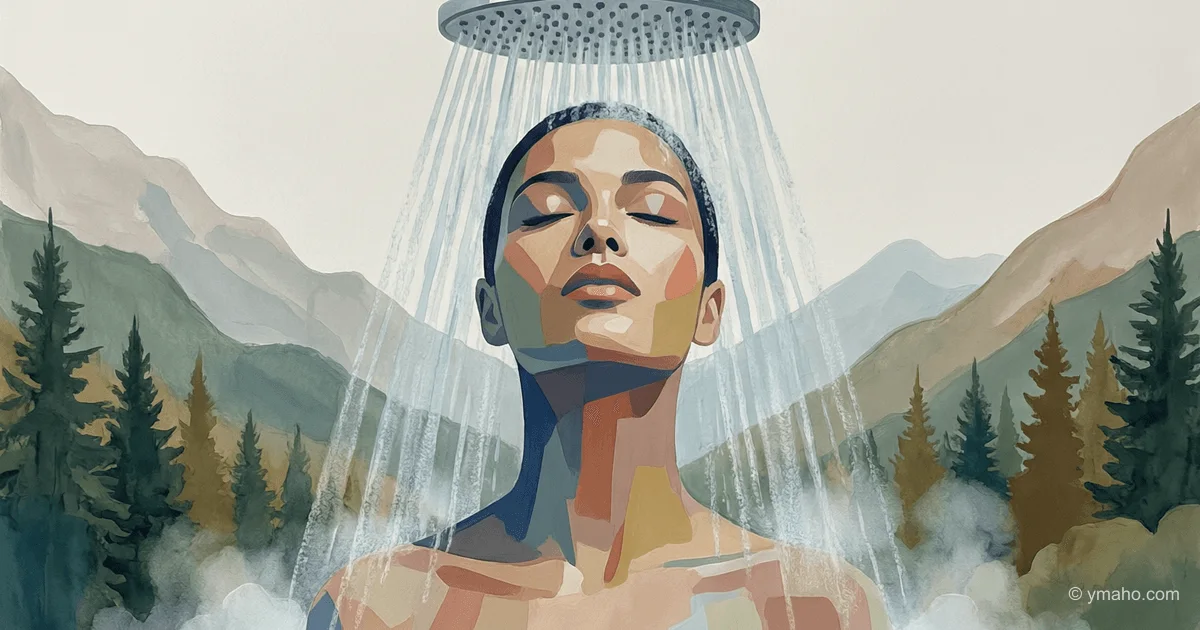
When functionality becomes a free option, the consumer has one question left: 'So what?' The answer: they want to be left alone. The shower is the only place in the house where the phone doesn't ring (theoretically). Hair washing is the only practice where it's allowed to stand under hot water and stare at one spot without purpose.
Timeline and Context
- 2021–2023: The era of 'ingredientism.' Keratin, collagen, ceramides, niacinamide enter the race in shampoos. Consumers memorize formulas.
- 2024: First saturation. Mintel notes that 47% of consumers no longer believe in 'miracle ingredients.' Simultaneously, the hashtag #HeadSpa — a Japanese scalp massage practice — skyrockets to 919 million views on TikTok.
- 2025: Key turning point. Bathfeeling research shows: the need for 'cleanliness' drops to 12%, for 'scientific effect' to 47%. But the need for 'healing' soars to 53%. This is the moment emotion beats function.
- May 2026: Here we are. Off&Relax launches the 'Spring Awakening' collection with the scent of the Altai Mountains. The brand Fuledi (created by the former CMO responsible for Chaoling's rise) releases 'shampoo-cake' with names like 'Strawberry Date.' This is no longer cosmetics. It is a wrapper for an emotional break.
And here's the key figure that news headlines don't bold: the Head Spa market (Japanese scalp spa) is forecast to grow at a CAGR of 10.76% in the coming years. This isn't about hair. It's about people being willing to pay 120–200 EUR for a session where they just get their hair washed for an hour and a half.
Who Wins and Who Loses
Winners:
- Brands that build 'hair washing temples.' Off&Relax, Shanju Riji, the young brand Yunnan Baiyao (which opened 'Hair Therapy' salons in Shanghai). They sell not bottle volume but duration of contact. Their shampoos are fluid, their scents layered like perfume. The user must slow down to apply them.
- The 'Head Spa' salon segment. This is a goldmine. A course of 5 treatments in London costs 450–600 GBP. In Tokyo (market leader), 200–350 USD for a full ritual with massage, cleansing, and aromatherapy. The profitability of such a service is up to 70%, because consumables are water and shampoo.
- Platforms of Asian aesthetics. Korean and Japanese rituals are becoming the global standard for 'proper washing.' Brands that export this narrative win (Aromatica, Ryo, &honey).
Losers:
- The 'old guard' of functional shampoos. Head & Shoulders, Clear. Their positioning ('kills dandruff') sounds like a medical diagnosis in an era when people want to escape diagnoses. P&G's hair category sales in Asia fell 6% in 2025.
- Any shampoos with names like 'Clinical Recovery.' That's dead language. The 2026 consumer doesn't want 'clinic.' They want 'forest' and 'moments of silence.'
- Brands still investing in 'comparative tests.' 'Our shampoo makes hair 80% shinier' — against such a claim, the emotional argument 'I feel calm' works. Emotion cannot be disputed in a lab. Function can.
What the Media Isn't Saying
Now for the most disturbing insight. The one that keeps me up at night as an analyst.
Insight: This is not a consumer choice. It is a medical diagnosis of the economy. People are so burned out that they don't have the resources even for 15 minutes of meditation. They need 'meditation with someone else's plumbing.'
Look. Meditating at home is free. But it requires discipline. You have to sit, close your eyes, not get distracted. For a person with a burned-out prefrontal cortex, this is an impossible task. But lying with a wet head while someone (or something — a stream of water, a scent) leads you by the hand — that's a passive action. You don't exert willpower.
The trend of emotional hair care is the industrialization of 'supervised idleness.' The consumer pays not for cleanliness. They pay to be guided through stages of relaxation without having to engage their brain. It's the same mechanism as in ASMR: triggers (sound of water, scent of pine) trigger a response bypassing the cerebral cortex.
The second non-obvious point: this is a path to complete de-specialization of the category. If 53% buy shampoo for 'healing,' then the winner is not the one with the best conditioner, but the one with the best perfumer. And we see this already: brands hire 'directors of neuroaesthetics' and collaborate with fashion houses. Off&Relax works with perfumers who created scents for Byredo.
This means barriers to entry in the category are crumbling. Tomorrow, a perfume startup could make a shampoo that outsells Procter & Gamble because it has a 'wet earth after rain' note, and P&G doesn't.
Forecast: Next 30 Days and 90 Days
30 days (June 2026): Wave of 'instrumental shampoos.' Brands will start adding microcapsules of essential oils that burst from water heat. This will give a 'scent change effect' during washing. Korean innovative brands will be first to hit. Price per bottle: 25–35 USD.
90 days (August 2026): Market polarization. On one hand, 'antidepressant shampoos' with legal adaptogens (ashwagandha, rhodiola) for relaxation will appear — costing 50+ USD. On the other hand, mass market will start copying textures and scents, leading to 'products for the poor that smell like the rich.' The Chinese brand Fuledi has already set the trend for 'simple joy' — a 6 USD shampoo called 'Fluffy Donut.'
And the most important forecast: in 90 days, a phase of skepticism will begin. Investigations will appear: 'Shampoo doesn't cure depression.' 'Forest scent is just chemicals.' But this won't kill the trend. Because rational criticism doesn't work against irrational need. People don't need evidence-based shampoo. They need a permitted escape. And as long as the workday doesn't shorten and the number of phone notifications doesn't decrease, people will buy 'shower therapy' — even knowing it's just scented water.
We have stopped believing that washing our hair can heal us. But we so desperately want to believe it that we pay 20 USD for a bottle of hope. This is not cosmetics. It's an indulgence for 10 minutes when you don't have to be productive, beautiful, or happy. You're just wet. And that's okay.
— Editorial Team