Frugal Chic: The Trend of Conscious Rejection of Hyperconsumption
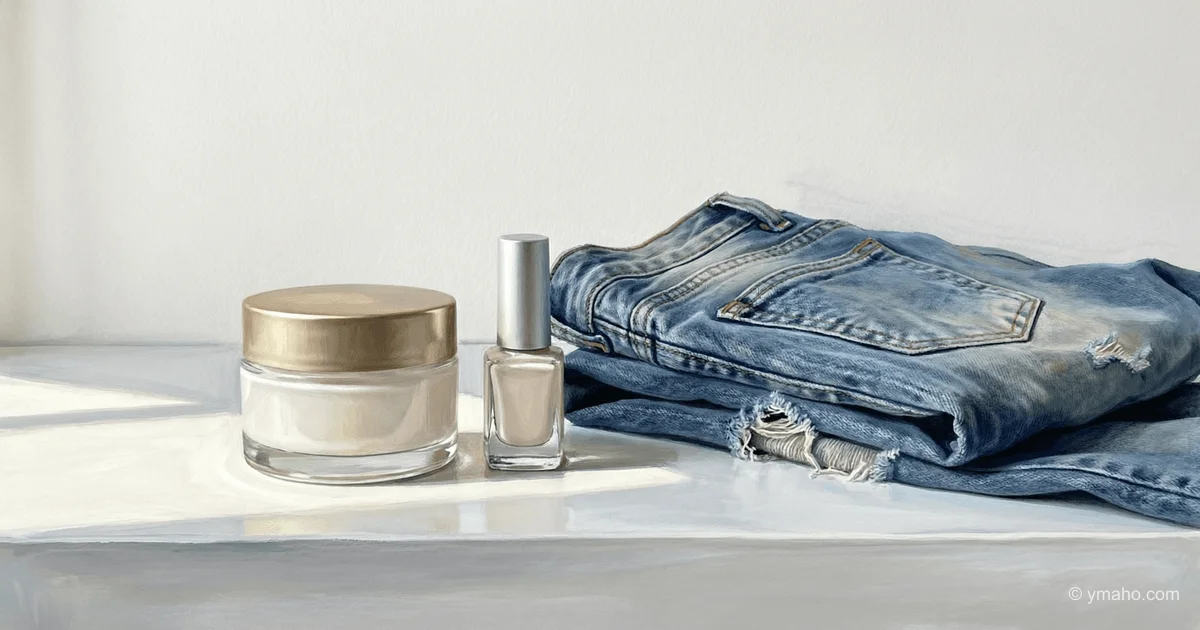
In 2026, a trend toward rational shopping went viral on TikTok: bloggers urge people to keep wearing old jeans and not chase viral novelties. The makeup bag of style adherents holds only basics and clear nail polish, not a battery of jars.
I've been analyzing consumer behavior in the beauty segment since 2019. Over this time, I've seen the rise and fall of dozens of trends, but Frugal Chic is not just another cycle. It's the first time a platform has massively legitimized what the industry considered a mortal sin for decades. Brands have always hated when people don't buy new things. Now TikTokers are turning that into content with millions of views.
[The Essence]: What's Really Happening
Stop perceiving Frugal Chic as an environmental trend. It's not about saving the planet. It's about economic burnout that is no longer shameful.
The 2026 consumer is in a unique situation. Inflation has driven up cosmetics prices by 18–25% since 2023 (NPD Group data, April 2026). At the same time, the labor market has become more volatile. The median salary in the US has grown only 4.2% over the last 18 months. The gap between income and the cost of a "normal" consumer basket has reached its highest since 2008.
In this reality, buying a $120 cream or a $45 highlighter every two weeks is an unaffordable luxury for most. But a decade of hyperconsumption culture taught people to be ashamed of their wallets. Buying from mass-market brands felt like failure. Wearing old jeans felt like social death.
Frugal Chic removes that shame. It turns "I don't have money" into "I made a conscious choice." The difference between these phrases is billions of dollars in marketing potential.
The trend doesn't call for asceticism. It repackages scarcity of resources into an aesthetic of rationality. Clear nail polish instead of $60 gel manicures every three weeks. One foundation instead of five. Wearing 2022 jeans instead of hunting for a viral Zara novelty. On the surface—minimalism. In essence—inflation adaptation.
Timeline and Context
- 2021–2022: Peak of hyperconsumption on TikTok. #TikTokMadeMeBuyIt reaches 15 billion views. Brands release collections every 3–4 weeks. A $28 lip gloss becomes a "must-have," even if you already have 40.
- 2023: Economic pressure begins to change behavior. The term "loud budgeting" emerges—people openly say they can't afford something. This is the first crack in the culture of endless spending.
- 2024: The search for "how to use products completely" grows by 340% according to Pinterest. People start scraping jars. Influencers film "panning" videos for the first time (pan—the last remnants of a product squeezed from a tube).
- 2025: Saving becomes mainstream. The New York Times publishes an article "The Rise of the Anti-Haul." Bloggers film themselves going to Sephora and not buying anything.
- May 2026: Frugal Chic goes viral. The hashtag #FrugalChick (with a spelling mistake that becomes a brand) gains 890 million views in 10 days. Key content: "showing what's in my makeup bag"—and there are 3 products. Total cost: $47.
The number you won't see in viral videos: premium cosmetics sales in the US fell 8.3% in Q1 2026 compared to Q1 2025. The mass-market segment grew 2.1%. The gap in dynamics is the largest in 5 years.
Who Wins and Who Loses
Winners:
- Mass-market titan brands. CeraVe, The Ordinary, e.l.f. Cosmetics. Their average ticket is $12–25. They get free viral marketing. In April 2026, The Ordinary's sales grew 27% year-over-year. Without launching new products. Without an ad campaign. Simply because TikTokers called their serum "good enough."
- Resale platforms. Poshmark, Depop, Vinted. A user may not buy new jeans for $80, but can buy the same, almost new, for $25. This isn't a rejection of consumption—it's a redistribution of the secondary market. In Q1 2026, transactions on these platforms grew 19%.
- Minimalist brands with honest prices. Glossier (when it stopped pretending to be luxury and cut prices by 15% in 2025) and Bubble (teen skincare for $6–10). They fit the aesthetic of "little but good."
Losers:
- Premium multi-brand retailers. Sephora, Ulta Beauty. Their business model relied on customers leaving with 4–5 products totaling $120–200. Now customers come for one basic cream for $24. Sephora's US sales fell 4.7% in April 2026.
- Brands that built their entire marketing strategy on #TikTokMadeMeBuyIt. ColourPop released a collection every 2 weeks. Now consumers say, "I don't need a 51st eyeshadow palette." ColourPop's sales dropped 35% over the last 6 months.
- Influencers whose content is unboxings. The format is dead. Unboxing views fell 40% compared to 2024. Audiences no longer want to see someone open 30 boxes. They want to see someone say, "I didn't buy this."
What the Media Aren't Saying
Now for the most important part. The reason brands are panicking and marketing consultants are rewriting strategies.
Insight: Frugal Chic is not a rejection of consumption. It's a shift in consumption from goods to content.
Look closely. A person who didn't buy a $70 cream didn't just save money. They spent time creating a video "why I didn't buy this cream." That video got 2 million views. They earned $1,500 from ads. Their old jeans became the star of a video "10 years in the same jeans, and here's what happened"—another 3 million views, another $2,000 in income.
Frugal Chic is monetizing the refusal to buy. The platform pays people for not buying. And the more viral their refusal, the more they earn.
So the reality is: a TikToker who urges you not to spend money on cosmetics is themselves earning $5,000–10,000 a month from those very urgings. You watch their video, get inspired, don't buy the cream—and keep your money. They earn income.
The second non-obvious point: brands are already adapting, but hiding it. Estée Lauder quietly launched a budget line, The Ordinary Competitor, in January 2026 without announcement. L'Oréal bought 40% of a cosmetics resale platform. They all understand: the trend is not anti-consumption. It's a new way of consuming, where money flows from the buyer's pocket to the influencer's pocket through ads, not through the product.
Forecast: Next 30 Days and 90 Days
30 days: Rise of "upcycling content." Bloggers will start showing how to turn old highlighter into body cream, and dried mascara into eyelid pigment. It will look like a life hack. In reality, it will be content that generates views without needing to buy a new product. Brands will launch official guides "how to extend product life"—hoping to retain loyalty.
90 days: A split within the trend. Two camps will emerge. First—"ascetic chic": minimalism as a strict norm, condemnation of any cosmetics spending above $20. Second—"rational hedonism": you can buy an expensive product, but only one, and use it to the last drop. The second will win—because total denial of pleasure is psychologically unstable.
And the most important forecast: in 90 days, brands will start targeting "hidden consumption." Products that look cheap but cost a lot. "Invisible luxury." Because Frugal Chic is an aesthetic of saving, not saving itself. People still want to spend. They just want it not to look like spending. And the market will give them that. A $15 bamboo toothbrush instead of a $2 plastic one? Same logic. Expensive minimalism—the next stop.
Frugal Chic is not a revolution of consciousness. It's a rebranding of poverty as a conscious choice. We haven't become wiser. We're just tired and poorer. But admitting that is hard. It's much easier to say: "I'm not buying this $45 lipstick because I'm frugal chic, not because I don't have money after the mortgage." The trend sells us the right to be honest with ourselves. And for that right, we pay with views. And whoever pays with views dictates the rules.
— Editorial Team