Paula‘s Choice Becomes Official Sponsor of FIFA World Cup 2026
The skincare brand launched the campaign "Proud Supporter of Your Skin" to capture the attention of 5 billion viewers. The goal: to assert that skin health is as crucial to "athletic endurance" as physical fitness.
Goal for the Skin: How Paula‘s Choice Rewrites Sponsorship Rules at the 2026 World Cup
I’ve been advising brands on strategic marketing and partnerships since 2018. Over that time, I’ve seen beauty companies try to break into sports through ambassadors—photogenic models with perfect cheekbones out for a jog. But what Paula‘s Choice did by signing as the official skincare sponsor of the FIFA World Cup 2026 and the 2027 Women’s World Cup is not just a deal. It’s a nuclear shift in how the beauty industry thinks about male audiences and mass sports.
[The Core]: What’s Really Happening
Forget "soccer players don’t use creams." This isn’t about them. It’s about the 5 billion viewers who will watch matches from June 11 to July 19, 2026 across the US, Canada, and Mexico. Paula‘s Choice isn’t paying for access to locker rooms. It’s paying for access to the minds of people who have never set foot in Sephora.
The brand’s activity around women’s sports isn’t new—they already had partnerships with Seattle Reign of the National Women’s Soccer League and ambassadors like rugby player Ilona Maher. But men’s soccer is a different league. It’s an audience that beauty brands have feared touching for decades because "men don’t buy serums."
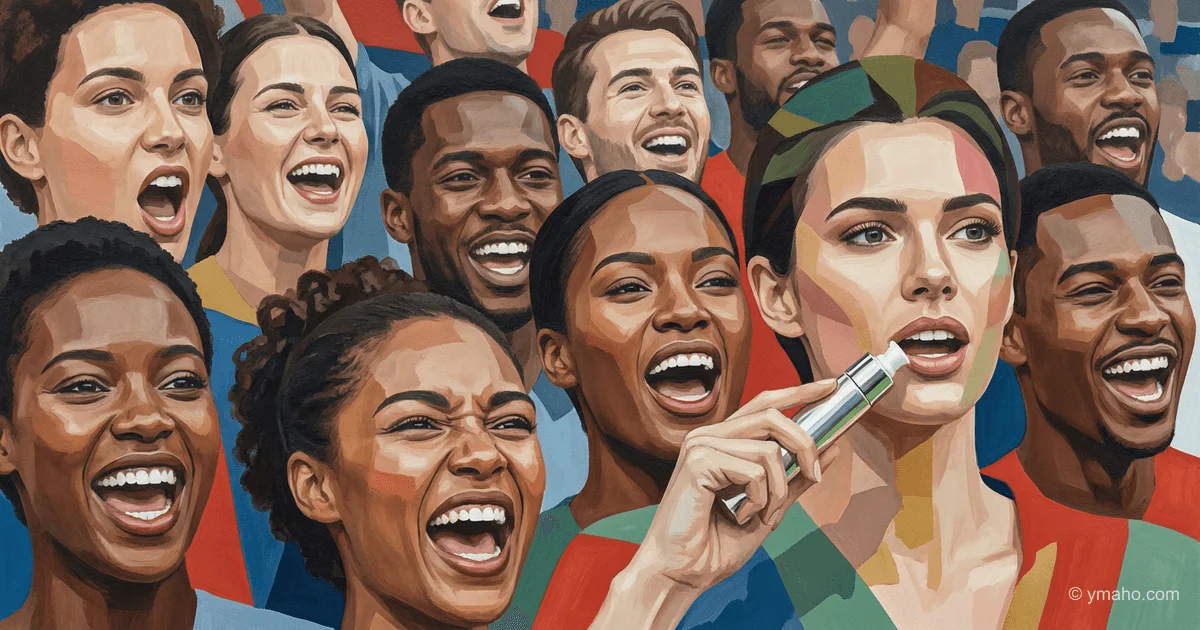
The campaign is called "Proud Supporter of Your Skin." The main video, "The Beautiful Game," doesn’t show ripped athletes but fans’ faces. Their shouts, sweat, tears of joy and despair. The idea: skin goes through the same ordeal as the nervous system. And it needs support. Paula‘s Choice CEO Faiz Ahmad stated outright: "We see skincare as part of a broader performance mindset."
Timeline and Context
- 2024: Early signs. Paula‘s Choice signs Ilona Maher, an Olympic medalist in rugby. It looks like a niche sponsorship case.
- Early 2026: The brand announces a partnership with basketball player Azy Fudd, who just signed with the Dallas Wings (WNBA).
- May 2026: Big announcement of sponsorship for the 2026 World Cup and 2027 Women’s World Cup. The brand launches global out-of-home (OOH) and digital advertising. A massive activation event in Los Angeles is announced.
Note the context. Unilever bought Paula‘s Choice not long ago, and this deal is the giant’s first truly loud strike in the premium mass market. Right now, in May 2026, Dove Men+Care is also launching a campaign under Unilever’s umbrella, with the slogan "Care for Your Skin Like You Care for the Game." This is a systemic attack. Unilever decided that men (and fans) are ready for a conversation about skin.
And here’s a figure that’s usually not disclosed. According to analytics, Paula‘s Choice online sales in the US fell by 20-50% in 2025. In the German market, the drop was over 50%. The brand needed a powerful springboard to return to growth. And they chose the stadium.
Who Wins and Who Loses
Winners:
- Paula‘s Choice and Unilever. They bought a seat at a table that beauty brands never had before. While L‘Oréal and Estée Lauder fight over glossy banners, Unilever captures the male audience through soccer. It’s cheaper (per reach) than traditional advertising and more honest than trying to appear "tough" on Instagram.
- Male audience aged 18–35. They finally got self-care legitimized. Before, buying a moisturizer was "gay." Now it’s "part of an athlete’s routine." Sponsorship changes the social norm in an instant. A guy watching soccer with a beer sees a serum ad and thinks, "Oh, it’s like LeBron (or national team players) uses." The stigma is gone.
- Fans. They, at least in theory, get a solution to the "soccer fan mask" problem—red face from shouting, dry skin from stadium weather, and marks from body paint.
Losers:
- Traditional sponsors from adjacent categories. Beer, chips, and car brands now share airtime with a bottle of acid. Viewer attention fragments. Beer giant Anheuser-Busch pays the same money, but its audience now gets distracted by toner ads.
- Niche "sports" beauty brands. Small companies that built their business on formulas "for marathoners" or "for triathletes" just got a competitor with Unilever’s budget. Paula‘s Choice says, "Your skin suffers at the stadium" and pulls the rug out from under them.
- Brands that still promote cosmetics through sexism. While Paula‘s Choice talks about "performance" and "resilience," brands that advertise creams through "be beautiful for him" look archaic. The new discourse is functional, not decorative.
What the Media Isn’t Saying
Now for the insight that won’t appear in press releases.
Insight: Paula‘s Choice is hedging against the collapse of retail by capturing "experiences," not "places."
Look. Online sales are falling. Malls are emptying. The traditional model of "a person walks into Sephora and touches a jar" is dying. How do you sell cosmetics if people stop going to stores? Answer: attach cosmetics to an event they will attend.
A soccer match is the last bastion of mass physical presence. 5 billion eyes watch broadcasts, but millions of people are physically at stadiums and fan zones. Paula‘s Choice places its ads and activation points there. They’re not selling cream in a vacuum. They’re selling it as a souvenir of an emotion. "You were at the final, your skin cried with joy—here’s a gel to capture that."
The second non-obvious point: this is a move against competitors who are hooked on "clinical trials." Paula‘s Choice has always been an "evidence-based skincare" brand. In a lab, it’s hard to prove your cream is better than a competitor’s. But at a stadium, under the blazing sun of Mexico City or the wind of New York, SPF care and moisturizing aren’t cosmetics. They’re protective gear. They shifted the discussion from "beauty" to "health and comfort," where their position is stronger.
Forecast: Next 30 Days and 90 Days
30 days (June 2026): Tournament kickoff. Battle for the fan zone. Paula‘s Choice flagship activation opens in Los Angeles. Expect viral videos of fans applying cream right before entering the stadium. And crucially, comparisons with the Dove Men+Care campaign will begin. The internet will argue whose creative is better. Spoiler: the one who offers free SPF at the entrance first will win.
90 days (August 2026 – post-final): Tournament echo. First, Paula‘s Choice will announce limited edition "The Beautiful Game" collections with enhanced sweat and pollution protection (a logical follow-up). Second, and more importantly, a wave of search queries will start: "skincare for men," "best skincare for football fans."
Numbers forecast: if the campaign works, the sales decline seen in early 2026 will reverse to 15-20% growth in Q3. But the most important metric isn’t revenue. It’s share of voice in a new category. Unilever just officially declared: the stadium is the new makeup bag. And billions of fans are its visitors. Those who miss this starting whistle will be playing catch-up until 2030.
— Editorial Team