Rational Approach in Cosmetics: From Chaotic Purchases to 'Value-Driven' Choices
By 2026, the global beauty market is moving toward transparency: 50% of people buy self-care products consciously. Consumers have stopped believing in 'miracle jars' and demand proof of effectiveness, comparing price and real quality.
The Death of the Miracle Jar: How 50% of Consumers Killed the Illusion Industry
I have been analyzing the global beauty market since 2017. Over this time, I have seen the rise of 'green' cosmetics, the collapse of 'acid mania,' and the boom of Korean toners. But what is happening in 2026 with the 'rational approach' is not just another trend. It is the end of the business model that the industry has relied on for 50 years.
[The Core]: What Is Really Happening
Forget 'tested on supermodels' and 'secret of French pharmacies.' The 2026 consumer is a person with a calculator in one hand and an incognito tab with research in the other.
50% of people buy self-care products consciously. What does that mean in practice? It means they do not believe advertising. They believe evidence—clinical studies published in PubMed. They compare the cost per 1 ml of serum, not the bottle price. They know that the preservative phenoxyethanol is safe in doses up to 1%, and a long ingredient list does not scare them.
But most importantly, they have stopped believing in 'miracles.' In the ingredient that will solve all problems. In the cream that will replace a plastic surgeon. In the serum that will 'rejuvenate in 7 days.' The rational consumer knows: skin is a barrier organ. Most of what you apply to it does not absorb deeper than the stratum corneum. And so they pay not for promises, but for formula, texture, and molecular stability.
This trend is a direct consequence of information overload. In 2000, the consumer had a choice between 5 creams. In 2026, between 500. To avoid going crazy, they grab the only available anchor: objective data. Or at least its imitation.
Timeline and Context
- 2018–2020: The era of ingredientism. Consumers learn names—retinol, vitamin C, niacinamide. Brands compete on percentages. More = better.
- 2021–2023: The era of 'clean' beauty. Harsh fight against 'toxins.' Scientific consensus says: it's marketing. But marketing works.
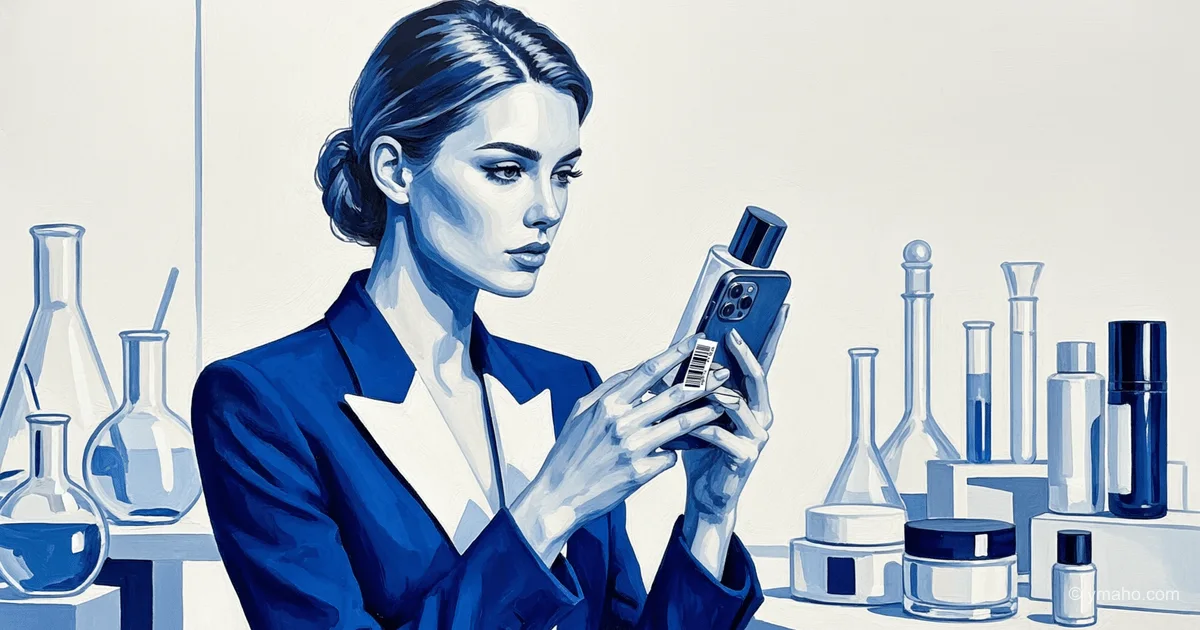
- 2024: Turning point. A McKinsey study finds: 58% of consumers are willing to pay more for 'evidence-based efficacy.' Aggregator apps (Think Dirty, Yuka) appear, scanning barcodes and showing 'real' ratings.
- 2025: Chemist influencers take off. Audiences turn not to makeup artists, but to cosmetologists with PhDs (e.g., Dr. Michelle Wong, 2 million TikTok followers in a year). Their content: formula breakdowns, not swatches.
- May 2026: The 50% barrier is crossed. Every second consumer states: 'I buy consciously.' The US prestige beauty market shows 0% growth in Q1, while masstige grows 12%. Consumers vote with their dollars for rationality.
A number you won't see in glossy magazines: sales of creams over $500 USD have dropped 22% compared to 2024. No one believes anymore that La Mer works miracles that a $50 jar with an identical set of emollients cannot replicate.
Who Wins and Who Loses
Winners:
- 'Pharmacy' brands with scientific positioning. CeraVe, La Roche-Posay, The Inkey List. Their average price is $15–30 USD. Their argument: 'dermatologists recommend.' A 2025 study showed that 74% of US dermatologists recommend CeraVe. That is stronger than any influencer.
- Brands with full ingredient transparency. The Ordinary (average price $8–15 USD) publishes not only concentrations but also the pH of each product. Their sales grew 27% in 2025. Because the consumer can verify.
- Aggregator platforms for reviews and comparisons. Incidecoder (free, with a premium subscription of $5 USD/month) allows you to break down any cream into molecules. Its user base grew to 50 million in 2026. They don't need brand advertising. They need data.
Losers:
- Luxury brands built on myth. La Mer (cream for $400 USD) is built on a story about the healing power of seaweed. The rational consumer buys seaweed from The Ordinary for $12 USD. La Mer sales in 2026: down 18%.
- Direct sales (Avon, Mary Kay, Amway). The 'buy from a friend because you like her' model is dead. The consumer checks the formula via an app while the 'consultant' talks about a 'unique formula.'
- Makeup influencers selling 'lifestyle.' Views of 'my 47-product routine' videos have dropped 40%. Now the trend is 'my minimal scientific 3-product routine.'
What the Media Are Not Saying
Now for the key insight that will change your view of this trend.
Insight: The 'rational approach' is not about knowledge. It is about choice fatigue. The consumer delegates decision-making to algorithms and authorities because they don't have time to learn about 500 ingredients.
Look. Studying cosmetic chemistry to the level of distinguishing marketing from science takes about 200 hours of reading. No consumer wants to spend 200 hours. They want someone else to do it for them. And that 'someone' is either an app (Yuka, Think Dirty), a trusted expert (Dr. Wong, Dr. Dray), or a brand with a reputation (CeraVe).
The rational approach is shifting responsibility. Before, you bought a cream because of 'pretty packaging' and 'miracle promise.' Now you buy a cream because 'the app said it's safe.' Freedom of choice hasn't gone anywhere. The tyrant has just changed: instead of the marketing department, it's the app rating.
Second non-obvious point: this kills innovation because new ingredients lack an 'evidence base.'
Any new peptide, any new molecule (hundreds are synthesized each year) does not have 10-year clinical studies. The rational consumer rejects them because 'no evidence.' Brands stop taking risks. As a result, the market consolidates around 10–15 'proven' ingredients (retinol, vitamin C, niacinamide, hyaluronic acid). Innovation in cosmetics slows down. But consumers like it. Because predictability matters more than miracles.
Forecast: Next 30 Days and 90 Days
30 days (June 2026): Rise of 'rationality subscriptions.' Services like Curology and Skin+Me (already existing) will ramp up marketing. You send a photo of your skin, a dermatologist (or AI) selects a formula of 3 actives. Cost: $30 USD per month. The consumer gets a 'scientifically proven solution' without having to choose.
90 days (August 2026): The first major scandal with an aggregator app. It will be revealed that Yuka or Think Dirty takes money from brands to boost ratings. Trust in 'objective' ratings will collapse. But this won't return the consumer to chaotic purchases. A new level of filtering will simply emerge: 'Check the checker.'
The most important forecast: in 90 days, brands will stop talking about 'efficacy' as such. They will start talking about 'predictability.'
2026 advertising: 'Our cream won't make you look 10 years younger. But it will definitely moisturize for 8 hours, won't cause acne (clinically proven, n=200), and won't break the bank ($15 USD for 50 ml).' This isn't sexy. It doesn't sell a dream. But it sells relief. Because in a world where everything lies, predictability is the most expensive currency.
The rational approach in cosmetics is not the triumph of science over marketing. It is the triumph of fatigue over hope. People no longer want to believe. They want to know. And if knowledge costs 200 hours of reading, they will pay $5 USD to an app to know for them. The beauty industry no longer sells a dream. It sells a report. And that is perhaps the most honest deal in the last half-century.
— Editorial Team