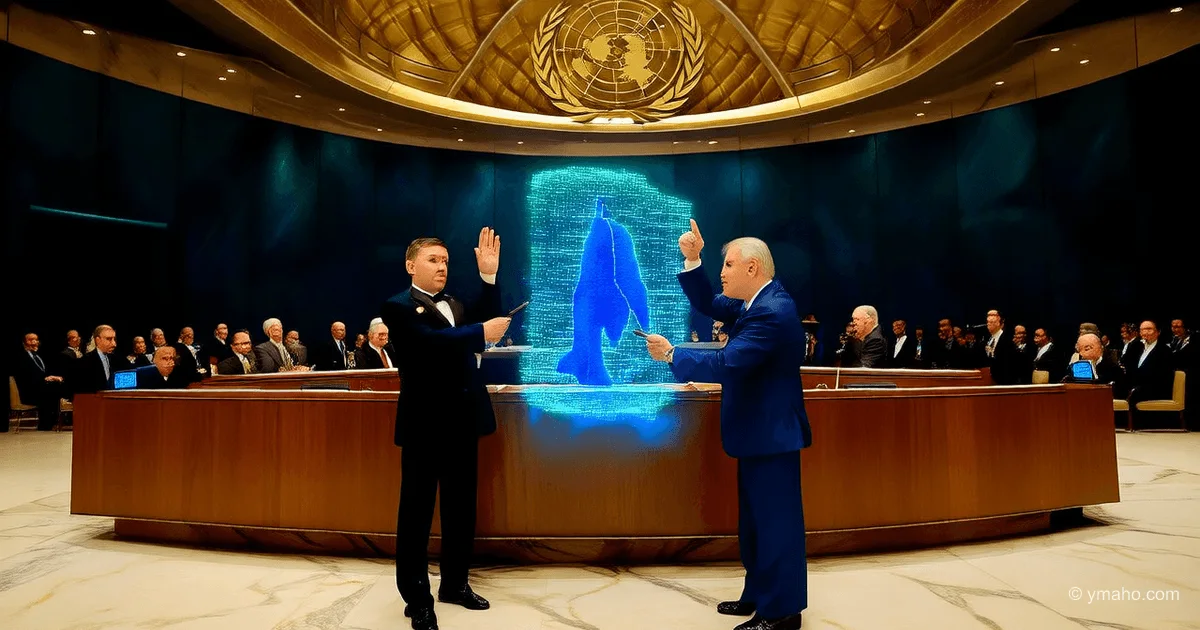
Russia and China Block UN Security Council Resolution on the Strait of Hormuz
China's Ambassador to Russia stated that the two countries' veto of the "unbalanced" draft resolution on April 7 prevented a new round of escalation and helped create conditions for a temporary ceasefire.
The veto by Russia and China of the UN Security Council resolution on the Strait of Hormuz is not just a diplomatic duel, but a moment of profound tectonic shift in the architecture of global security. With this decision, Moscow and Beijing not only defended Tehran but also officially closed the era of Western unilateral dominance in matters of using force on the world stage.
The Essence: What Is Really Happening
The resolution, proposed by Bahrain and actively lobbied by the US, was intended to create a legal basis for an international naval mission to clear the strait of Iranian forces. However, after the veto—which Washington clearly did not expect—the Security Council found itself paralyzed. The US immediately shifted from attempts at multilateral legitimization to unilateral ultimatums.
The crux of the matter is that the legal shield over Tehran was created not by a nuclear bomb or thousands of missiles, but by a single diplomatic move. China's Ambassador to Russia, Zhang Hanhui, directly called this step "a responsible choice that will stand the test of history." The US and its allies, geared toward a military solution, found themselves trapped in a geopolitical snare where any use of force without a UN mandate automatically labels them as interveners.
Timeline and Context
The conflict around the strait erupted immediately after US-Israeli strikes on Iran on February 28, 2026. In response, Tehran closed the Strait of Hormuz, through which up to 20% of global oil and LNG supplies previously passed. This triggered a global energy crisis and inflicted catastrophic damage on the economies of the Arab Gulf monarchies. For example, Qatar was forced to completely halt gas production and declared force majeure, losing approximately $20 billion in lost profits annually.
It was Qatar, Saudi Arabia, Kuwait, and the UAE that initiated the appeal to the Security Council, hoping to push the UN to forcefully unblock the strait. However, Russia, China, and—curiously—France considered that the document did not link the closure of the strait to the bombings of Iran and effectively served Washington's military interests.
The particular cynicism of the situation lies in the fact that the veto was cast just hours before the expiration of Donald Trump's ultimatum, in which he promised to "wipe an entire civilization off the face of the earth" if Iran refused to surrender. Without a mandate, the White House lost the formal right to continue the full-scale phase of Operation "Epic Fury."
Who Wins and Who Loses
Losers. The Arab countries of the Persian Gulf, primarily Qatar. Bahrain, as the formal author of the resolution, stated that the refusal to adopt the document "sends the wrong signal to the peoples of the world." The US also lost tactically, as its ultimatum diplomacy ran into a brick wall of international law.
Paradoxical winners. Iran is certainly in a winning position—its Ambassador Amir Saeid Iravani expressed gratitude to Moscow and Beijing for their responsible actions. However, the main gain went to the global insurance and maritime shipping business. If the resolution had passed, it would have set a precedent for legitimizing military convoys and, consequently, led to escalation and the complete destruction of the insurance market. The veto froze the situation in a state of "neither war nor peace," allowing insurers to at least partially maintain operations in the region.
What the Media Isn't Saying
Insider view: secret bargaining over an alternative resolution. Most Western outlets present the veto as an act of aggressive support for Iran, but they miss a key detail: Russia and China did not just destroy the Western project; they immediately proposed their own. Their draft obliges all parties to cease hostilities and return to the legal framework. The document is deliberately crafted to force the US and Israel to sit down at the negotiating table on the Iranian nuclear dossier.
The Yemeni interest is another blind spot. The Houthis have direct influence over the southern coast of Saudi Arabia and the Red Sea. As soon as the Security Council failed the resolution, the Houthis received a "green light" from Iran for a more active blockade, sharply narrowing the corridor for possible US reinforcement deployment. Western media prefer to remain silent about this.
Forecast: The Next 30 Days and 90 Days
Next 30 days (by mid-June 2026).
The failure at the UN will force Trump to act outside international law. The US will announce the creation of a "coalition of the willing" to transit the strait without a mandate. However, Arab countries, frightened by the risk of being hit by "carpet" strikes, will sabotage participation in the mission. China will intensify diplomatic pressure, and Russia will offer its patrol services to the Iranian side. Oil will continue to fluctuate around $110 per barrel, and a quiet panic will begin in the financial markets due to the freezing of Qatari LNG contracts worth over $150 billion.
Next 90 days (by mid-August 2026).
If the Chinese-Russian alternative platform becomes operational by the end of summer, the Hormuz crisis will be resolved on Tehran's terms. This would be a catastrophe for US influence in the region. Iran will announce its agreement to temporary IAEA monitoring in exchange for full sanctions relief, and the UN Security Council will adopt a different document recognizing Iran's sovereign rights to control the entrances to the Gulf. If the diplomatic track collapses and Trump decides on a military operation without the UN, we will witness the end of the international legal system as it has existed since 1945.
— Editorial Team









