The 2008 Financial Crisis: A Simple Breakdown of Causes
The 2008 financial crisis was the most severe global economic disaster since the Great Depression, a meltdown that pushed the world's banking system to the brink of collapse and erased trillions in wealth . Understanding what caused the 2008 financial crisis explained simply requires tracing a chain reaction: it began with a flood of cheap money and loose lending standards that inflated a housing bubble, was amplified by complex and opaque financial products, and finally burst when interest rates rose and housing prices fell . This breakdown will guide you through how a combination of deregulation, reckless lending, and interconnected risk transformed a manageable housing downturn into a global catastrophe.
What You'll Learn
By the end of this explainer, you'll have a clear mental model of the 2008 crisis: from the role of "subprime" mortgages and securitization to the collapse of Lehman Brothers and the ensuing global recession. You'll understand that the crisis wasn't caused by a single event but by a fragile system where risk was hidden, underestimated, and spread to every corner of the financial world.
How It Works: The Chain Reaction of Collapse
To understand the crisis, you need to follow the money. It was a multi-stage process where a problem in one area—U.S. housing—quickly infected the entire global financial system.
Stage 1: Cheap Money and the Housing Bubble
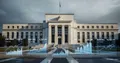
In the early 2000s, the U.S. economy was reeling from the burst of the "dot-com" bubble and the September 11 attacks. To stimulate growth, the U.S. Federal Reserve (the Fed) lowered its key interest rate to just 1% in 2003 . This made borrowing money extremely cheap. Suddenly, mortgages were more affordable, and a surge in demand pushed housing prices higher and higher . This created a self-reinforcing cycle: as prices rose, people believed they would continue to rise forever, making real estate seem like a "one-way bet" . This period of euphoria was characterized by strong economic growth, financial deregulation, and low interest rates .
Stage 2: The Rise of "Subprime" Lending
With housing prices soaring and demand high, banks and mortgage lenders relaxed their standards. They began offering loans to "subprime" borrowers—people with poor credit history, low income, or unstable jobs—who previously would never have qualified . These loans often had low "teaser" rates that would later reset to much higher adjustable rates. The logic was simple: if the borrower couldn't afford the new payment, they could just sell the house for more than they paid, or refinance the loan . Brokers and lenders were happy to push these risky loans because they made money on the fees and, crucially, because they didn't plan to hold onto the loans themselves.
Stage 3: Securitization and the "Shadow Banking" System
This is where the crisis became a global powder keg. Banks didn't keep these mortgages on their books. Instead, they sold them to investment banks, which would "securitize" them . This process involved bundling thousands of mortgages together and selling them to investors as complex financial products called Mortgage-Backed Securities (MBS) and Collateralized Debt Obligations (CDOs) . Computer models were used to determine the value of these bundles, and credit rating agencies like Moody's and Standard & Poor's often gave them their highest AAA ratings, implying they were very safe . This system was fueled by a loosely regulated "shadow banking" system—including investment banks, hedge funds, and mortgage brokers—that grew as large as the formal banking system . This allowed Wall Street firms to take on massive risk with little oversight.
Stage 4: The Bubble Bursts and the Dominoes Fall
The chain reaction began in 2004 when the Fed, worried about inflation, started raising interest rates. By 2006, the rate had climbed from 1% to 5.25% . This triggered the collapse. Millions of subprime borrowers with adjustable-rate mortgages saw their monthly payments skyrocket, and they could no longer afford them . At the same time, housing supply outpaced demand, and home prices began their dramatic fall . Borrowers couldn't sell or refinance, and they started to default in massive numbers . This devalued the MBS and CDOs held by investors worldwide because the underlying mortgages were failing. The "safe" AAA-rated investments turned toxic almost overnight .
Stage 5: Panic, "Too Big to Fail," and the Great Recession
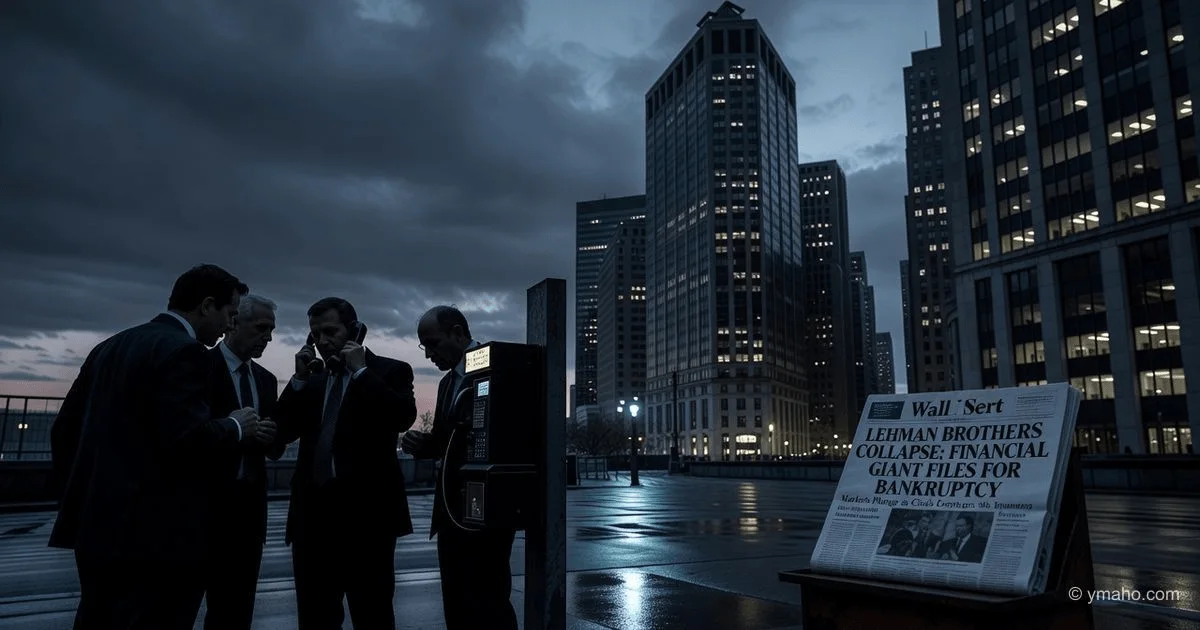
When the value of these securities plummeted, panic spread. Banks, unsure of who held the bad debt, stopped lending to each other. The interbank lending market froze . This was a modern-day "bank run," with institutions denying each other crucial short-term funding . Major institutions that were heavily exposed, like the investment bank Bear Stearns, collapsed and were forced into a fire-sale takeover . In September 2008, the crisis hit its peak. The government seized mortgage giants Fannie Mae and Freddie Mac, and the massive insurer AIG was bailed out . But Lehman Brothers, another Wall Street titan, was allowed to fail, filing for the largest bankruptcy in U.S. history . This sent global markets into a tailspin, leading to the Great Recession, widespread job losses, and a global sovereign debt crisis .
Why It Matters: Real-World Impact
The crisis wasn't just an abstract financial event; it devastated the lives of millions. Between 2007 and 2010, U.S. unemployment nearly doubled from 4.6% to 9.6% . In the UK, it rose from 5.2% to 8.4% . Public debt ballooned as governments spent billions on bailouts and stimulus to prevent a complete collapse of the financial system . The crisis also triggered a sovereign debt crisis in Europe, particularly in countries like Greece, Ireland, and Spain . The collapse of the housing market also led to millions of foreclosures, wiping out the life savings and primary wealth of countless families . The ripple effects—including bank bailouts, massive government intervention, and years of slow economic growth—reshaped global politics and public trust in the financial system .
By the Numbers: Key Statistics and Dates
| Event / Statistic | Figure / Milestone |
|---|---|
| Federal Funds Rate (Low) | 1% (June 2003) |
| Federal Funds Rate (High) | 5.25% (June 2006) |
| U.S. Subprime Mortgages | Rose to 14% of all mortgages by 2007 |
| Off-Balance Sheet Assets (Citigroup) | $2.1 trillion (exceeding on-balance-sheet assets in 2006) |
| Credit Derivatives Market (BIS) | Grew from $118 billion (1998) to $52 trillion (2007) |
| Lehman Brothers Bankruptcy | September 15, 2008 |
| U.S. Unemployment | Rose from 4.6% (2007) to 9.6% (2010) |
| U.S. Public Debt (% of GDP) | Rose from 86.4% (2007) to 125.8% (2010) |
Common Myths vs. Facts
| Myth | Fact |
|---|---|
| The crisis was solely caused by poor, uneducated people taking out loans they couldn't afford. | While subprime borrowers were a key part of the story, a system-wide failure of risk management, including from sophisticated investors, credit rating agencies, and regulators, amplified the problem . Major investment banks, hedge funds, and insurance companies were the primary actors in creating and distributing the risky products . |
| The government's Community Reinvestment Act (CRA) was the main cause of the housing bubble. | While the CRA encouraged lending in low-income neighborhoods, most subprime mortgages originated from private lenders not subject to the CRA. The primary drivers were deregulation, low interest rates, and the insatiable demand for mortgages to create profitable securities . |
| Wall Street banks were the only ones to blame. | Blame is widely shared. It includes predatory lenders, investment banks that bundled toxic assets, rating agencies that gave them false credibility, and regulators who failed to oversee the "shadow banking" system . |
| The crisis was unforeseeable. | The financial system's high leverage, opacity, and the housing bubble itself were widely discussed. In 2008, then-South African Reserve Bank Governor Tito Mboweni cited Alan Greenspan calling it the most wrenching crisis since WWII . The warning signs, like the failure of Bear Stearns, were clear in the months prior . |
What You Should Do With This Knowledge
Understanding the 2008 financial crisis provides powerful lessons for managing your own financial life. First, be wary of "too good to be true" financial products—if a mortgage sounds too easy to get or an investment's risk is obscured by complexity, it likely is risky. Second, recognize that financial systems are interconnected; a problem in one market can rapidly spread and affect the global economy, impacting your job security, savings, and investments. Finally, pay attention to central bank policy, especially interest rates, as they are a primary lever that can either fuel or pop asset bubbles . This historical insight underscores the importance of financial literacy, emergency savings, and diversification in your personal financial planning. As the IMF's Chief Economist noted, benign economic environments often lead to credit booms and a dangerous underestimation of risk .
Frequently Asked Questions
What exactly is a "subprime" mortgage? A "subprime" mortgage is a home loan offered to borrowers with poor credit histories, low incomes, or unstable employment . Because these borrowers are seen as a higher risk of default, the loans often come with higher interest rates or unfavorable terms, such as the adjustable-rate mortgages (ARMs) that played a central role in the crisis .
How did the collapse of Lehman Brothers trigger the crisis? Lehman Brothers was a massive, interconnected investment bank. When it declared bankruptcy on September 15, 2008, it was the largest in U.S. history . Its failure shattered confidence, causing markets to freeze, banks to stop lending to each other, and exposed the enormous, hidden web of risk that had been built up, leading to a systemic panic .
What were Mortgage-Backed Securities (MBS) and Collateralized Debt Obligations (CDOs)? These were complex financial products created by bundling thousands of mortgages together and then selling them to investors . The idea was to spread the risk, but the underlying mortgages were often subprime. When those loans went bad, the value of the MBS and CDOs plummeted, leading to massive losses for investors worldwide .
Who was to blame for the 2008 financial crisis? Blame is widespread and includes investment banks and hedge funds that created and traded risky products, mortgage lenders who gave loans to unqualified buyers, credit rating agencies that falsely labeled these products as safe, and regulators who allowed the "shadow banking" system to operate with little oversight .
What were the major reforms after the 2008 crisis? The crisis led to significant regulatory changes, most notably the Dodd-Frank Act in the U.S. . Internationally, the Basel III accords strengthened capital and liquidity requirements for banks . Governments also reinforced macroprudential supervision to monitor risks to the entire financial system, not just individual firms .
Sources
- Autoritat Financera Andorrana. "The 2008 Crisis." Adapted from Banque de France.
- Guernsey Financial Services Commission. "The 2008 Crisis" (PDF).
- The Balance. "Causes of the 2008 Financial Crisis."
- South African Reserve Bank. Address by Governor T.T. Mboweni.
- Brookings Institution. "The Origins of the Financial Crisis."
- International Monetary Fund (IMF). Finance & Development. "The Crisis: Underlying Causes."
- Investopedia. "The 2008 Financial Crisis Explained."
- Razin, Assaf and Steven Rosefielde. "Prevention and Crisis Management." (Excerpt via Tel Aviv University).
- HistoryExtra. "The 2008 financial crisis explained."
- South African Financial Markets Journal. "Global financial crisis: What happened and what happens next?"
— Editorial Team