Geopolitics Explained: Why Global Power Shifts Affect You
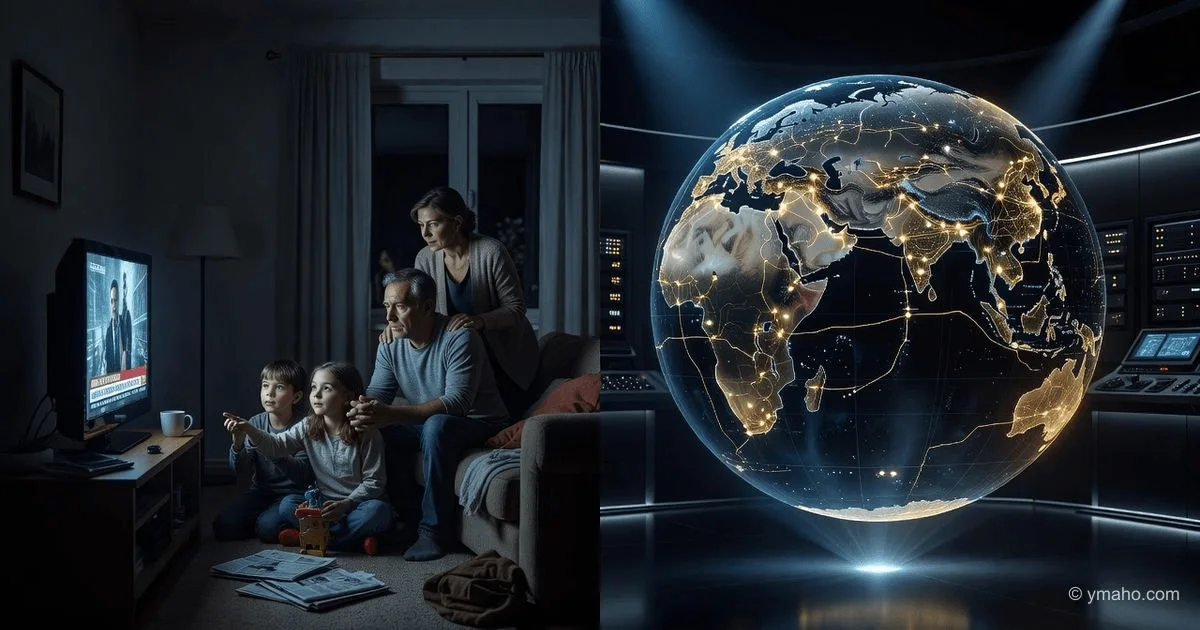
Geopolitics is the study of how geography—encompassing location, resources, and physical space—shapes political power and international relations . It analyzes the interplay between state and non-state actors, their national interests, and the tools they use to achieve them, all within a global landscape that is constantly being redrawn . Understanding what is geopolitics and why does it matter is no longer an academic exercise but a critical skill for navigating a world where a conflict in one region can directly impact the price of food on your table and the stability of your job.
What You'll Learn
By the end of this explainer, you'll understand the fundamental mechanics of geopolitics, moving beyond abstract theories to grasp how global power shifts directly affect your daily life and financial decisions. You will walk away with a clear framework for interpreting international news and the practical steps you can take to build personal and professional resilience in an increasingly fragmented world. The most important takeaway is that geopolitical risk is now a personal financial and lifestyle risk, not just a matter for diplomats and investors.
How It Works: The Mechanism of Global Power
At its core, geopolitics is about the "struggle for the control of geographical entities for political advantage" . This struggle is driven by a country's "national interest"—its goals for survival, security, economic prosperity, and cultural influence . To achieve these goals, nations can choose to be cooperative (engaging in trade and alliances) or non-cooperative (using tariffs, sanctions, or even armed conflict) . The world is currently witnessing a shift from a predominantly cooperative, globalized system toward one of greater strategic competition and fragmentation .
The Tools of Geopolitics
Countries deploy a range of tools that can be categorized into three main types :
- National Security Tools: These include direct measures like armed conflict and indirect ones like espionage or forming military alliances for deterrence .
- Economic Tools: These can be cooperative, such as multilateral trade agreements, or non-cooperative, such as tariffs, sanctions, and nationalizing foreign assets to assert economic control .
- Financial Tools: These reinforce a stance through financial mechanisms, from cooperative free exchange of currencies and foreign investment to restrictive measures like capital controls .
The Geopolitical Risk Framework
Geopolitical risk is the potential for tensions or actions between actors to disrupt the peaceful course of international relations . It can be classified into three types, each affecting the world differently :
- Event Risk: This evolves around known dates, like an election or a planned policy decision. Brexit is a classic example .
- Exogenous Risk: This is a sudden, unanticipated shock, such as an invasion, a natural disaster, or a sudden uprising .
- Thematic Risk: These are known, slow-moving risks that evolve over time, including climate change, cyber threats, and the ongoing threat of terrorism .
Why It Matters: The Concrete Impact on Your Life
The consequences of these geopolitical shifts are not confined to boardrooms and government ministries. They permeate the economy and directly affect household budgets. As the World Economic Forum noted, geoeconomic confrontation was ranked as the top immediate risk, meaning that the use of economic tools to achieve geopolitical goals is now the primary driver of global instability .
The Cost of Living
When conflict or strategic competition disrupts supply chains, the result is price volatility. Families feel this as higher electricity bills, fuel costs, and food prices . For example, a conflict near the Strait of Hormuz can cause a 60% jump in the price of urea, a key fertilizer component. This directly increases the cost of food production and can lead to acute hunger for millions . Based on data from the Uppsala Conflict Data Program, approximately 60 active state-based conflicts were recorded in 2024 alone, highlighting the scale of ongoing global tensions . These conflicts are not isolated events; they are part of a larger pattern of geoeconomic confrontation that is reshaping the global economy.
Your Job and Career
Geopolitical instability strains labor markets. A recent academic analysis suggests that tariff increases alone could result in cumulative global job declines exceeding 23 million . Businesses scale back, hiring slows, and real wages are eroded by inflation . For you, this translates into a more uncertain job market and potentially slower wage growth, particularly in sectors tied to global trade and manufacturing.
Health, Education, and Social Stability
The effects are also deeply personal. Geopolitical conflicts lead to health system collapses and displacement, increasing the risk of illness and hunger for the most vulnerable . Over 52 million children in conflict zones have experienced educational disruption . Even if you are not directly in a conflict zone, the resulting economic strain can lead to reduced funding for social services and increased political polarization, as seen with the sharp rise in anti-migrant demonstrations and hate crimes in stable nations like the US and Germany .
By the Numbers: A World Under Pressure
| Statistic/Milestone | Figure | Context & Source |
|---|---|---|
| Active State-Based Conflicts (2024) | ~60 | Conflict is spreading at an unprecedented rate, making geopolitical risk the world's top immediate threat . |
| Conflict-Related Deaths (2024) | >2.3 million | This staggering figure, from the Uppsala Conflict Data Program, underscores the immense human cost of geopolitical strife . |
| Global Seaborne Fertilizer Exports | ~33% | The Middle East normally supplies roughly one-third of seaborne fertilizer exports, most of which were halted by the 2026 Gulf conflict . |
| Surge in Fertilizer Price (Urea) | 60% | The World Bank reported this surge, driving up food costs for consumers globally . |
| Food Insecurity Increase (2026) | 363 million | The World Food Programme warns this is the number of people who could face acute hunger if strait disruptions continue . |
| Estimated Job Losses from Tariffs | >23 million | A recent academic analysis suggests this is the cumulative global impact of tariff increases alone . |
Common Myths vs. Facts
| Myth | Fact |
|---|---|
| Myth: Geopolitics is a distant affair that only concerns world leaders. | Fact: Geopolitics directly affects household budgets through food and energy prices, employment opportunities, and overall economic stability . |
| Myth: Globalization and free trade have made conflict obsolete. | Fact: While globalization fostered cooperation, it also created interdependence that can be weaponized. States still prioritize power and security, as seen in the rise of strategic competition and "de-risking" . |
| Myth: Geopolitical risk is mainly a military risk. | Fact: Geopolitical risk is increasingly economic and financial. The use of tariffs, sanctions, and "weaponized trade" is now a primary tool of statecraft . |
| Myth: Economic ties automatically prevent conflict. | Fact: History shows that strategic mistrust can override economic ties. The "security dilemma" explains how one country's efforts to strengthen itself can make others feel less secure, leading to tensions even when no one wants war . |
| Myth: The biggest geopolitical threats are unpredictable "black swan" events. | Fact: Many of the biggest risks, like climate change and cyber threats, are "thematic" and known. They evolve over time, providing opportunities for preparation . |
What You Should Do With This Knowledge
Understanding what is geopolitics and why does it matter is the first step to protecting yourself. Here is a practical, multi-faceted approach to building resilience:
- For Your Personal Finances: Recognize that global supply shocks cause inflation. To hedge against this, consider allocating a portion of your savings to tangible assets or investments that historically outperform during inflationary periods, such as real estate or commodities. Ensure your investments are diversified not just by asset class, but also by geography and currency.
- For Your Career: In an era of "de-risking" and "friend-shoring," industries tied to national security, domestic manufacturing, and renewable energy are set to grow. Develop skills that are transferable and in demand in resilient sectors. Consider how your industry might be exposed to global supply chain shocks and proactively seek to make yourself more valuable by understanding these dynamics.
- For Your Daily Life and Mindset: Acknowledge the "security dilemma" at play in your country's foreign policy and its inevitable cost. When you see rising defense spending in the news, understand that it has an opportunity cost that can "crowd out" other public investments . In your daily decisions, stay informed not just of local events, but of global ones. The stability of your country's trade routes, energy sources, and alliances are part of the "shield" that protects your quality of life .
Frequently Asked Questions
Is geopolitics the same as international relations?
No. While closely related, geopolitics is a specific lens through which to view international relations. It emphasizes the role of geography (location, resources, physical space) in shaping political power and the behavior of states. International relations is a broader field that includes the study of international law, diplomacy, and global institutions in addition to power politics .
How does geopolitics affect the global economy?
Geopolitics affects the economy through trade, investment, and supply chains. For example, the use of tariffs (a non-cooperative economic tool) can trigger trade wars that slow economic growth and increase prices for consumers . Furthermore, geopolitical instability drives up insurance costs, disrupts shipping routes, and creates uncertainty that deters investment, all of which impact global economic performance.
Why is there a current shift from globalization to more fragmentation?
The shift is due to a growing recognition of the vulnerabilities created by deep interdependence. The COVID-19 pandemic exposed the fragility of global supply chains, while rising tensions between major powers (like the US and China) have led to a "security dilemma" where states prioritize resilience and strategic autonomy over pure efficiency . This has resulted in policies like "de-risking" and "friend-shoring."
How can I protect my investments from geopolitical risk?
Investors use a framework to assess geopolitical risk based on its likelihood, velocity (speed of impact), and size of impact . To protect your portfolio, you can focus on asset allocation, geographic diversification, and scenario planning. A common strategy is to build resilient portfolios that can withstand shocks by investing in assets that are less correlated with traditional markets or by seeking hedging opportunities.
What are "chokepoints" and why are they important?
Chokepoints are narrow, strategic locations—like the Strait of Hormuz or the Suez Canal—through which a significant volume of global trade, especially energy, must pass . Their importance lies in their vulnerability; any disruption, whether from conflict, piracy, or accident, can have an outsized impact on global energy prices and commodity flows, creating a ripple effect on the global economy.
Sources
- CFA Institute, 2026 Curriculum, "Introduction to Geopolitics"
- Britannica, "Geopolitics"
- World Economic Forum, "The real cost of geoeconomic confrontation" (June 2026)
- Sage Publishing, "Geopolitics"
- Repository of the Academy's Library, "Geopolitical Context, Ideologies and Motivations" (2025)
- 3News, "A Fragile World: How global tensions are impacting everyday lives" (2025)
— Editorial Team