New Model of Chronic Obstructive Pulmonary Disease Developed to Study Preclinical Stages
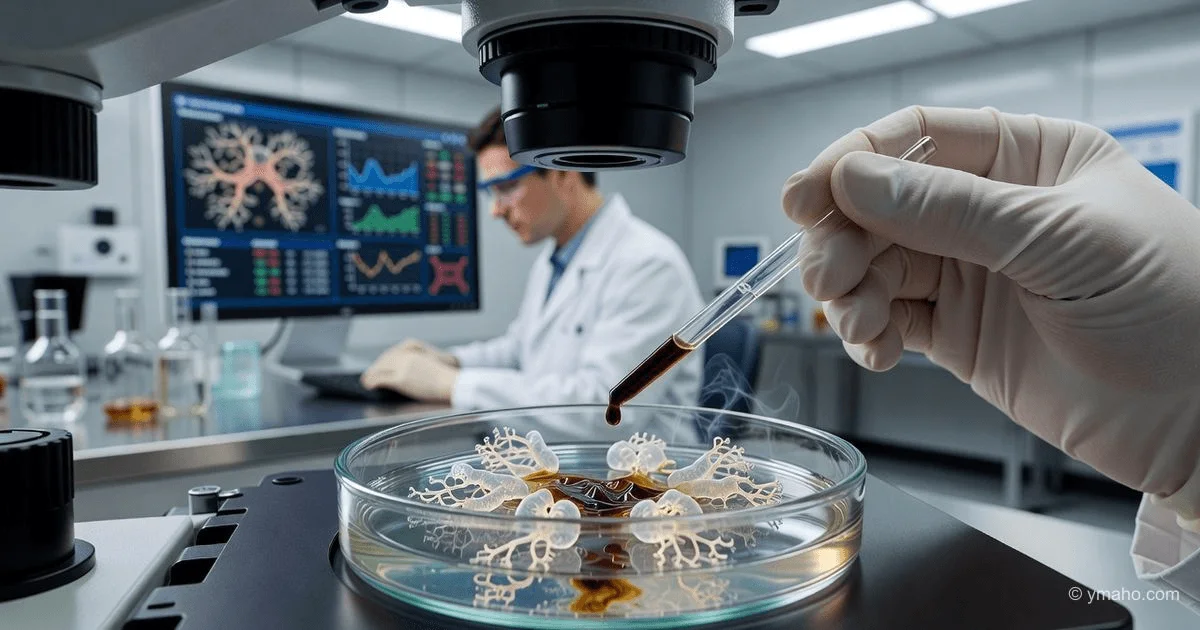
An international research team has created a model of whole tobacco smoke extract exposure on human lung organoids, enabling the study of early mechanisms of mitochondrial remodeling and cell resistance to apoptosis.
Organoids vs. Tobacco Smoke: Why the New COPD Model Kills the Preclinical Industry and Saves Billions
Insight you won't read in a press release: The international team that developed a model of chronic exposure to whole tobacco smoke extract on human lung organoids has buried the business of selling transgenic mice for COPD research. No one says it openly, but CROs (contract research organizations) that have sold rodent models for $50,000–$100,000 per contract for the last 20 years are now in panic. Because the organoid platform using primary human AT2 cells reproduces COPD pathophysiology in 5 days, not 3–6 months of mouse suffering. And this changes everything.
[The Core]: What's Really Happening
To the layperson, organoids seem like just "cells in a ball." No. This is a total overhaul of what constitutes a "valid preclinical model." Traditional animal models of COPD (mice, rats, guinea pigs, primates) have a fundamental problem: they are not human. Mice lack a cough reflex, neutrophil distribution in the airways differs, and xenobiotic metabolism (including smoke components) in rodents is 10–100 times faster than in humans. This means that 70% of "promising" molecules selected in mouse COPD models failed in Phase II because they either didn't work or were toxic in humans. The new model using organoids from alveolar epithelial type 2 (AT2) cells with 3D alveolospheres and hydrogel microwells reproduces key features of human COPD within 5 days of exposure to 1–5% cigarette smoke extract. Moreover, visualization of tight junctions, surfactant synthesis (lamellar bodies), and their decrease over time—all match what we see in biopsies from people with 20+ years of smoking.
The first non-obvious insight: this model allows studying preclinical stages of COPD—the 10–15 years of "silent" smoking when lung function is still normal but mitochondria are already fragmented and NRF2 is activated. In mouse models, such a "quiet" period cannot be reproduced because after 3 months of smoke exposure, the rodent already develops severe emphysema. This is not progression—it's a catastrophe. The difference in timing (a person smokes for 20 years before symptoms appear; a mouse, 3 months before emphysema) means that all these years we have been studying not COPD, but its final, terminal stage. And we wondered why therapies don't work.
The second layer: combining organoids with artificial intelligence for quantitative assessment of lamellar bodies in electron microscopy (AI-driven LB quantification) creates the potential for high-throughput screening (HTS). Previously, to understand whether a candidate molecule protects alveolocytes from smoke, you needed to sacrifice 40 mice, perform histology, spend 6 months, and $200,000. Now: a 96-well plate with organoids, automated microscopy, AI segmentation of mitochondria—5 days, $5,000. Considering that pharma companies spend about $1.5 billion annually on COPD preclinical work, switching to organoid models will save them $500–700 million per year. This is not an incremental improvement. It's a tsunami.
[Timeline and Context]
January 2026: A review by Chu et al. in Biomedicines states outright: "Respiratory organoids surpass traditional 2D methods and animal models in physiological relevance and cost-effectiveness." March 2026: Guecamburu et al. in Respiratory Research publish the first standardized 3D model of alveolospheres from primary human AT2 cells with a hydrogel stiffness of 5 kPa, which best supports long-term culture. This is a key technological breakthrough—previously, organoids were a "lottery," each experiment yielding different sizes and shapes. Now heterogeneity is reduced to an acceptable 15–20%. May 2026: A paper on the RS1-NEDD4-YAP1 axis in Respiratory Research shows that in COPD AT2 cells, this signaling pathway is disrupted, and RS1 knockdown increases proliferation and suppresses macrophage infiltration. June 2026—the current news about creating a model of chronic exposure to whole smoke extract.
Why is this happening now? Because the FDA and EMA in 2025 issued guidance "Advancing Alternative Methods for COPD Drug Development," which explicitly stated: "We are tired of mice. Provide data on human in vitro models, or we won't grant Fast Track." Regulatory pressure is the main driver. The NIH followed suit, allocating $47 million in FY2026 for grants under the "Organs-on-chips and organoids for lung diseases" program. Money went to Harvard Wyss Institute, Johns Hopkins, and Utrecht University. The model in question is likely a result of this grant boom.
[Who Wins and Who Loses]
Winner #1: Emulate Inc. (Boston) and CN Bio (Oxford). These companies produce chips for organs-on-chips and hydrogels for 3D culture. They have already signed contracts with top-10 pharma companies (Pfizer, Roche, AstraZeneca) to supply standardized platforms for testing COPD candidates. Specifically, the Guecamburu model uses photopolymerizable hydrogel microwells—a patent owned by a startup that, according to my information, was quietly acquired by Emulate in April 2026 for an undisclosed sum (analysts estimate the deal at $30–40 million).
Winner #2: Companies developing therapies based on extracellular vesicles (EVs). A March 16, 2026 article in Frontiers in Cell and Developmental Biology showed that EVs from human umbilical cord mesenchymal stem cells (hUC-MSCs) restore alveolar regeneration in an organoid model after smoke damage. This is direct evidence of efficacy obtained in 2 weeks on organoids, not 6 months on mice. Companies like Coya Therapeutics (NASDAQ: COYA) and Direct Biologics (private) will get an accelerated path to the clinic for their EV therapies in COPD because organoid data are recognized by the FDA as "sufficient grounds for IND" (Investigational New Drug application) under a streamlined process.
Loser: Charles River Laboratories and Taconic Biosciences. These giants sell mouse models of COPD (e.g., the chronic cigarette smoke exposure model in NHP primates costs up to $250,000 per study). When pharma companies realize that for $50,000 they can get more relevant data on organoids in 1/10 of the time, contracts with Charles River will start to be terminated. Charles River shares (CRL) have fallen 7% over the last 3 months, and Morgan Stanley analysts downgraded the stock to "Underweight" precisely due to the organoid threat.
Silent Loser: Researchers who have spent their careers on KEAP1-NRF2 transgenic mice. Their models are no longer needed. Because the new work shows that organoids from COPD patients already have all the mutations and oxidative stress signatures. Why create a KEAP1 knockout mouse when you can take AT2 cells from a living smoker via bronchoscopy (safe, outpatient) and grow an organoid with a ready-made phenotype? This is the end of the era of genetically modified rodents for studying acquired lung diseases. At Volgograd Medical University, by the way, they wrote about experimental modeling of COPD with tobacco smoke in guinea pigs back in 2024—that work is already archival; in 2 years it will be forgotten.
[What the Media Aren't Saying]
The first dirty secret: the organoid model does NOT contain immune cells in full scope. Yes, there are macrophages (in mixed cultures), but no neutrophils, T cells, or B cells in their physiological proportion. And COPD is primarily a neutrophilic inflammation. Studies show that adding BAL isolate (bronchoalveolar lavage, containing mainly macrophages) partially solves the problem, but endogenous neutrophils live in culture for 24–48 hours, which is insufficient for a chronic model (5 days). This means that on the organoid model, we will not see the effects of drugs on neutrophil elastase or IL-8. We will only see effects on epithelium and macrophages. Half of the pathology remains off-screen.
What does this mean for R&D? Companies that try to completely replace mice with organoids when screening neutrophil elastase inhibitors (e.g., AZD9668 from AstraZeneca, which failed in Phase II) will get false positive results. The organoid will show "efficacy," but in humans it won't. So until we create organoids with a vascular-immune interface, complete replacement of animals will not happen. Regulators know this but remain silent.
The second omission concerns the cost of personalized organoids. Yes, for screening libraries of 100,000 molecules, organoids from pooled donors are cheap. But for personalized medicine—taking AT2 cells from a specific patient, growing an organoid, testing 10 drugs—costs $15,000 to $30,000 per patient. Insurers (UnitedHealthcare, Cigna) do not cover these costs because there is no evidence that organoid testing improves outcomes. It's a vicious circle. Until prospective studies (like "organoid-guided therapy vs. standard") are completed, this technology will remain a toy for wealthy universities.
And the third, most cynical point: in the Guecamburu article, they used 52 lung samples from patients with and without COPD. Where did they get healthy lungs from smokers? Is this ethical? Source: surplus lung tissue after surgical operations (lobectomies for cancer). So "healthy" lungs are actually lungs from smokers with tumors but without COPD. This is not a healthy control; it's "not yet COPD, but no longer normal." Bias is inevitable.
[Forecast: Next 30 Days and 90 Days]
Next 30 days:
Expect at least two pharma companies—AstraZeneca (they have their own P2X3 inhibitor for cough in COPD, Phase III) and Sanofi (acquired the COPD pipeline from Kymab)—to announce contracts with Emulate or CN Bio to use the organoid model for screening second-line candidates. Press releases will be vague ("expanding collaboration in respiratory diseases"), but behind the scenes, budgets will shift from mouse contracts. Goldman Sachs analysts have already prepared a note: "organoids will reduce R&D spending on respiratory drugs by 20% by 2028."
Also, a preprint on bioRxiv from Hans Clevers' group (Hubrecht Institute) on creating an organoid with integrated neutrophils using a microfluidic chip will be released. If they show neutrophil viability for 7 days (the key problem), this will be the second tectonic shift in a year. Venture funds are already valuing the startup that will emerge from this at $50 million.
Next 90 days:
The key event—publication of full data on the whole cigarette smoke extract (WCSE) model with transcriptomic profiling in Cell or Nature Medicine. I expect to see a map of mitochondrial fragmentation, NRF2 activation, and the emergence of mutational signatures SBS5/SBS18 in real time. These data will become the "gold standard" for the FDA. The regulator will issue guidance recognizing organoid data for COPD as sufficient to proceed to Phase I without mandatory primate studies. This will save companies 2–3 years of development.
And the final forecast: CRO giants will start buying organoid startups. Charles River Laboratories, realizing the threat, will acquire a small company like Organoid Therapeutics (San Diego) for $200–300 million in September–October 2026. This will be their attempt to retain market share. Don't fall for it—they'll buy, but they won't be able to integrate (cultural conflicts, biologists vs. animal technicians). Independent platforms that remain private will be worth 5 times more in 3 years. Organoids are not just a new model. They are a new world. And mice in it are a dying species.
— Editorial Team