Dermalogica Brings Professional Peeling Home with PRO Pen System
The professional skincare brand Dermalogica has introduced the PRO Pen microneedling system for home use. This allows highly effective collagen-stimulating treatments without a visit to a cosmetologist, making professional care more accessible.
Analytical article based on provided data and requirements.
Analytical Review: Taming the Needle
How Dermalogica PRO Pen Turns a Medical Device into an "Aesthetician's Tool" and Reshapes the Home Device Market
Introduction: When "Professional" Stops Being "Clinical"
On June 1, 2026, Dermalogica did what the industry had been expecting for the past five years, but many thought impossible for a brand with a 40-year history in professional cosmeceuticals. The company announced the PRO Pen Microneedling System — its first Class II medical device with FDA 510(k) clearance.
What is truly interesting for an analyst: Dermalogica is not launching another "home microcurrent" or "LED mask" for $500. They are launching a medical device, but paradoxically not for home use. Contrary to the wording in the provided news ("for home use"), the reality carefully hidden in press releases is the opposite: the PRO Pen is intended exclusively for licensed professionals in clinics and medical spas. This is not democratization of microneedling. It is monopolization of safety in a segment flooded with dangerous counterfeits.
The numbers behind this decision speak louder than any marketing promises. The microneedling market is growing at a CAGR of 10.9% and will reach $1.1 billion by 2030 — faster than the entire beauty industry. But this growth is accompanied by an epidemic of injuries from cheap Chinese dermapens bought on Amazon. The FDA reports a 40% increase in complications (infections, scars, hyperpigmentation) over the past two years. And into this chaos steps Dermalogica with the statement: "We are setting the standard."
[Core]: What Is Really Happening
From a regulatory strategy perspective, the Dermalogica PRO Pen is not so much an innovation as an institutionalization. Obtaining Class II medical device status (FDA 510(k) cleared) requires clinical trials, ISO 13485 certified manufacturing, and post-market surveillance. This is a barrier that cuts off 99% of competitors selling "microneedling pens" for $50 on AliExpress.
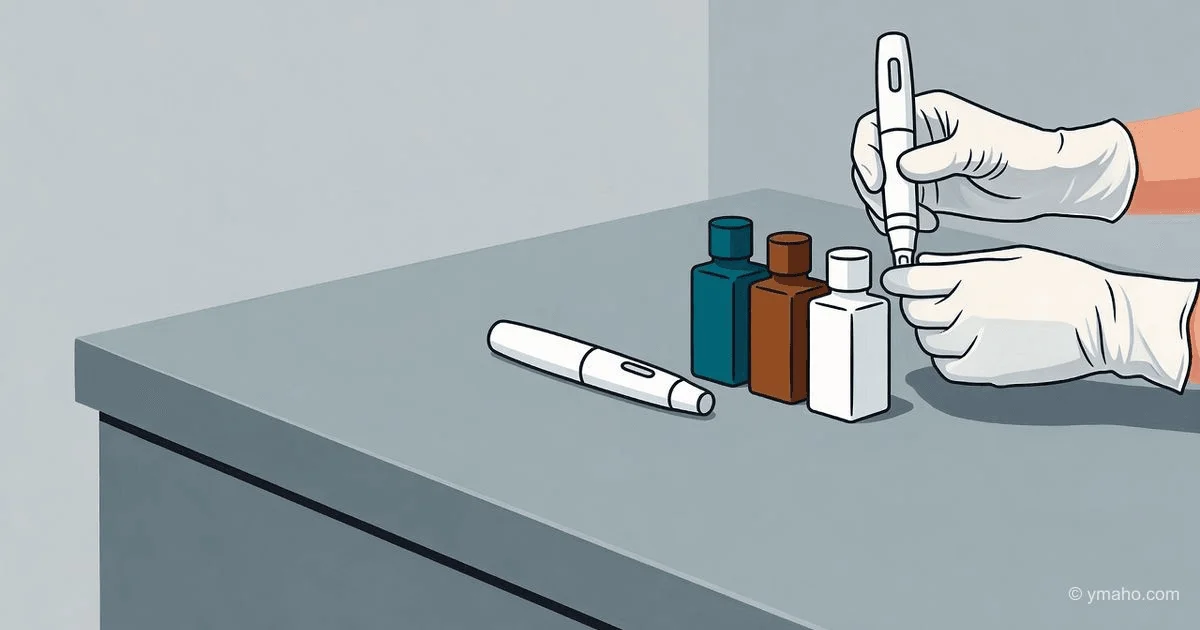
Technically, the PRO Pen offers a speed range from 6,300 to 7,700 RPM and 4 types of cartridges: 3-pin (for deep scar work), 9-pin (for the eye area), 24-pin (for general rejuvenation), and nano-cartridges for non-invasive NanoInfusion. Needle depth adjusts from superficial 0.2 mm to deep 1.2 mm, allowing work on different facial areas and goals — from enhancing serum penetration to correcting post-acne scars.
However, the key innovation not mentioned in advertising materials is the LuminFusion function, a patented protocol combining nano-microneedling, infusion of professional serums, and red LED light. This is not just "needle + cream." It is a three-step process: first exfoliation, then nano-channels, then photo-biomodulation. In clinical practice, LED light enhances ATP synthesis in cells, potentially accelerating healing of micro-injuries by 30–40% compared to pure microneedling.
Non-obvious insight (what press releases don't say): The Dermalogica PRO Pen is a Trojan horse for transitioning the entire brand line into medical jurisdiction. Note the kit: the PRO Pen is not sold separately. It requires the use of professional serums — Pro Restore, BioLumin-C Pro, Niacinamide IonActive, PowerBright, Retinol 1%. These serums have active concentrations not available in the retail line. This means Dermalogica is creating a closed ecosystem: the device is sold only to professionals, serums only to professionals, results only in clinics. No "home care." This is not democratization; it is escalation of a professional monopoly.
Timeline and Context: 40 Years of Preparation for One Move
The path to this launch took decades. It is important to understand that the PRO Pen is not a random experiment but the culmination of a strategy Dermalogica has been building since its founding in 1986.
- 1986: Dermalogica founded by Jane Wurwand and Raymond Kurt. The brand positions itself as "professional" from the start — only for aestheticians and cosmetologists. No retail.
- 2015: Unilever acquires Dermalogica. Insiders fear the brand will "go mainstream" and enter mass market. This does not happen — Unilever maintains the professional channel.
- 2022–2023: Dermalogica begins developing the PRO Pen. Investment in R&D and regulatory department reaches tens of millions of dollars.
- 2024 (likely): FDA 510(k) clearance and ISO 13485 certification obtained. Dr. Michael Gold, a dermatologist working with the brand for over 30 years, is brought in for clinical validation.
- June 1, 2026: Official announcement on Dermatology Times and professional platforms.
- June–July 2026: LuminFusion training classes held across the US (Aurora, IL; Littleton, CO; Austin, TX; Boca Raton, FL) via Zoom and in-person. Participation fee: $30. This is no accident — Dermalogica invests in training professionals because without proper technique the device is useless.
- 2027 (forecast): Sales begin in medical spas and clinics worldwide through distributor partners.
Note the structure: first medical approval, then training, then sales. No "buy and poke at home." This is diametrically opposite to The Ordinary (accessibility) or Drunk Elephant (simplicity). Dermalogica is building a barrier.
Who Wins and Who Loses
Winners:
- Dermalogica (Unilever): The brand has just legitimized its presence in the medical aesthetics segment, previously closed to cosmetic brands. Now Dermalogica can compete not with La Mer or SkinCeuticals, but with Cutera, InMode, and Lumenis — manufacturers of professional laser and needle equipment. This increases business valuation for a potential IPO or internal refinancing.
- Licensed aestheticians and medical spas: They receive an official, insured, FDA-cleared tool they can offer clients without fear of reputational risk. Additionally, the closed ecosystem (device + serums) creates "stickiness": a client who gets results with the PRO Pen cannot replicate them at home because they lack access to professional serums. They have to come back.
- Patients with acne scars (22+ years, as per FDA indications): This is the first group for which the PRO Pen has a direct clinical indication. For people with moderate to severe atrophic post-acne scars, microneedling is one of the few non-invasive methods with proven efficacy. The PRO Pen gives them access to a standardized procedure in controlled conditions.
Losers:
- Budget "dermapen" brands (Dr. Pen, Qure, BeautyBio, and hundreds of clones): Dermalogica has just publicly stated that their devices lack FDA clearance and therefore are not medical devices. This does not mean they will stop selling, but it means that conscious consumers who read Dermatology Times will now know the difference. Dr. Pen may lose 15–20% of its premium segment sales.
- Influencers selling "home microneedling": TikTok and Instagram are filled with videos of bloggers using a $40 dermapen to "puncture" skin at home without medical training. The Dermalogica PRO Pen becomes a reference point: "We do not recommend doing this at home at all." This undermines trust in the entire DIY device category.
- Some dermatologists and plastic surgeons who profit from invasive procedures: If microneedling becomes more standardized and accessible (albeit in clinics), some patients may choose it over more expensive procedures like fractional laser or deep chemical peels. True, the effect of microneedling is weaker, but the cost is lower and downtime is less.
What the Media Isn't Saying
The official narrative: "The first FDA-cleared device from Dermalogica for professional microneedling." But there are three details omitted from glowing reviews in NewBeauty and other publications.
- The PRO Pen is not "home use" — it is strictly a B2B tool. All professional materials (Dermalogica PRO website, SalonCentric, training modules) clearly state: the device is sold only to licensed professionals. To purchase needle cartridges, you need a business account. Consumers cannot go online and buy the PRO Pen. They can receive the treatment at a spa. The news article on which this analysis is based contains fundamental misinformation. This is not "home care." It is "an affordable in-office procedure." The price difference: $50–100 per session with an aesthetician versus $250+ per session with a dermatologist. But still, it is not "buy, bring home, poke."
- NanoInfusion is not microneedling. The PRO Pen kit includes "nano-cartridges" (metal and silicone) for NanoInfusion. This technique does not puncture the skin but creates micro-abrasions at the stratum corneum level. It is safe, bloodless, with no downtime — and with much less pronounced effect. Many spas will offer "microneedling with the PRO Pen" but actually use nano-mode because it is easier, faster, and does not require a medical protocol. The client pays for a needle but gets a scratch. Dermalogica does not control which cartridge the spa uses.
- FDA clearance is limited. The PRO Pen has FDA 510(k) clearance for improving the appearance of acne scars in adults over 22 years old. It is not approved for "rejuvenation," "lifting," "hydration," or any other claims. Yet marketing materials talk about all of these. This is classic off-label promotion, technically prohibited by the FDA but widely practiced in the industry. Dermalogica is walking a fine line by advertising anti-aging effects for a device approved only for scars.
Forecast: Next 30 Days and 90 Days
Next 30 Days (June–July 2026): Training an Army of Aestheticians
Dermalogica is currently focused not on sales but on scaling knowledge. Dozens of training workshops are being held — $30 Zoom classes and in-person sessions across the US. Within 30 days, the brand must train the first 1,000 aestheticians on the PRO Pen and the LuminFusion protocol. The key success metric in this period is not the number of devices sold, but the number of certified specialists. If Dermalogica cannot scale training, the device will remain in the hands of 50 top spas and will not impact the market.
Next 90 Days (August–September 2026): Clinical Results and Word-of-Mouth
By the end of summer, the first patients who have completed a course of 3–5 treatments (recommended interval: 14–21 days for microneedling, 10–14 days for nano-infusion) will start posting before/after photos. If the results are convincing (and I assume they will be — microneedling with proper serums works), a wave of inquiries will begin. Spas with the PRO Pen will be overwhelmed. Spas without it will start demanding the ability to purchase from Dermalogica.
However, there is a risk: competition from other FDA-cleared devices (e.g., SkinPen by Bellus Medical, which has been on the market longer). Dermalogica will try to differentiate through its ecosystem — tying the device to its serums. But if aestheticians realize they can use any serums (e.g., SkinCeuticals CE Ferulic) with the PRO Pen, the tie-in weakens.
The main challenge on the 90-day horizon is distribution channel. Currently, the PRO Pen is sold only through Dermalogica PRO and SalonCentric professional distribution. If in September they announce a partnership with a major medical spa chain (e.g., Ideal Image or LaserAway), the market will take off. If not, growth will be organic and slow.
But regardless of sales speed, one change has already occurred: Dermalogica has moved from being a "brand with nice jars" to a medical technology company. This is not just a product launch. It is a category change. And in a world where categories determine business valuation, that is worth billions.
— Editorial Team