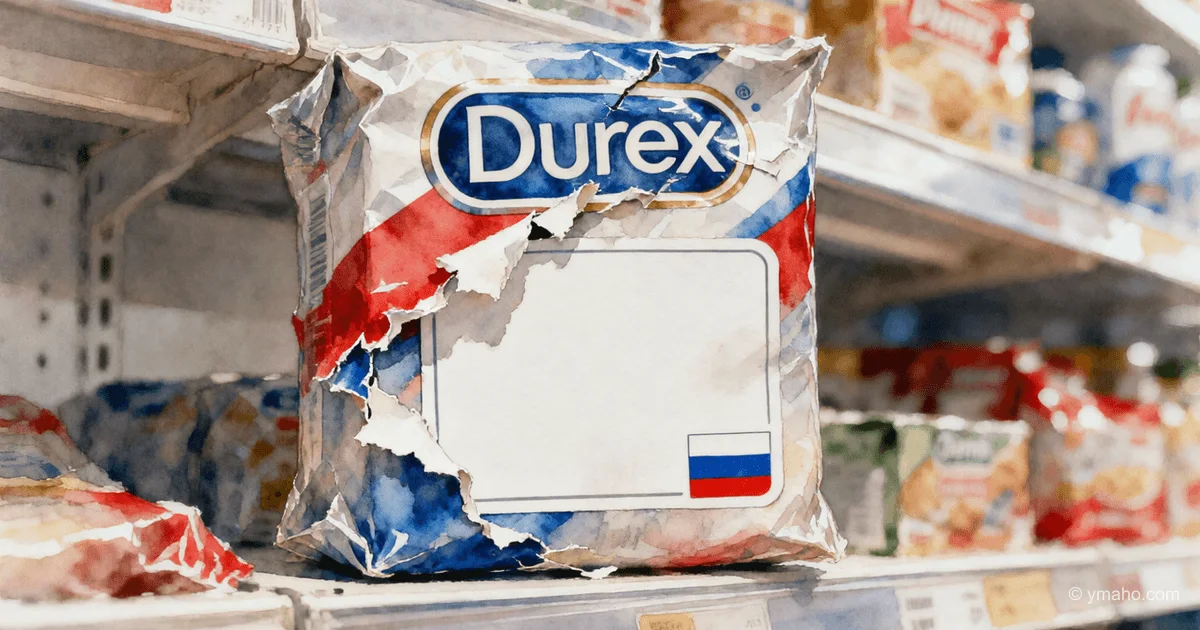
Durex manufacturer leaves Russia: EU sanctions change the game for global brands
British company Reckitt, which produces Durex, Lysol disinfectants, and other household products, has announced that it can no longer use its international brands in Russia. The reason is the tightening of European Union sanctions. Now, Reckitt's Russian division is forced to create new products and register its own intellectual property to replace nearly the entire range of hygiene products that were previously supplied under global brands.
How do EU sanctions impact business?
EU sanctions, imposed after the start of the war in Ukraine, are constantly being tightened. The latest changes affect not only the export of goods but also the rights to use brands. While previously a company could continue selling products under a familiar name, this is now impossible if the brand owner is based in the EU.
Reckitt is a British company, but its intellectual property is registered in the European Union. This is precisely what became the stumbling block. A company representative explained: "Changes in sanctions have affected our ability to supply home care and germ protection products to the market, as well as to use global brands if the main product is restricted by EU sanctions and the intellectual property rights belong to an EU entity."
What does this mean for Reckitt?
The financial impact is already tangible. The company reported a double-digit percentage decline in comparable revenue in Russia. Moreover, this decline dragged down overall emerging market performance by 200 basis points (2 percentage points).
To maintain some presence in the Russian market, Reckitt is launching a replacement process: the Russian team is developing new products and registering new patents and trademarks. Notably, the head office in Britain provides no support — everything is done locally.
Why does this matter to everyone?
This case is not isolated. Many international companies have faced a dilemma: leave Russia and lose the market, or stay but under sanctions pressure. Reckitt chose a third path — stay but under a new, local brand. However, this requires time and money.
For consumers in Russia, this means that familiar products may disappear from shelves or change significantly. For global business, it is a signal: sanctions are becoming more sophisticated, affecting not only finances but also intellectual property.
Key takeaways
- EU sanctions directly affect the ability to use global brands in Russia.
- Reckitt is losing a double-digit percentage of revenue in Russia due to new restrictions.
- The company is forced to create new products and brands locally, without support from headquarters.
- The process of transferring Reckitt's Russian business is still ongoing.
- Other companies may follow this example, changing the consumer market in Russia.
What's next?
Reckitt stated that the process of transferring ownership of the Russian business "is ongoing, and we will provide further information if and when appropriate." It is not yet clear when new local products will appear or what they will be called. But one thing is clear: sanctions are changing the game for everyone.
— Editorial Team









