"Eat Your Skincare": The New US Trend Turning Kitchens into Beauty Ritual Hubs
The new "Eat Your Skincare" trend is gaining momentum, offering a rethink of skincare starting from the grocery cart. It's not about replacing serums and creams, but about creating a "foundation" of beauty from within using nutrients—from beta-carotene in carrots to omega-3s in fatty fish and probiotics in kimchi.
"Eat Your Skincare": How the Beauty Industry is Reinventing the Plate and Rewriting the Rules
The Essence: What's Really Happening
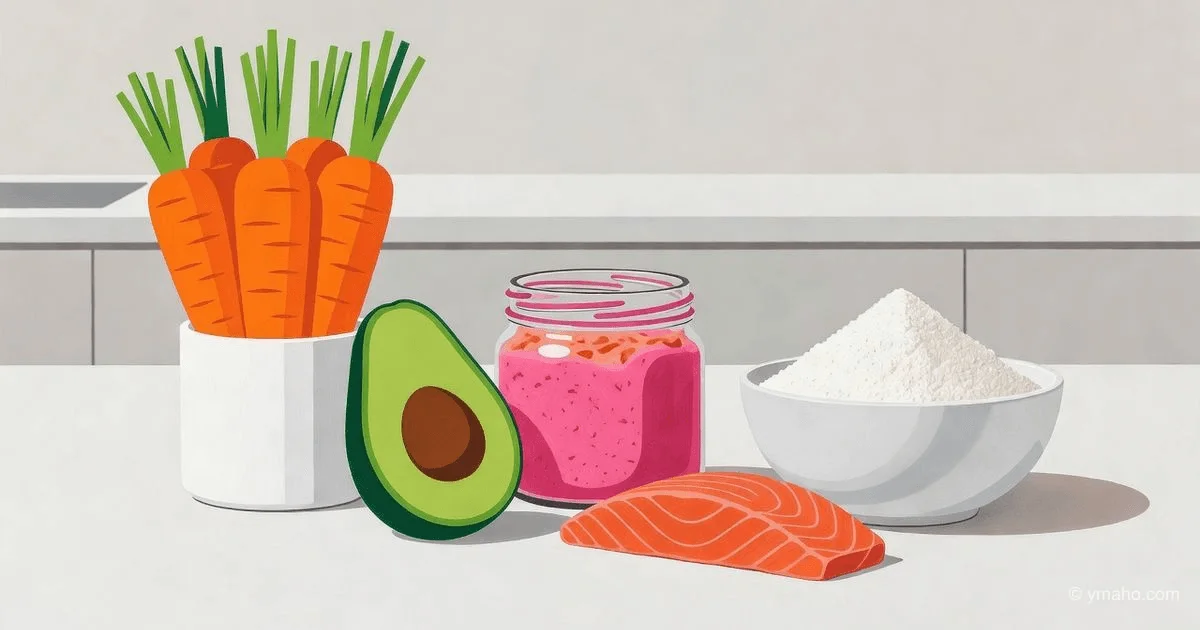
The "Eat Your Skincare" trend is not another diet or a juice infomercial. It's a fundamental shift in consumer logic: the beauty ritual now begins not with cleansing or serum, but with the grocery cart. Carrots are "natural retinol," avocados are building material for the barrier, kimchi is a prebiotic for the gut-skin axis.
In reality, the mechanics are more complex than "eat it and glow." It's about millennials and Gen Z, tired of 12-step checklists and harsh acids, seeking a more systemic approach. They want to fix the root cause of inflammation from within, not just patch the problem. Here, food becomes a quiet but powerful tool for managing physiology. According to Research and Markets, the global nutricosmetics market was valued at USD 9.4 billion in 2025 and is projected to reach USD 15.41 billion by 2031. This is no longer a niche hobby—it's an industry with double-digit growth.
But the most interesting part is how it's changing brand positioning. Traditional beauty giants, who for decades taught us to apply actives to the skin, are now forced to admit that their main competitor is in the next aisle of the supermarket. And they're losing not on formula quality, but on speed: the trend is born in the kitchen, not the lab, and moves bottom-up, from TikTok bloggers chopping salads to strategic sessions at L'Oréal.
Demand for ingestible beauty is growing at double-digit rates. And this creates cognitive dissonance in Estée Lauder headquarters: how do you monetize something people can grow on their windowsill?
Timeline and Context
Rewind just six months, and you can see the trend maturing and gaining mass. In February of this year, European media began noting the hashtag #EatYourSkincare—first as experimental content from nutritionist enthusiasts. In March, a key study was published in the authoritative journal Geroscience (NIH), where scientists documented that short-chain fatty acids produced by the gut microbiome directly affect skin barrier function and slow cellular aging. Science legitimized the phenomenon.
May 2026 was a turning point: Fresha analysts recorded a 22% increase in searches for "banana skincare." June 2026 saw an avalanche of growth. Major industry publications (Happi, TheIndustry.beauty) published analyses of how mass-market brands (Rhode, Dr. PawPaw, Prada Beauty) were urgently integrating "banana" and "ube" into their lines to ride the wave. Peptonic Medical, a Swedish medtech player, announced on June 3 the launch of a new segment: a functional beauty powder with collagen, hyaluronic acid, and red maca, targeting women's health through hormonal cycles. They don't say "buy our balm." They say "drink our beauty."
And then the climax: June 2026, press releases brimming with headlines about collagen coleslaw from Cleveland Kitchen. K-beauty goes over to the food side: Korean cabbage with the probiotic Lactobacillus plantarum CJLP55 is sold at Walmart and H-E-B as functional beauty food. This is not a diet snack—it's positioning. The matrix has finally flipped.
Who Wins and Who Loses
Absolute winners are nutricosmetics and supplement manufacturers. Japan and South Korea already capture nearly half the global market (48.35%). The Japanese have been drinking collagen powders for decades for healthy aging, and now their experience has become a global standard. North America is projected to show a CAGR of 9.25% through 2031. Winners are those who can package science into aesthetics: hyaluronate capsules, probiotic jelly sticks, matcha powders with adaptogens.
Unexpected winner—chain supermarkets and fresh departments. When "self-care" becomes "buy salmon and avocado," retailers get premium traffic without extra marketing spend. A person coming for carrots for a glow effect will also buy organic almonds and an expensive smoothie. Food as beauty boosts the average check.
Who's at risk? Budget decorative cosmetics brands. If consumers believe "retinol can be eaten with carrots," they'll stop buying cheap serums with dubious concentrations. Also losing out are dermatology clinics that have spent decades treating the consequences of poor diet—acne and rosacea. If clients start regulating their microbiome through fermented foods, visits to the dermatologist will drop.
Hidden loser—niche beauty brands built around a single "magic" ingredient (e.g., a vitamin C serum for USD 120). Consumers now ask, "Why do I need your ascorbate when I can eat a kiwi and get the same vitamin C plus fiber for USD 0.80?" This devalues complex formulas in favor of simple nutrients.
What the Media Isn't Saying
First non-obvious insight: "Eat Your Skincare" doesn't work without a stable microbiome. You can drink probiotic smoothies and eat salmon, but if you have dysbiosis, leaky gut, or high cortisol from stress, nutrients simply won't be absorbed. The skin gets resources on a residual basis. The industry is silent about this because microbiome diagnostics are complex and expensive. But this is where the real boundary lies between the "old" and "new" paradigm: not just eating healthy, but first healing the gut.
Second insight concerns consumption formats. The Asian market, especially Japan, has long moved from pills to functional drinks and jellies. In the US, capsules and powders still dominate. But the real breakthrough will come when beauty functionality is built into regular food—like that collagen ramen soup or fortified bread. Brands that first offer a "smart" bar for glowing skin at the price of a regular snack will sweep the shelves.
Third—this is a hidden form of body control. Psychotherapists are already sounding the alarm: behind the aesthetics of "self-care from within" often lies orthorexia—an obsessive pursuit of healthy eating. When every piece of carrot is evaluated on a scale of "how many retinol equivalents did I get," food ceases to be pleasure and becomes therapy. Media avoid this topic because the trend brings huge money from advertisers—from fitness apps to organic stores. But the flip side of "edible beauty" is anxiety, perfectionism, and a disconnect from reality.
Finally, fourth: no food can replace SPF and prescription retinoids. This is the biggest omission in viral videos. Beta-carotene from carrots is not retinol itself. It converts to vitamin A in the liver, but only if you don't have genetic polymorphisms hindering conversion. For most people, the conversion rate is extremely low. But YouTube bloggers stay silent because a "bitten carrot" gets 10 times more views than an analysis of carotenoid metabolism in the small intestine.
Forecast: Next 30 Days and 90 Days
30 days: We'll see a wave of "edible beauty" launches from mid-tier D2C brands. They'll copy the success of Rhode (caramelized banana) and Cleveland Kitchen (probiotic cabbage), but with cheaper ingredients. Whole Foods and Erewhon shelves will feature smoothie lines labeled "For Your Glow." The main battle will be for the fridge shelf: who will first launch a collagen yogurt without the "protein" prefix? Asian grocery stores like H Mart will start promotions linking fermented vegetables with BB cream samples. Social media will be flooded with challenges like "My Skin Dinner": people showing their plates, explaining which step of skincare each ingredient covers. TikTok influencers will retrain as nutritionists. Meanwhile, large beauty conglomerates (L'Oréal, Shiseido) will hold "debunking" webinars, proving that the concentration of actives in their serums is hundreds of times higher than in carrots. But this will look like defending an outdated business model.
90 days: The trend will peak in hype and begin to differentiate. In Japan and Korea, "Eat Your Skincare" will merge with the reverse-age trend. "Hormonal sets" of foods for different phases of the menstrual cycle will appear—with delivery and instructions from an endocrinologist. These will cost from USD 300 per week but become status products. In the US, the first class-action lawsuits will emerge: someone will eat too many carrots, get carotenemia, and sue a blogger for "promoting dangerous methods." The FDA will issue a warning that dietary supplements labeled "beauty-from-within" are not regulated as drugs and their efficacy is unproven. The market will cool slightly but won't crash.
However, the most important shift will happen in manufacturers' minds. Major players will start acquiring personalized nutrition and nutrigenomics startups. By the end of summer, we'll hear about the first merger: a traditional beauty giant plus a probiotic manufacturer. Because the only way not to lose to the kitchen is to buy a lab that makes food smarter. As for ordinary consumers—in 90 days, half of those now diligently chewing carrots for "retinol" will return to jarred cream. Because the promise of "beauty from within" requires discipline that many lack. But the other half—those who actually changed their gut—will stay with the trend forever. And it's for them that the industry will fight until the end of the year.
— Editorial Team