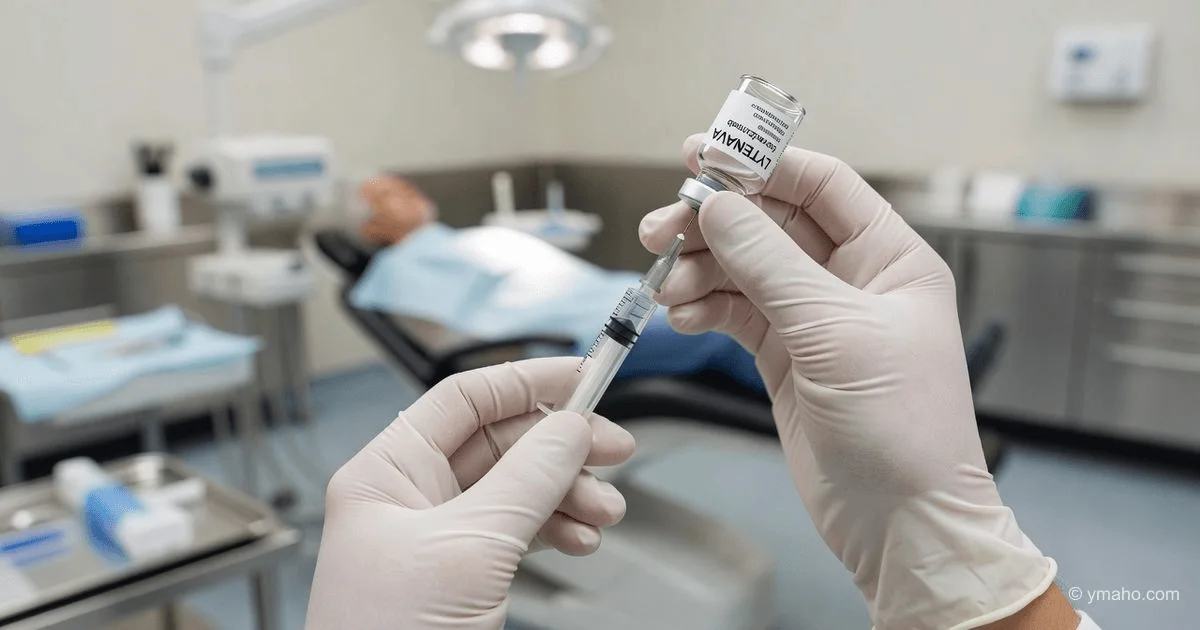
FDA Approves First Ophthalmic Bevacizumab for Wet AMD Treatment
The FDA has accepted Outlook Therapeutics' appeal and will approve the application for ONS-5010 (LYTENAVA) — a standardized form of bevacizumab for treating neovascular age-related macular degeneration. A decision is expected within 60 days.
Analytical Review: FDA Approves Bevacizumab for the Eye — A Victory for Pharmacy Compromise Over Pharmaceutical Ambitions
Author: Independent Analyst in Ophthalmology and Pharmaceutical Repositioning
Date: June 7, 2026
Event: Outlook Therapeutics' appeal accepted by FDA; application for ONS-5010 (LYTENAVA) approved for review as Class 1 resubmission; decision expected within 60 days.
While headlines trumpet a breakthrough, the industry whispers something else: the U.S. regulator has just made perhaps the most awkward U-turn in its history. After three Complete Response Letters, after the failed NORSE EIGHT study where LYTENAVA failed to demonstrate non-inferiority to ranibizumab, the FDA suddenly said, "You know, we changed our minds." And this decision was made not by just anyone, but by the Office of New Drugs — a division that very rarely overturns its own decisions.
To the uninitiated, this looks like a victory for a small biotech company. For those on the inside, it's a victory for pharmacy compounding lobby and common sense over regulatory perfectionism. Compounded (pharmacy-prepared) bevacizumab, which costs $50-100 per dose, has been used off-label by ophthalmologists for decades. The problem is that compounding pharmacies are not required to adhere to the GMP standards of pharmaceutical companies, leading to outbreaks of endophthalmitis — a severe intraocular inflammation. Regulators have wanted to "legalize" a safe version for years, but demanded evidence that a drug already working in practice for 20 years couldn't provide.
Now the FDA has essentially made a political decision: we will approve a labeled bevacizumab because patients cannot wait another 5 years for perfect trials.
[The Core]: What's Really Happening
Something paradoxical has occurred: a clinical failure became the basis for approval. NORSE EIGHT — the study Outlook Therapeutics conducted at the FDA's request after two previous CRLs — failed its primary endpoint of non-inferiority compared to ranibizumab. LYTENAVA was not non-inferior to Lucentis (Novartis). By classical evidence-based medicine standards, that usually spells the end of development. But the FDA decided that the totality of data from NORSE TWO (which showed efficacy) and mechanistic data was sufficient for approval.
It's important to understand here that the FDA is approving not bevacizumab itself (the molecule has long been known and used off-label), but a specific ophthalmic formulation — LYTENAVA, filled into standardized sterile vials for intravitreal injections. Outlook Therapeutics has spent years proving that its manufacturing process (Chemistry, Manufacturing, and Controls) guarantees no contamination and stable concentration — something that pharmacy compounding lacks.
Key point: The FDA accepted the appeal through Formal Dispute Resolution — a rare mechanism where a company can challenge a decision by the Office of New Drugs. In effect, the regulator admitted that its previous requirements were excessive. This sets a dangerous precedent for the entire industry: if pharmaceutical companies realize they can push through approval via appeal after three CRLs, development discipline may suffer.
Timeline and Context
This is not a "sudden victory." It's the result of a 4-year war between Outlook Therapeutics and the regulator. A timeline that most news sites miss:
March 2022 — first BLA submission. May 2022 — withdrawal at FDA request. August 2022 — resubmission. October 2022 — application accepted. August 2023 — first CRL (CMC and efficacy evidence issues). November 2023 — Type A meeting. December 2023 — NORSE EIGHT protocol agreement via Special Protocol Assessment (SPA). March 2024 — positive CHMP opinion in Europe. May 2024 — approval in EU and MHRA. August 2025 — second CRL (insufficient efficacy evidence). September 2025 — second Type A request. November-December 2025 — third CRL. February-April 2026 — appeal via FDR. May 2026 — appeal granted. June 1, 2026 — fourth BLA submitted, Class 1 review, decision within 60 days.
What's overlooked: Outlook Therapeutics had already launched commercial sales of LYTENAVA in Germany, Austria, and the UK in June 2025. European regulators were less demanding on evidence. The FDA held out until the end, but under pressure from the ophthalmology community (doctors have used off-label for decades and want a standardized alternative), it gave in.
Insider nuance: The company had spent about $350-400 million on development and clinical trials by this point. With a market cap of about $150 million before the news (figures from memory, may vary), this is a classic "deep value" case — the market didn't believe in approval, but it came.
Who Wins and Who Loses
Winner #1: Outlook Therapeutics (NASDAQ: OTLK).
If approval goes through (and chances are now close to 90-95%), the company's stock could rise 3-5 times within a week of the FDA decision. Analysts estimate the potential U.S. market for LYTENAVA at $500-800 million per year — about 20-30% of the current off-label bevacizumab market. The company will have 3-5 years of exclusivity as the first approved ophthalmic bevacizumab before direct biosimilars appear (of which only a handful are in development). If the PDUFA date falls in late July-early August, it will be a catalyst for a full company revaluation.
Winner #2: Ophthalmologists and wet AMD patients.
Globally, about 20 million people suffer from wet AMD, with about 1.5-2 million in the U.S. receiving injections. Bevacizumab is the cheapest anti-VEGF ($50-100 vs $1200-2000 for Eylea or Lucentis). But the compounded version carries infection risks (endophthalmitis — eye loss in 30-50% of cases). LYTENAVA offers the same price (expected $150-250 per dose, accounting for approval and logistics) but with guaranteed sterility and stability. Medicare will save billions if it switches from Eylea to LYTENAVA.
Winner #3: Patients in developing countries and budget-constrained healthcare systems.
LYTENAVA could become a global standard for countries that cannot afford Eylea at $2000. Bevacizumab is already used off-label in India, Brazil, and China. Now they will have a regulated product that can be procured through tenders. The anti-VEGF market was valued at about $7 billion globally in 2023, with off-label bevacizumab accounting for about $1-1.5 billion. LYTENAVA could capture 30-40% of this segment within 5 years.
Loser #1: Regeneron and its Eylea (aflibercept).
This isn't about an immediate collapse, but a long-term trend. Regeneron reported a 28% decline in Eylea sales in Q4 2025, partly due to patients switching to generic bevacizumab due to pricing pressure. If LYTENAVA gets FDA approval, it will accelerate the shift from Eylea to standardized bevacizumab. Regeneron plans to build a new $2 billion plant for Eylea HD, but if the market shrinks, those investments may not pay off. Novartis (Lucentis/ranibizumab) and Roche also suffer, though they have broader portfolios.
Loser #2: Compounding pharmacies living off off-label bevacizumab.
The U.S. compounding bevacizumab market is estimated at $300-400 million per year. If LYTENAVA captures 50% of this market within 2-3 years, many compounding pharmacies will lose a key revenue source. Some have already started diversifying (e.g., into peptides for longevity), but adaptation will be painful.
Loser #3: Aflibercept biosimilar manufacturers (Samsung Bioepis, Amgen, Biocon, etc.).
The aflibercept biosimilar market was expecting a boom after 2026-2027 (Eylea patent expires in 2027). But if doctors switch to LYTENAVA (cheaper and already approved), demand for aflibercept biosimilars may be lower than forecasts. Analysts estimated the potential aflibercept biosimilar market at $2-3 billion by 2030; now these figures may be revised down by 20-30%.
What the Media Isn't Saying
Non-obvious Insight #1 (Main): Approval of ONS-5010 sets a precedent for "incomplete" clinical data in conditions of unmet medical need.
The FDA just told the entire industry: if you have a drug that has been used off-label for decades, and you can prove your formulation is safer (more sterile), you don't necessarily have to show efficacy in an RCT superior to existing standards. One successful study (NORSE TWO) and mechanistic data may suffice. This lowers the barrier to entry for repositioning old drugs in new formulations. Companies like Alvotech or Sandoz, developing improved formulations of old molecules, will study this precedent closely. But caution: the FDA clearly made an exception under pressure from the ophthalmology community; for other therapeutic areas, this approach may not work.
Non-obvious Insight #2: The 2024 European approval was a key factor pressuring the FDA.
Outlook Therapeutics wasn't just waiting for the FDA decision — it was already making money in Europe. By the time of the U.S. appeal, the company had commercial experience in Germany and the UK, where LYTENAVA has been sold since June 2025. The FDA saw this. And it understood that if it continued to deny, U.S. patients would keep receiving the risky compounded version while Europeans got a standardized product. This created a politically awkward situation.
Non-obvious Insight #3: The candidate for FDA Commissioner (expected in July 2026) may have influenced the speed of the decision.
This is speculation, but inside the Beltway, rumors circulate that the current acting commissioner wants to "clear the deck" before the new agency head is confirmed. Approving LYTENAVA is a high-profile case that can be presented as "the FDA works efficiently and responds to patient needs." If the decision had dragged into 2027, the new commissioner could have claimed it as their own achievement. Administrative games shouldn't influence science, but that's reality.
What's missed about price: LYTENAVA will cost more than compounded bevacizumab. The compounded version costs Medicare about $50-70 per dose (including pharmacy work). To recoup R&D ($400 million) and ensure distribution margins, Outlook Therapeutics will set a price around $150-250. Medicare will pay more, but it's still 5-10 times cheaper than $1200-2000 for Eylea. The question: will insurers cover LYTENAVA if the compounded version is still available? Most likely yes, because the compounded version is not FDA-regulated and carries legal risks for doctors and clinics.
Forecast: Next 30 Days and 90 Days
Next 30 Days (until July 7, 2026):
Expect the FDA to officially set a PDUFA date — likely for late July or early August 2026. Within 30 days, Outlook Therapeutics will probably announce expanded commercial partnerships in the U.S. — likely with a major distributor (e.g., AmerisourceBergen or Cardinal Health) for nationwide LYTENAVA logistics.
Additionally, negotiations with CMS (Centers for Medicare & Medicaid Services) for a J-code reimbursement will begin — this takes 3-6 months, but initial steps will be taken in June-July. Without a code, doctors cannot bill for the drug, so this is critical.
Next 90 Days (until September 2026):
If the FDA approves LYTENAVA (I expect yes), Outlook Therapeutics' stock will rally — from current levels to $4-6 per share (market cap could reach $500-600 million). Then, a follow-on offering is likely to raise capital for commercialization — about $100-150 million. This will dilute existing shareholders but give the company a 2-3 year cash cushion.
Competition won't sit idle. Regeneron will likely launch an aggressive marketing campaign "Eylea HD vs LYTENAVA" emphasizing longer injection intervals (Eylea HD can be given every 4-8 months, while bevacizumab requires monthly injections). Doctors will have to choose: LYTENAVA's low cost and standardization vs Eylea HD's convenience of fewer injections.
90 days after approval (i.e., by November-December 2026), we'll see first quarterly LYTENAVA sales. If they exceed $20-30 million in the first quarter, it signals that $500 million annual forecasts are realistic. If sales are lower, the market will be disappointed, and the stock may correct.
Brief Summary: The FDA took an unprecedented step by approving (via appeal) a drug with ambiguous clinical data. This gives Outlook Therapeutics a chance to become a player in ophthalmology. But long-term success will depend not on the regulator, but on doctors: will they switch from compounded bevacizumab, which they've used for 20 years, to a paid version from Outlook? And on whether the company can scale manufacturing and logistics without defects. For now, the stakes have never been higher.
— Editorial Team