Functional Minimalism and 'Personal Protection': How Stress Is Changing Skincare
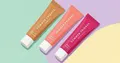
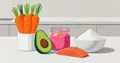
Western consumers are increasingly complaining about skin sensitivity caused by stress and information overload. This has driven demand for 'adaptive barrier care' with lightweight textures (hemp seed oil, squalane) and multitasking: formulas that work for face, body, and hair.
Functional Minimalism and 'Personal Protection': How Stress Turns Skincare into Neuroimmunology
The Core: What's Really Happening
At first glance, 'functional minimalism' is just another name for the trend of reducing the number of products in a routine. But in reality, we are witnessing a fundamental shift in how consumers understand their skin and its needs. People no longer want to 'fight wrinkles' or 'whiten pigmentation.' They want one thing: for their skin to stop reacting to stress. And that is a completely different request—not aesthetic, but physiological.
Skin sensitivity caused by chronic stress and information overload has become the top complaint in dermatology clinics in the US and Europe in 2025–2026. Regular moisturizers don't work because the problem isn't dryness. The problem is disrupted neuroimmune regulation. Skin nerve endings are constantly in a state of 'battle readiness,' releasing substance P and calcitonin gene-related peptide, which trigger inflammation without any visible external trigger. This isn't 'sensitive skin' in the classic sense—it's skin exhausted by stress.
The industry's response has been the emergence of the 'neurocosmetics' category—products that target not the consequences (dryness, redness) but the causes (neuroinflammation, hyperactivity of nerve endings). Here, adaptive barrier formulas with lightweight textures—hemp seed oil, squalane, postbiotics—play a key role. They don't just 'moisturize'; they 'calm' the skin's nervous system, reducing its reactivity to external irritants.
Timeline and Context
The trajectory of this trend is clear. 2023–2024: the 'skinnimalism' boom—consumers tired of 12-step Korean routines start reducing products. But back then, it was about saving time and money. 2025: pandemic and post-pandemic stress peaks, dermatologists record a rise in 'stress sensitivity'—a condition where skin reacts with redness and burning to products previously tolerated well.
March 2025: a study published in the British Journal of Dermatology confirms a direct link between chronic psychological stress and impaired skin barrier function via activation of the hypothalamic-pituitary-adrenal axis. This is the scientific validation of what women intuitively felt: 'my skin goes crazy when I'm nervous.' April 2026: Clariant launches the 'Let True Beauty Glow' concept—15 multifunctional formulas focused on slow beauty and barrier support. These aren't just 'moisturizers'; they are products that work 'with stress,' not against wrinkles.
May–June 2026: the expert community (Personal Care Insights, in-cosmetics Connect) notes the final shift. Claudia Barba from Univar Solutions states directly: 'Modern skin damage is less and less about age and more and more about chronic environmental exposure and emotional stress, which activates skin nerve endings and triggers neuroinflammatory signals.' Consumers no longer want to 'fight aging'; they want to 'manage stress.' Brands that haven't adjusted their communication by summer 2026 risk being left with an outdated anti-aging portfolio.
Who Wins and Who Loses
Absolute winner—brands that bet on multifunctionality and barrier support. Herbivore Botanicals with their Emerald oil (hemp + squalane + adaptogens) is a perfect example: lightweight texture, soothing ingredients, positioning 'for all skin types, including sensitive.' Such brands win because their product replaces three or four others: serum, moisturizer, face oil, and sometimes even primer.
Winner—squalane as an ingredient. It's not just 'another oil'; it's a molecule almost identical to the skin's natural lipids. Squalane is non-comedogenic (rating 0 on a 5-point scale), absorbs instantly, leaves no greasy film, and crucially, does not trigger an immune response. After age 30, squalane levels in the skin drop, and external replenishment becomes a necessity, not a luxury. Brands that integrate squalane as a base component (not a marketing additive) gain loyalty from consumers with sensitive skin.
Winner—the neurocosmetics category as a whole. Ingredients like Alpaflor Neurosooth from dsm-firmenich clinically show reduced transepidermal water loss even under heat stress. This isn't 'moisturization' in the old sense—it's active management of skin physiology. Brands that first incorporate such components gain a technological advantage that is hard to copy.
Who is at risk? Brands built on aggressive anti-aging formulas with high concentrations of retinol and acids. Their consumer base—women 40+ who have tolerated irritation for years for the sake of 'results.' But in 2026, these women are tired. They want their skin to stop hurting, not to have 15% fewer wrinkles on a photometric scale. If a brand doesn't offer them 'adaptive barrier care,' they leave for competitors.
Losing are brands that continue to sell 'purity' without evidence. 'Clean beauty' (free-from-parabens, free-from-sulfates) was a trend of 2020–2022. In 2026, consumers want not 'what's removed' but 'what's added'—and for that addition to work. 75% of US households buy three or fewer skincare products. This means every product must win the 'battle for bathroom space.' And those who can't explain why their product deserves to be one of those three lose.
Unexpected winner—ingredient manufacturers working with precision fermentation. Companies like Melt&Marble or Äio produce lipids and squalane in bioreactors, without deforestation (palm oil) or shark liver extraction. This is not only sustainable but also provides 'purity' at trace levels: no impurities, no allergens. For stress-exhausted skin, this is critical—the fewer 'extra' molecules, the lower the chance of triggering an unwanted immune response.
What the Media Aren't Saying
First non-obvious insight: 'multifunctionality' is often a marketing gimmick, not a real formula. One product cannot simultaneously 'deeply moisturize,' 'protect from free radicals,' and 'repair the barrier' with equal efficacy. Each function requires a specific pH, specific active concentrations, and specific contact time with the skin. When a manufacturer 'packs' everything into one bottle, they usually sacrifice either stability (actives degrade) or efficacy (concentrations too low). The consumer buys 'convenience' but gets a product that does 'a little bit of everything, but nothing well.' The industry knows this but stays silent because 'multifunctionality' sells.
Second insight concerns hemp seed oil. This ingredient is indeed rich in linoleic acid (about 55–60%), essential for barrier repair. But there's a problem: hemp seed oil also contains cannabinoids in trace amounts, and while they are not psychoactive, people with pollen or nut allergies may have cross-reactions. No brand warns about this in advertising. Instead, they sell 'CBD-free hemp oil' as a panacea for stress skin, ignoring real risks for a subset of consumers.
Third insight—squalane does not regenerate the barrier on its own. Studies show squalane is excellent at retaining moisture and does not cause irritation, but it lacks ceramides, which are the main 'building blocks' of intercellular lipid layers. If you have a severely compromised barrier (atopic dermatitis, rosacea), squalane alone won't restore it—you need creams with ceramides and niacinamide. The industry downplays this because selling 'oil' sounds simpler and cheaper than selling a 'comprehensive repair system.' Consumers buy squalane thinking it's enough, then get disappointed when nothing changes after a month.
Finally, fourth: 'stress sensitivity' is a diagnosis of exclusion. Dermatologists admit: there is no biomarker for 'stress skin.' It's a clinical syndrome diagnosed when all other causes (allergy, rosacea, contact dermatitis) are ruled out. This means many brands sell 'anti-aging' products as 'barrier' products but cannot prove their formula works specifically by reducing neuroinflammation rather than through plain moisturization. Regulators in Europe and the US are already starting to ask questions. The media stays silent because 'neurocosmetics' is too hot a topic to cool with skepticism.
Forecast: Next 30 Days and 90 Days
30 days: In June 2026, we'll see a wave of repositioning. Brands that already have 'lightweight oils' and 'soothing serums' will add words like 'stress,' 'barrier,' and 'adaptive' to descriptions. Sephora and Ulta will create dedicated 'Stress & Barrier Support' categories—and this won't be marketing, but real navigation for consumers. The smartest brands will start including 'stress checklists' in kits—not about skin, but about sleep, diet, and cortisol levels. This will work because consumers already know: the problem is in the head, not the face. Sales of products with squalane and hemp seed oil will grow 30–35% compared to May.
90 days: By the end of August, the first clinical studies comparing 'regular' moisturizing cosmetics with 'neurocosmetics' under stress conditions will begin. They will likely show minimal difference for people without clinically expressed sensitivity. This will cool the hype but won't kill the trend—because placebo works in cosmetics, and if a consumer believes a product 'calms their stress,' their skin indeed reacts less (this is also proven, known as the nocebo/placebo effect in dermatology). The main shift will be in formulation: 'lightweight textures' will become the norm, 'heavy bases' with mineral oil will become obsolete. By fall, most new launches in the 'face care' category will be positioned as 'atraumatic,' 'adaptive,' and 'stress-protective.'
The global takeaway: functional minimalism is not 'just another trend.' It is the industry's response to a systemic demand from a generation living in chronic stress mode. People no longer want to spend an hour on 12 steps of care. They want one product that 'just works'—doesn't irritate, doesn't clog pores, doesn't require instructions. And that product must be 'quiet': no strong scents, no bright colors, no aggressive copy. Because in a world where everything screams, the only luxury is silence. And the skin, like its owner, just wants to be left in peace.
— Editorial Team