Banane Délice by Le Monde Gourmand: A Fragrance Tasting of Banana Milk and Coconut Sun
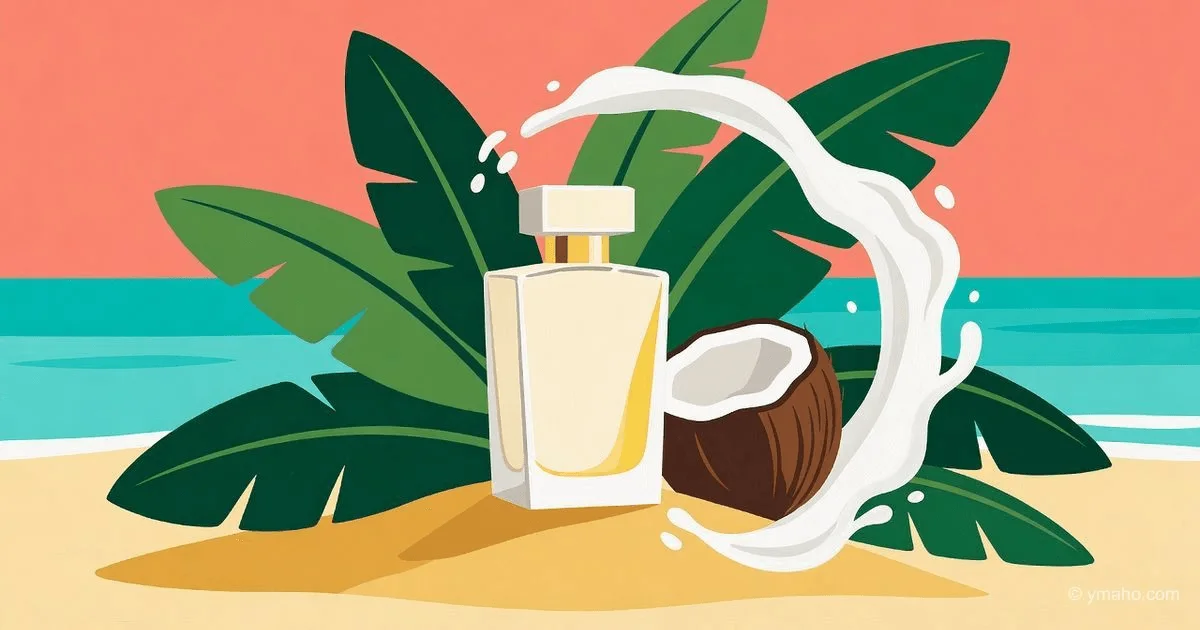
The new scent, blurring the line between vacation memories and pleasure, is built on notes of whipped banana milk, pineapple, and orange, transitioning into a heart of coconut sun and sugar accord. The composition is rounded off with a warm base of tonka beans, whipped vanilla, and musk.
Banane Délice by Le Monde Gourmand: How a Banana Fragrance Is Changing the Game in Niche Perfumery
The Essence: What's Really Happening
Le Monde Gourmand Banane Délice is not just another fruity perfume for the summer season. It's a marker of a paradigm shift in how niche perfumery interacts with consumers and how brands choose notes to stand out in an oversaturated market. Banana—a note long considered "kitsch," "cheap," and "a scent for teenage lip glosses"—suddenly becomes a brand's main weapon in the battle for an adult audience.
The key insight is that Banane Délice doesn't just "smell like banana." It uses a complex architecture where banana acts not as a cheap bubblegum fragrance but as a nostalgic trigger. The pyramid is built on contrast: whipped banana milk (childhood, comfort) transitions into a heart of coconut sun (vacation, freedom) and is anchored by a musky base with tonka beans and whipped vanilla. This isn't a "dessert"—it's a memory packaged in a bottle.
Le Monde Gourmand positions the fragrance as "blurring the line between vacation memories and pleasure." And this isn't just a marketing slogan—it's a formula for success for a generation tired of abstract "sea breezes" and "flower fields." They want a perfume that tells a story. A specific, tangible, emotional one. Banana milk from the beach—that's the story.
Timeline and Context
By May 2026, the gourmand perfume market was already overheated. Vanilla, caramel, honey had dominated for years, and analysts at Future Market Insights predicted the gourmand fragrance market would grow from $32.55 billion in 2025 to $55.0 billion by 2035. But growth was slowing—consumers were tired of "monotonous sweetness" and looking for a new trigger.
The first blow to the market came in April 2026. Juliette Has a Gun released Banana Rush—a fragrance with notes of banana, maple syrup, and coconut. The reaction was mixed: some called it "strange," others "brilliant." But the fact remained: the brand took a risk, and it paid off. Banana Rush quickly went viral in perfume TikTok communities, racking up millions of views under the hashtag #bananagirlsummer.
Miu Miu caught the wave with Fleur de Lait—a fragrance based on mango and coconut milk, inspired by the Asian dessert sago. Emporio Armani added passionfruit to its summer line. By May-June 2026, it became clear: "exotic fruits" were the season's main trend, and banana was its king.
Then on June 4, 2026, Beauty Packaging and Refinery29 simultaneously published the announcement of Banane Délice by Le Monde Gourmand. The brand, which specializes in affordable niche fragrances (average price $25-35 per bottle), bets on banana and coconut, but with an "adult" twist: musk, tonka beans, vanilla. This isn't a dessert for a teenager. It's a "comfort scent" for a woman who has grown up but hasn't forgotten the taste of banana milk from childhood.
Key detail: Le Monde Gourmand integrated Banane Délice into an ecosystem. They explicitly state that the fragrance can be layered with their other products: Lait de Coco, Le Beach, Fraise Fouettée. This isn't just "another perfume"—it's part of a construction kit where the consumer creates their own unique "cocktail." In the age of personalization, this gives the brand a huge advantage over competitors selling "single notes."
Who Wins and Who Loses
Absolute winner—Le Monde Gourmand. They aren't first with banana (Juliette Has a Gun beat them by two months), but they are first to make banana "accessible and layerable." The price of $25-30 for 50 ml is a sweet spot: cheaper than niche $100+, but more expensive than mass market. The consumer gets a sense of "exclusivity" without breaking the bank. Moreover, layering generates additional revenue: if you buy Banane Délice, you'll likely buy Lait de Coco to "boost" the coconut note. It's a smart strategy to increase average order value.
Winners—the entire "exotic gourmand" category. Juliette Has a Gun, Miu Miu, Emporio Armani—all are reaping the benefits of the trend they helped create. According to Femina and Edgar, in spring 2026, sales of fragrances with notes of banana, passionfruit, and mango grew by 30-40% compared to the same period in 2025. Consumers are willing to pay for "unexpectedness." This paves the way for the next exotic notes—rambutan, durian, guava.
Who's at risk? Traditional "floral-fruity" scents based on rose, jasmine, and raspberry. As Edgar writes, "every year shelves are filled with raspberry and cherry, and in 2026 this register is starting to bore." Consumers are tired of predictability. Brands launching yet another "rose-berry" flanker in 2026 risk going unnoticed.
Losers—hyper-sweet, "teenage" gourmands like brands built on caramel popcorn or marshmallow notes without any complexity. The audience is maturing. Perfumer Cécile Delaire notes: "social media and Gen Z's emoji culture have made fruity scents too trivial." Now you need "banana with maple syrup and sandalwood," not just "banana gum."
Unobvious winner—the consumers themselves, who have learned to layer fragrances. Le Monde Gourmand, offering Banane Délice as part of a system, trains the market in "perfume cocktails." This increases loyalty: if you've invested in three or four bottles, you'll return to the brand for new "ingredients." And this reduces churn to competitors.
What the Media Aren't Saying
First unobvious insight: the banana trend is a response to inflation and economic instability. In times of crisis, consumers seek "affordable luxury" and "comfort food." The scent of banana milk with coconut is the emotional equivalent of a $5 dessert instead of a $50 restaurant dinner. Perfume becomes a "small pleasure" you can afford every day. Media write about aesthetics but stay silent on the psychology of survival in an era of high inflation. Banane Délice sells not because it's "innovative." But because it's a cheap antidepressant in a bottle.
Second insight concerns the industry's reaction time. The "edible aesthetic" trend started in 2025 with Rhode and banana lip balms, and reached perfumery only by spring 2026. Usually, the lag between food trends and beauty trends is 12-18 months. Here—6-9 months. The industry has sped up. Brands no longer wait for "time-tested" validation—they jump on any viral story to avoid losing market share. This is risky: many trends will die before they're born. But the reward is huge.
Third insight—cultural appropriation and "flattening" of Asian flavors. Ube, mango sticky rice, matcha—all are Asian dessert traditions that Western brands "adopt" without context. Banane Délice is less problematic because banana has no clear cultural attachment (though banana milk is popular in Korea and Japan). But if the trend continues, questions will arise. Why does Miu Miu release Fleur de Lait, inspired by the Asian dessert sago, yet the ad campaign features no Asian faces? Media aren't asking this yet. But they will.
Finally, fourth: Le Monde Gourmand deliberately avoids the word "perfume" in communication. They say "eau de parfum," but in descriptions they emphasize "layering," "cocktail," "mood." This shifts the product from the "luxury" category to the "lifestyle" category. You're not buying perfume—you're buying "banana summer." This is a brilliant semantic shift that devalues competitors still talking about "longevity" and "sillage." The 2026 consumer doesn't care about sillage. They care that the scent evokes an emotion.
Forecast: Next 30 Days and 90 Days
30 days: Banane Délice will become the most talked-about fragrance of June in Western media. Refinery29, Byrdie, Harper's Bazaar will include it in summer roundups, driving traffic to Sephora and the brand's website. TikTok will be flooded with videos using #bananemilksmell and #layeringcombo, where influencers show how to mix Banane Délice with Lait de Coco for a "coconut-banana smoothie." Sales will rise 40-50% compared to May. Juliette Has a Gun, whose Banana Rush was first, will launch a counter-promotion ("Buy Banana Rush, get a mini coconut lotion free") to avoid losing market share.
90 days: By the end of August, the banana trend will peak and gradually fade. It will be replaced by the "next wave" of exotic fruits—analysts at Givaudan and CPL Aromas already predict the next hit will be passionfruit or "fried rice with coconut milk" (a clean-tech version of the dessert). Le Monde Gourmand will likely announce a fall fragrance with notes of baked pumpkin and maple syrup ("grown-up pumpkin spice"). Banana will remain in the line as a "summer bestseller," but without limited-edition hype.
The main takeaway for the next three months: the perfume industry has finally moved from the "world of flowers" to the "world of food." And this shift is irreversible. The younger generation doesn't want to smell like "rose" or "jasmine"—to them, that's the scent of grandma's living room. They want to smell like banana milk, coconut sun, caramelized popcorn. Le Monde Gourmand understood this earlier than many. Banane Délice is not just a fragrance. It's a manifesto of a new generation that chooses comfort, nostalgia, and affordable joy over abstract elegance. And brands that don't grasp this by fall 2026 risk being left on shelves with dusty bottles.
— Editorial Team