Banana Manicure and Ube Root Care: 'Edible' Aesthetics Take Over the Western Beauty Industry
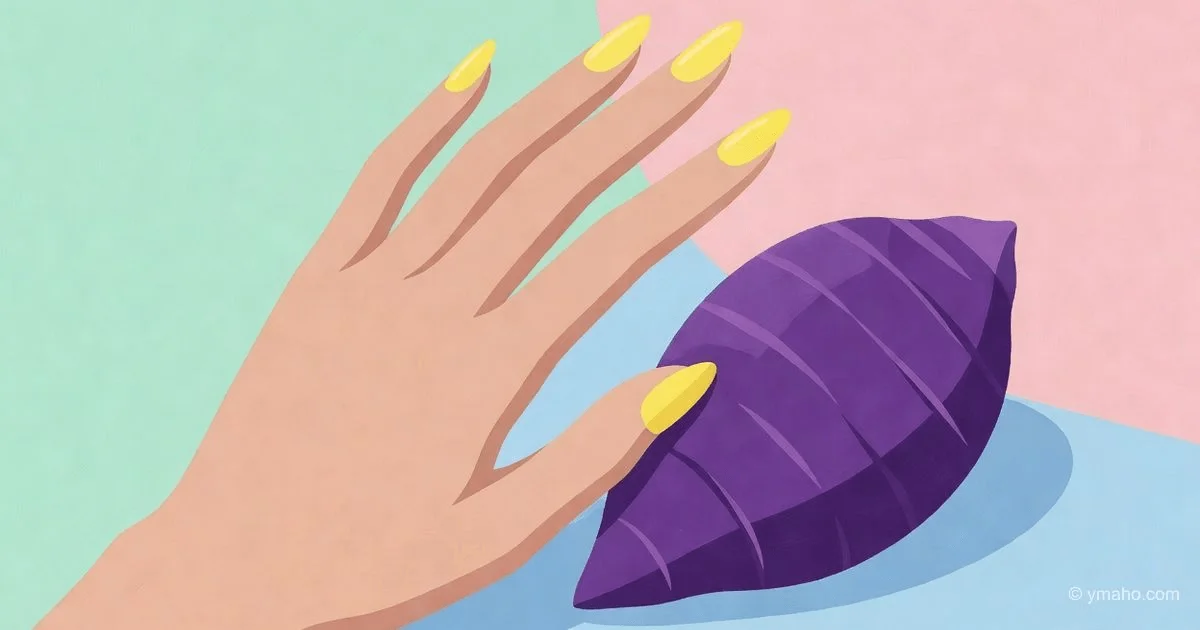
Following Hailey Bieber's Rhode brand with its caramel-banana lip treatment, the purple ube root has burst onto the scene. Fresha experts report a 22% increase in searches for banana in skincare, and the purple ube pigment is becoming the season's key color in decorative cosmetics thanks to its photogenicity and 'edible' aesthetic.
Banana Manicure and Ube Root: How 'Edible' Aesthetics Are Reshaping the Western Beauty Landscape
The Core: What's Really Happening
What we're seeing in June 2026 is not just "another food-in-cosmetics trend." It's a fundamental shift in how consumers choose products and how brands compete for attention. Banana and purple ube root have become not ingredients but cultural codes. When Hailey Bieber releases a caramel-banana lip treatment, she's not selling hydration—she's selling nostalgia for carefree summers when "banana" associations were part of everyone's childhood. And ube is no longer just a color; it's a claim to an aesthetic that's more photogenic than matcha and more exotic than lavender.
Fresha experts note: searches for banana in skincare have risen 22% over the past few months. But more importantly, it's the mechanism of trend propagation. The banana craze didn't start in a lab or with a press release. It started in cafes. First banana bread, then banana smoothies, then banana face masks. The trend moves bottom-up: from coffee shops to TikTok, from TikTok to brand R&D departments. And today, every beauty marketer knows: if you want to predict the next hit, don't look at patent filings—look at cafe menus and viral recipes.
Fresha analyst Annabel Tauroa puts it plainly: "Ingredients that gain popularity in mainstream food culture almost always find a second life in beauty. And brands that know how to leverage this win twice—because they don't need to explain to the consumer what it is. The connection is already established." In 2026, the pressure on brands is such that "clinicality" no longer sells—what sells is accessibility, familiarity, and a sense of "naturalness." And food provides that feeling better than any certificate.
Moreover, banana and ube arrive via different paths. Banana is about "edible beauty" in the literal sense: products that smell like desserts and make you want to "taste" them. Ube is about color aesthetics: a purple pigment that exploded on Instagram and TikTok long before it appeared in mass-market products. Tauroa clarifies: "Ube exploded because it was photogenic first. Edible second. That's how beauty trends move now." This flips traditional logic: before, a product was created, packaged, then promoted. Today, it's the image on social media first, then the product.
Timeline and Context
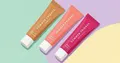
The banana trend's trajectory began long before Rhode. In June 2025, Prada released a banana lip balm, and it instantly went viral on TikTok. By fall, The Body Shop (whose banana shampoo was a hit 10 years ago) experienced a sudden renaissance—Gen Z "rediscovered" the brand through nostalgic content. Then in April 2026, the big moment: Hailey Bieber's Rhode, in collaboration with Justin Bieber, launched a limited-edition collection including Peptide Lip Treatment in Caramelized Banana scent ($20) and Banana Peel Peptide Eye Prep patches ($25). This is no longer an experiment—it's a bid for dominance.
May 2026 became a turning point for ube. Hypebae published a major analysis, "Is Ube the Next Big Beauty Flavor?", where experts discussed how the Filipino purple yam went from an ethnic ingredient to a global beauty phenomenon. Huda Beauty released an entire ube-inspired collection, Tower 28 added a shade to its lip balm line—all without any mention of the product's Filipino roots. The same happened on runways: Balenciaga, Carolina Herrera, and Khaite used purple in their Fall/Winter 2026 collections. Rihanna appeared on the cover of W Magazine with intense purple eye makeup—becoming the visual manifesto of the new trend.
June 2026—the moment of synchronization. Fresha published data: searches for "purple makeup" surged 229% in one month. Searches for banana cosmetics rose 22%. Analysts talk about "banana summer" and "ube autumn." But in reality, both trends are two manifestations of the same thing: consumers' desire to break free from the "clean girl aesthetic" that dominated the past two to three years. New York-based makeup artist Christian Briceño comments: "People are tired of makeup that feels too safe and repetitive. We've been stuck on neutral tones and bronzers for too long." Banana and ube are an escape from the beige prison. And this is a much deeper story than just "another trend."
Who Wins and Who Loses
Absolute winner—Rhode. Hailey Bieber's brand, acquired by E.l.f. Beauty in 2025, was in the right place at the right time. The Caramelized Banana Lip Treatment became not just a product but a cultural marker: if you don't have it, you're "out of the loop." The $20 price makes it accessible to the mass audience, but limited edition creates scarcity. Rhode won not because banana is the best lip ingredient, but because Hailey Bieber understood: in 2026, people buy not efficacy but belonging to a community.
Winners also include all brands that quickly copied the model. Dr. PawPaw released a budget banana balm alternative for $10-12. Juliette Has a Gun launched the Banana Rush fragrance with maple syrup and coconut. Sand and Fog released Banana Blossom EDP Oil Dropper. Each of these brands understands: the key is to be quick. Before the wave subsides. And according to Fresha's forecasts, it will only grow over the next 12 months.
Winner—the color purple as a category. According to Fresha, searches for "purple makeup" increased 229% in one month. This means dozens of brands, from mass market to luxury, are frantically finalizing their purple lines. Sephora has already created special "purple corners" with products from 15 brands. MAC Cosmetics released the "Ube Dreams" palette for €65. The trend is so strong that even Pierre Hermé launched ube macarons.
Who's at risk? Brands that bet on "scientific" aesthetics and complex, unfamiliar ingredients. Consumers no longer want to hear about "tetrahexyldecyl ascorbate." They want "banana," "ube," "mango," "raspberry." This is a return to simplicity, but not minimalism. It's simplicity through food, through understandable imagery. And brands that continue to sell "clinical efficacy" without an emotional component will lose.
Losing—cultural authenticity, at least for now. As Hypebae writes, ube in cosmetics today is a "flattened version" of the Filipino root. Brands use it as a "purple pigment" without mentioning the Philippines or explaining the cultural context. Expert Christina Rodulfo says: "Ube cannot be separated from Filipino culture because ube is Filipino culture. When brands turn it into just a color, they strip it of meaning." But for now, that's not stopping anyone. Sales are growing, and cultural reflection is left to small niche publications.
Unexpected winner—the Fresha platform. They don't just analyze trends; they create them by publishing data on search growth. Their reports are cited by Happi, Hypebae, WWD, Yahoo, and NewBeauty. Fresha is becoming the "trend arbiter"—if they say banana grew 22%, all brands rush to make banana products. This is power that once belonged to Vogue and Byrdie. Today, it belongs to analytics platforms with access to real-time data.
What the Media Isn't Saying
First non-obvious insight: the "banana trend" has actually existed for 10 years; no one noticed. The Body Shop has sold banana shampoo and conditioner for over a decade. Ole Henriksen released Banana Bright Eye Cream, and it became a cult product. The difference is that back then it was just "a nice-smelling ingredient." Today, it's a cultural code. And Rhode didn't invent banana. Rhode just gave it the right packaging and the right ambassador. This shows how much the industry depends not on innovation but on narrative.
Second insight concerns the speed of transition from food to beauty. Matcha took years to go from coffee shops to eyeshadow palettes. Ube made that journey in months. Why? Because the infrastructure is ready. TikTok accelerates everything. If a trend used to spread over a season, now it takes a week. Brands no longer wait for "the test of time." They act preemptively. This is risky—many trends will die before being born. But the reward is huge: whoever released the first ube product captured the lion's share of attention.
Third insight—purple works on any skin tone, and that's its superpower. Christian Briceño explains: purple enhances brown eyes, makes green eyes brighter, and blue eyes deeper. No other color has such universality. That's why Balenciaga, Carolina Herrera, and Khaite simultaneously used purple in their collections. It's no coincidence. It's a professional consensus: purple is the safest "colorful" color. And consumers feel it. It's hard to go wrong with it.
Finally, fourth: "banana summer" and "ube autumn" are the same trend, split by time and price. Banana is mass, cheap, accessible. Rhode's $20 balm is almost mass market. Ube is premium, exotic, "complex flavor." MAC's €65 palette, Pat McGrath's €125 shadows. Brands segment the audience: banana for everyone, ube for those who want to be "more advanced." And it works. If you bought the Rhode banana balm, you're on trend. If you bought the "Ube Dreams" palette, you're on trend and showing you "know your stuff." Different entry tickets to the same show.
Forecast: Next 30 Days and 90 Days
30 days: The wave of banana and ube products will flood Sephora and Ulta. By the end of June, we'll see at least five new banana lip balms from Rhode competitors—Laneige, Glossier, Summer Fridays won't want to miss market share. In makeup, ube will become the "color of July": purple eyeliners, shadows, highlighters will appear from all mass brands, from NYX to Maybelline. TikTok will be full of "Banana girl summer" and "Ube purple makeup" challenges. Fresha will update data: ube searches will grow another 50-70% relative to May. Banana searches by 15-20%.
90 days: By the end of summer, cultural criticism will kick in. Following Hypebae, other outlets will ask: where are the Philippines in the ube success story? Consumers will start choosing brands that at least mention the ingredient's origin. Those who continue to use ube as "just a color" will face backlash—first in comments, then in sales. Simultaneously, the banana trend will begin to fade. Too many brands copied Rhode; the market will be saturated with cheap banana balms, and consumers will tire. By September, "banana summer" will end. But ube, if brands communicate properly with cultural context, could last into winter.
Global takeaway: "edible aesthetics" is not a whim but a new norm. Consumers are tired of abstract "efficacy" and want cosmetics that evoke emotions like a favorite dessert. Banana and ube are just the beginning. Next will be mango, passion fruit, lychee. And the brands that learn to turn food into cultural code will dominate the market for the next five years. Those who continue to sell "clinical purity" will stay in the labs—alone.
— Editorial Team