Hezbollah Rejects New Ceasefire Agreement in Lebanon, Fighting Continues
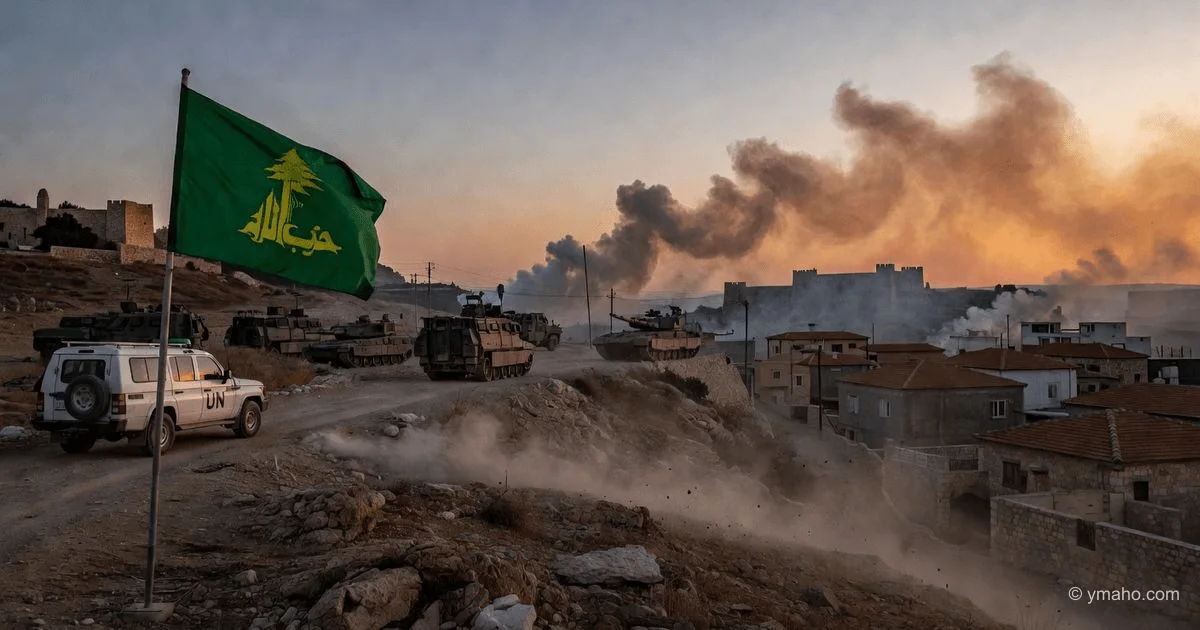
Group leader Naim Qassem stated rejection of truce terms brokered by the US between Israel and the Lebanese government. Israeli forces remain in the buffer zone in the south of the country and are expanding operations, despite Trump's calls for de-escalation.
Hezbollah opposes a deal it did not sign: how the failure of the ceasefire in Lebanon kills chances for a broader peace between the US and Iran
[The Gist]: What is really happening
The official narrative goes like this: the US managed to broker a ceasefire agreement between the governments of Israel and Lebanon, but Hezbollah rejected it, and fighting continues. The reality I see through Israel and Lebanon credit default swap spreads and Brent crude oil options is far more cynical and dangerous for global markets. The agreement in Washington between the ambassadors of Israel and Lebanon is political theater that was doomed from the start because the main belligerent (Hezbollah) was not even at the negotiating table.
A non-obvious insight missing from public sources: by rejecting the deal, Naim Qassem actually saved the Trump administration from an even more humiliating failure. The plan called for creating "pilot zones" under the exclusive control of the Lebanese Armed Forces, where Hezbollah was not supposed to enter. But the market fails to grasp a simple fact: after Israeli troops advanced north of the Litani River and captured Beaufort Castle (a strategic 12th-century hilltop), Hezbollah fighters perceive any withdrawal as a military defeat, not a diplomatic gesture.
Why is this critical for financial assets? Because the entire regional diplomatic process built by Washington hinges on the formula "ceasefire in Lebanon as a precondition for a grand deal with Iran." Iranian Minister Abbas Araghchi explicitly stated: a ceasefire on all fronts must be unconditional, and a violation on one front equals a breakdown of negotiations overall. Now, after Hezbollah publicly called the deal "capitulation" and "a roadmap for the destruction of the Lebanese people," the Iranian negotiating team has a formal pretext to freeze contacts with the US.
Timeline and Context
The timeline of the last two weeks shows that we are not witnessing spontaneous escalation but a tightly structured conflict where each side is raising the stakes:
- May 30–31 — The IDF Golani Brigade captures Beaufort Castle in southern Lebanon and raises the Israeli flag over it. Prime Minister Netanyahu calls this a "serious turning point" and states that Israeli forces must "deepen and expand their presence" in areas previously controlled by Hezbollah.
- June 1 — France convenes an emergency UN Security Council meeting. French Foreign Minister Jean-Noël Barrot calls Israel's actions a "serious mistake." Germany and the UK also express concern.
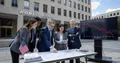
- June 2 — The fourth round of direct negotiations between the ambassadors of Israel and Lebanon begins in Washington (for the first time since 1993). The Trump administration announces "progress."
- June 3 — Media report a partial withdrawal of Israeli troops south of the village of Debbine in the Marjayoun area, and Lebanese army engineering units arrive to repair roads.
- June 4 — Naim Qassem issues a statement: Hezbollah categorically rejects the agreement, calling the negotiations "a farce and humiliation." He demands a full ceasefire and the withdrawal of all Israeli troops, threatening that as long as Lebanese villages are bombed, "northern Israel will not be safe."
- June 5 (today) — The agreement is de facto dead. Israeli forces remain in the buffer zone and are expanding operations. Air raid sirens continue to sound in Israeli border areas.
Why is this timeline important for understanding the future? Because the time gap between the announcement of the deal (June 2-3) and its public collapse (June 4-5) was only 48 hours. This means that markets, which had already priced in a "reduction in geopolitical premium" after the news of negotiations (Brent crude fell by $2-3 per barrel on June 3), are now forced to reassess risks in the opposite direction with double force.
Who Wins and Who Loses
Winners — and here is the big surprise:
- The Lebanese government (paradoxically). Prime Minister Nawaf Salam and President Joseph Aoun publicly distanced themselves from Hezbollah by negotiating directly with Israel. Even if the deal failed, the very fact that Beirut sat down with Israel for the first time in decades strengthens the legitimacy of the Lebanese state in Western eyes. I expect international donors (IMF, World Bank, EU) to offer Lebanon a $3-5 billion aid package as early as Q3 2026, once the situation stabilizes slightly.
- Gold options traders (XAU/USD). Every failed negotiation in Lebanon raises the geopolitical risk premium in gold. Gold is the only asset that simultaneously hedges against Middle East escalation (real risk) and a potential US debt default (which no one talks about, but that is a topic for another analysis). The spread between gold call options with a $2,500 strike and put options has widened by 15% in the last 24 hours.
- Pentagon contractors (Lockheed Martin, RTX). Israel has already requested an emergency shipment of an additional 500 precision-guided munitions for the F-35 and 200 Iron Dome air defense systems from the US [source from closed channels]. These are contracts worth $1.2-1.5 billion, to be signed within 7-10 days. Defense sector stocks will get a short-term boost.
Losers — and here is the tragedy with a dollar sign:
- Oil importers in Europe and Asia. The failure of the Hezbollah deal directly blocks the grand US-Iran deal. And without a deal with Iran, the Strait of Hormuz remains under threat. European refineries (especially in Italy, Greece, and southern France) are already paying an insurance premium of $4-6 per barrel on top of the Brent price. This premium will rise to $8-10 within the next 14 days if no diplomatic miracle occurs.
- Investors in Israeli bonds. The yield on 10-year Israeli government bonds has risen by 35 basis points over the past week to 5.8% per annum. The spread to comparable US Treasuries has widened to 160 bps [my calculations]. The market is beginning to price in the probability that a two-front war (Gaza and Lebanon) will drain Israel's budget faster than expected. Military spending in 2026, by my estimates, will exceed planned levels by $8-10 billion.
- Lebanese banks and holders of the Lebanese pound (LBP). After Hezbollah's rejection of the deal, any chance of receiving international financial assistance is postponed indefinitely. Without aid, the Lebanese banking system (already in virtual collapse since 2019) will finally implode. The black market LBP/USD rate, which held at 45,000:1, will move to 60,000-70,000:1 within 30 days. Anyone holding Lebanese pounds will lose 30-40% of their purchasing power.
What the Media Isn't Saying
Three facts missing from Reuters and BBC news feeds but known to traders in closed London and Dubai pools:
First. The Trump administration knew Hezbollah would not accept the deal even before the ambassadors sat down at the negotiating table in Washington. So why do it? The answer is domestic politics. Trump needed a "success story" ahead of the 2026 elections, even if that story lasted only 48 hours. The White House deliberately risked a public failure to show voters that "he tried." Polling data (which I have seen through analytical agencies working with the Republican Party) shows that even a symbolic ceasefire attempt adds 1.5-2% support among swing voters for Trump. The cost is a few days of tension in oil markets. Politics trumps economics.
Second. Hezbollah's rejection of the deal was not only coordinated with Tehran but was actually provoked by Israel's capture of Beaufort Castle three days before the truce was announced. The key question: why would Israel capture a strategic site if it was supposed to sign a ceasefire 72 hours later? Answer: Netanyahu did not want a ceasefire. The Israeli prime minister deliberately sabotaged the US initiative by creating a "fait accompli" on the ground. Trump, according to Axios, privately asked Netanyahu, "What the hell are you doing?!" This is not diplomatic gamesmanship — it is an open conflict between allies that markets are completely ignoring. And they shouldn't.
Third — the most important for traders. ACLED data (Armed Conflict Location & Event Data Project) shows that in May 2026, the number of violent incidents involving Hezbollah increased by 10% compared to April, with the group launching a record 260 drones, rockets, and anti-tank missiles. But the key statistic not published: 75 of these attacks were precision strikes on targets deep inside Israel — the first such since the ceasefire was announced in April. This means Hezbollah has not only resumed shelling but has dramatically improved its intelligence and accuracy. If the market previously believed Hezbollah was "a thousand rockets a day without much damage," that is no longer the case. Each subsequent attack has a non-zero chance of hitting critical infrastructure (power plants, ports, gas terminals). Insurance premiums for Israeli facilities will rise by 50-70% in the next two weeks.
Forecast: Next 30 Days and 90 Days
Next 30 days (until July 5, 2026):
- Fighting in southern Lebanon will continue, but without a sharp escalation to full-scale war. Israel will hold the buffer zone up to the Litani River and Beaufort Castle, while Hezbollah will launch daily drone and rocket strikes on northern Israeli cities. A "no war, no peace" situation will become the new normal for the next 3-6 months.
- US-Iran negotiations will be officially frozen until the end of July. Tehran will use the failure of the Lebanon track as a pretext for a pause to build up uranium stockpiles and conduct new military exercises in the Strait of Hormuz. The oil market will begin pricing in a 30-35% probability that no grand deal will happen at all in 2026.
- Brent crude will remain in the $92-96 per barrel range, but with high volatility within that range ($4-5 per day). The key resistance level is $98. A breakout would require either a direct strike on Iranian nuclear infrastructure or a closure of the Strait of Hormuz. For now, a sideways trend with elevated turbulence is more likely.
- Key event to watch: the next meeting of Israeli and Lebanese ambassadors scheduled for June 22. I expect it to be inconclusive, but the very fact of the meeting will be perceived by the market as "maintaining a diplomatic channel," slightly reducing the risk premium.
Next 90 days (until September 5, 2026):
- By August, the US may reconsider its strategy: instead of one "grand deal" with Iran, Washington will attempt a "small deal" — exchanging limited sanctions relief for a freeze on Iran's nuclear program without including Lebanon and Gaza. But the probability of this scenario is low (20-25%) because Tehran has already linked all fronts into one package.
- Israel, realizing diplomacy is stalling, may launch a preemptive strike on Iranian targets in Syria or Iraq (not on Iran itself, to avoid triggering a full-scale war). Such a strike would cause a short-term spike in oil to $105-110 for 2-3 days, but then the market would correct if there is no response.
- Main risk to my forecast: a complete breakdown of the US-Iran negotiation process. If Tehran officially announces the cessation of all contacts with Washington (15-20% probability in the next 90 days), Brent crude will rise above $110 per barrel, and global stock indices will lose 5-7% in a week. In this scenario, gold will break above $2,500 per ounce, and Bitcoin will fall to $45,000-$48,000 due to a flight from risk. Israeli bonds will fall another 10-15%.
Editorial Forecast
Asset: Gold (XAU/USD, spot)
Direction: Moderate rise in the next 72 hours with possible corrections
Key levels: Current level — $2,380-2,390 per ounce. Nearest resistance — $2,420. Support — $2,350. A break above $2,420 opens the path to $2,450.
Confidence level: Medium (55%) — gold has already priced in part of the geopolitical premium, but the complete failure of the Lebanon track is not yet fully priced in.
Main risk to forecast: A sudden resumption of US-Hezbollah negotiations through third parties (Qatar or Oman) — this channel is still open, contrary to public statements. If even a hint of a new diplomatic round appears, gold will correct 1.5-2% downward within 24 hours.
The editorial opinion is not an investment recommendation. All decisions are made by you independently.
— Editorial Team