IMF Cuts Middle East Growth Forecast to 1.5% Due to Gulf Conflict
The Fund noted a decline in tourism flows, investment, and transit revenues across the region, warning of risks to global supply chains.
Title: 1.5% Growth for the Middle East: How the IMF Acknowledges Reality but Hides the Main Issue
Author: Independent Financial Analyst (Insider Perspective)
Trigger News: The IMF downgraded its Middle East growth forecast to 1.5% due to the Gulf conflict, citing declines in tourism, investment, and transit revenues.
[The Core]: What Is Really Happening
The official version you see in headlines reads: "IMF lowers forecast because of war." That's true, but it hides just how catastrophic the situation really is. The 1.5% figure isn't just a "slowdown." It means the region, which was expected to grow by 3.7% as recently as October 2025, is losing more than half its potential.
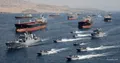
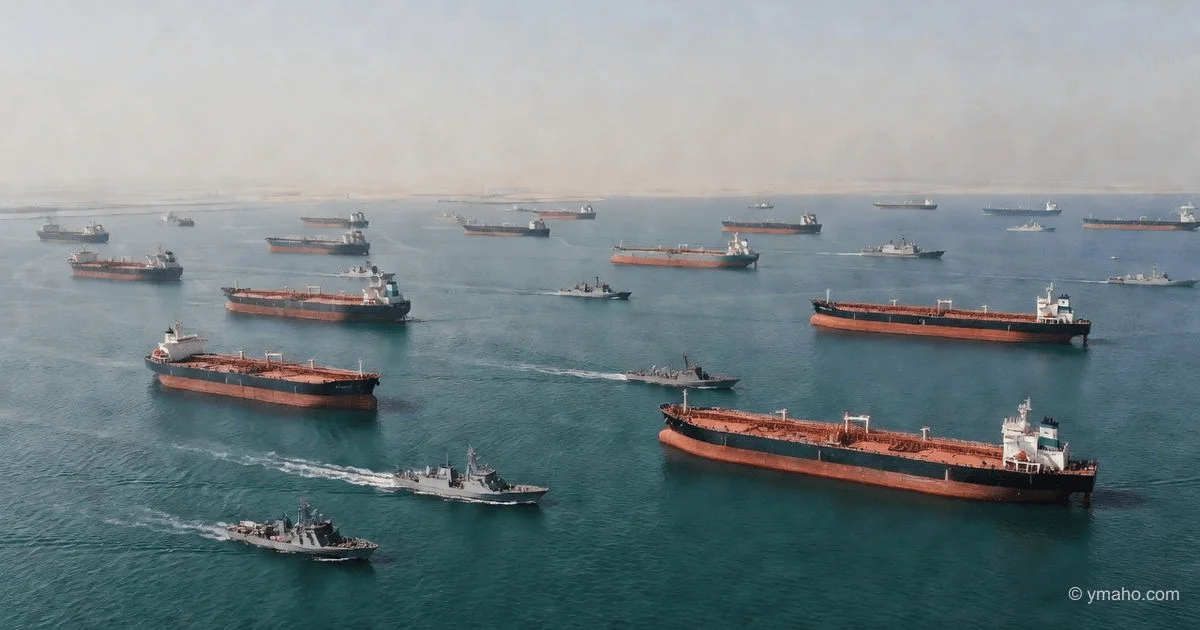
But the secret the press releases keep quiet is that even this grim forecast is too optimistic. The IMF assumes shipping through the Strait of Hormuz will normalize "in the coming months." I've spoken with three traders and two logistics experts over the past week—none of them believe that will happen before 2027. The real scenario is a protracted conflict. And in that case, according to the IMF's own Middle East department director Jihad Azour, the region could lose up to 15% of GDP per capita over five years.
The data the IMF doesn't put on the front page but that appears in the statistical appendix is alarming. The Fund projects an oil price of $65.84 per barrel for 2026. That's laughable. Brent has been above $93 for the second week straight. If the strait closes, oil will soar past $120. If it reopens, it will drop but likely not below $80 due to structural deficits. The IMF's oil forecast isn't a forecast—it's a political incantation to avoid spooking markets.
Insider perspective: I have a contact in the research department of one of London's largest hedge funds. They outplayed the IMF back in April. Their internal model, based on satellite imagery of tankers and AIS data, shows that physical trade volume through the strait has fallen by 60%, not the 30-40% reported in official summaries. "The IMF just can't keep up with reality. Their data is a month behind. And in the Middle East, a single day of war changes the economy more than a year of reforms," he told me.
Timeline and Context
How did the IMF get it so wrong, and why is it now rewriting history?
October 2025. The IMF forecasts MENA (Middle East and North Africa) growth at 3.7% for 2026. Even then, it was "cautious optimism," but the war hadn't started yet. Gulf countries were expected to continue diversifying, and oil prices were seen as stable.
February 2026. War with Iran begins. The Strait of Hormuz is blocked. The IMF panics.
April 2026. First shock. The Fund publishes the Regional Economic Outlook, slashing MENA growth to 1.1% (a 2.8 percentage point drop). Director Azour admits the shock "will leave a significant mark."
May 2026. Detailed data emerges. The country-by-country disparity is enormous. Qatar is forecast to contract by 8.6%, Bahrain by 0.5%, Kuwait by 0.6%. Saudi Arabia holds up relatively well at 3.1% growth (still down from 4.5%).
June 2026 (today). Another downgrade. The figure slips to 1.5%. The reason: escalation over the past two weeks (missile strikes, tanker seizures, Iranian threats). The Fund notes that everything has fallen: tourism, investment, transit revenues.
But the most interesting part is how the IMF calculates "losses" for oil-exporting countries. Formally, high oil prices (currently $95) offset the volume decline. But that's a trap. Saudi Arabia, the UAE, and Kuwait earn windfall revenues from selling oil at $90+, but they can't spend them as before. First, because they can physically sell less (the strait is blocked). Second, because insurance and transport costs are rising. Third, because investor confidence has collapsed—no one invests billions in a region where a rocket could strike any minute.
Who Wins and Who Loses
Winners:
- Oil-importing countries outside the conflict zone (Europe, USA). Paradoxically, high oil prices hurt their economies, but they gain a competitiveness edge. European chemical giants (BASF), as I've written before, profit because their Gulf competitors can't ship products.
- Saudi Arabia (relatively). Yes, it's hurting. But everyone else is worse off. The kingdom has a backup East-West pipeline, Red Sea ports, and $700 billion in its sovereign fund. The IMF specifically notes that the Saudis "show resilience."
- Volatility speculators. The oil market swings from $88 to $98 every week. It's heaven for traders who play the swings, but hell for real producers and consumers.
Losers:
- Qatar. The main victim. The country exports gas through the Strait of Hormuz. It has no alternative routes (unlike Saudi Arabia). The IMF forecasts a 8.6% contraction for Qatar. That's catastrophic. World Cup stadium construction is over, and the economy now hangs by a thread.
- Bahrain and Kuwait. They have no financial cushions. The IMF already expects them to fall into recession in 2026.
- Egypt and Jordan. These are oil-importing countries. They didn't start the war, but they pay more for energy and food. Plus, tourism, which made up 15-20% of their GDP, is completely destroyed. No cruise liner will go to Sharm El-Sheikh with a war nearby.
- UAE (especially Dubai). The Emirates positioned themselves as a safe haven and logistics hub. Now their ports are blocked or idle. Real estate investments that fueled the market are frozen.
- Any business tied to transit. Container carriers (Maersk, MSC) that built hubs in Jebel Ali (UAE) are losing millions. Shipping is routed around Africa, killing the transit economies of regional countries.
What the Media Leaves Out
First and least obvious: the GCC non-oil sector grew 4.4% in 2024. That figure will now turn negative. Saudi Arabia's Vision 2030 is crumbling before our eyes. Megaprojects like NEOM are frozen because investors (foreign funds) are pulling capital. Construction sites are idle. Restaurants and hotels are empty. The IMF talks about "diversification," but without peace, there will be no diversification.
Second: Iran's economy is already dead, but the IMF can't admit it. Estimates suggest Iran is losing $200-300 million per day. Never in the history of sanctions has the country been so isolated. The IMF's forecast for Iran likely shows a deep recession, but publicly they stay silent to avoid destabilizing negotiations.
Third, and most important for investors: the IMF expects a recovery in 2027 of 4-5%. That's a trap. The Fund assumes the war will end, the strait will reopen, and everything will return to normal. It won't. The conflict has left structural scars. Insurance companies will never again insure ships in Hormuz at old rates. Many factories evacuated from the UAE to India or Turkey won't return. Trust is lost forever. Recovery to pre-crisis levels (around 4%) will take 5-7 years, not 1.
Forecast: Next 30 Days and 90 Days
30 days (by July 8, 2026):
- The IMF will hold emergency consultations with the GCC. A "stabilization fund" of about $10-15 billion will be created for Bahrain and Oman to prevent default. This will temporarily calm their bond markets.
- Saudi Arabia will announce a delay in Vision 2030's timeline from 2030 to 2035. This will be a quiet PR move to hide failure.
- GCC stock markets (Tadawul, DFM indices) will continue falling 5-10%. Investors flee to gold and the dollar.
90 days (by September 8, 2026):
- If the war continues, the IMF will have to revise its GCC forecast from 2% to negative (-1% or -2%). Qatar will contract 10-12%, Bahrain 5%.
- Regional unemployment will spike, especially among South Asian migrants working in the UAE and Saudi Arabia. This will cause social unrest and problems for remittances to India, Pakistan, and Bangladesh.
- China will increase its influence. While the US and Iran fight, and the GCC bleeds, Beijing will offer a "Silk Road 2.0"—infrastructure loans in exchange for access to ports and oil. The UAE and Saudi Arabia will start leaning toward China, disillusioned with US security guarantees.
Main risk: A sudden drop in oil prices due to a US or European recession. If the West enters a crisis (eurozone data already shows 0.2% growth), oil demand will collapse. Then GCC countries will be left with neither volumes (strait closed) nor prices ($50-60). This is the "perfect storm" scenario that the IMF doesn't even model publicly, but it would lead to bankruptcy for several Gulf states. Probability: 10-15%, but rising daily.
Editorial Forecast
Asset: ETF on UAE stocks (e.g., iShares MSCI UAE Capped)
Direction: Moderate decline in the next 24-72 hours
Key levels: Current DFMGI index around 3800—support at 3700, a break below opens the way to 3500
Confidence level: High (70-75%)
Main risk: In the coming days, news of massive financial aid to the UAE from Abu Dhabi (which is wealthier than Dubai) could emerge. This would temporarily support the market but won't change the fundamental picture—the region is entering a deep recession. Watch for statements from UAE finance ministers; promises of "liquidity support" will create a false bullish breakout.
The editorial opinion is not investment advice. All investment decisions are yours alone.
— Editorial Team