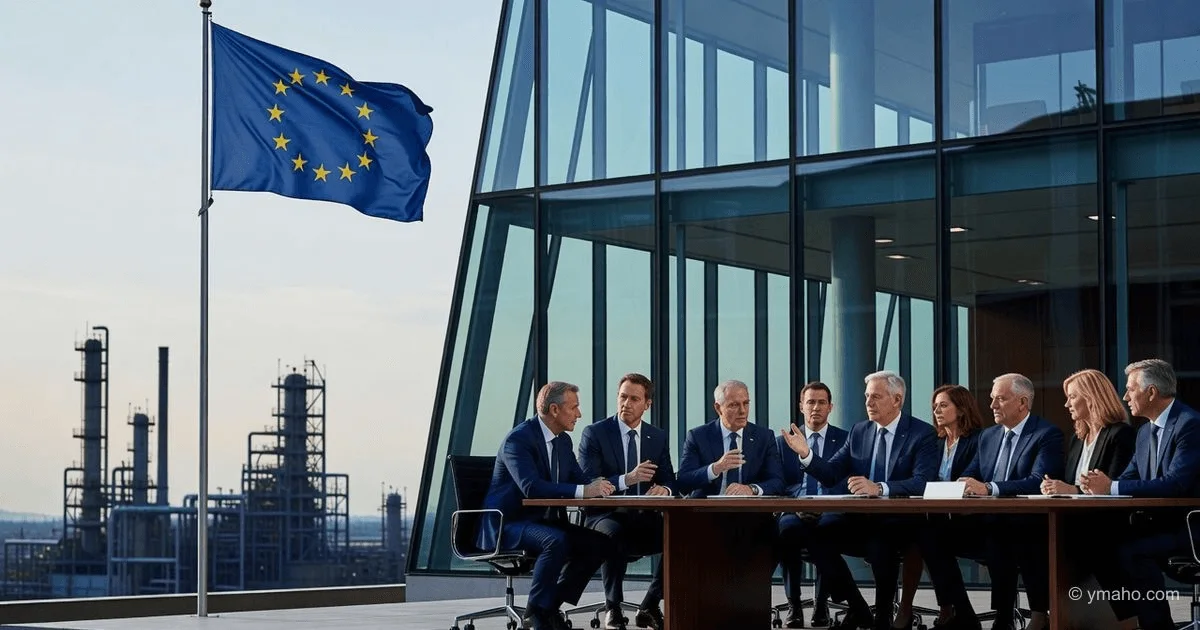
EU Agrees 11th Sanctions Package Against Iran in Response to Persian Gulf Attacks
New restrictions will target Iranian petrochemical exports and the financial sector but exclude Russian companies to preserve bloc unity.
Title: EU's 11th Package Against Iran: Act of Desperation or Strategy Shift?
Author: Independent Financial Analyst (Insider Perspective)
Trigger News: EU agreed on the 11th sanctions package against Iran, targeting petrochemicals and the financial sector but excluding Russian companies to maintain bloc unity.
[The Gist]: What's Really Happening
The official version you read in the European Commission communiqué sounds like a decisive step: "The EU is increasing pressure on Tehran in response to aggression in the Persian Gulf." That's a nice political declaration with almost no connection to reality. In fact, the 11th sanctions package is not a weapon against Iran but a shield to save EU unity, which is cracking under the weight of contradictions between Germany, France, and Eastern European countries.
What really lies behind this package, agreed on June 6-7, 2026? The exclusion of Russian companies from the sanctions list is not "humanity" or a "technical detail." It is a direct signal to Moscow: "We will not expand anti-Russian sanctions alongside Iranian ones because without your gas and oil, Europe won't survive the winter." Brussels fully understands that simultaneous pressure on two major energy exporters (Russia and Iran) with oil at $95 and gas at €50 per MWh is economic suicide.
Insider perspective: On Friday, June 6, after market close, an emergency video call took place between the finance ministers of Germany, France, and Italy. A source in Berlin told me that the German side threatened to veto any package including new restrictions against Russian energy structures. The argument: "Our chemical companies BASF and Evonik are already losing €3 billion per quarter due to high raw material prices. One more blow and we lose our industry."
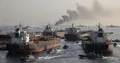
As for Iran: sanctions against petrochemicals look impressive, but in reality they hit an empty target. Iran has been unable to export a single barrel of oil through the Strait of Hormuz for three months. Its petrochemical plants in Assaluyeh and Bandar-e Mahshahr are operating at 30-40% capacity because feedstock (ethane and naphtha) is not arriving, and finished products cannot leave ports blocked by US aircraft carriers. EU sanctions against something that doesn't exist is political theater.
Timeline and Context
Let's break down how we got to this package and why it appeared now rather than a month ago.
February-March 2026: Start of the conflict in the Persian Gulf. The EU declares solidarity with the US but takes no real action. Hungary, Slovakia, and Austria block any energy-related sanctions.
April 2026: European chemical companies (BASF, Evonik, Lanxess) start reporting unexpected profits. Reason: competitors from Asia and the Middle East cannot deliver products, and Europeans raise prices. BASF increased monthly profit from $450 million to $700 million. Lanxess, despite a 14% drop in quarterly revenue, confirms annual targets and expects growth in Q2. This shifts the mood in Berlin and Paris: it turns out high energy prices are not so bad for European manufacturers.
May 2026: The US unilaterally imposes sanctions on 19 vessels of Iran's "shadow fleet" and the crypto exchange Nobitex. The EU is forced to play along, but there is no unity within the bloc. Greece and Malta, whose shipowners lose millions due to the strait blockade, demand compensation.
June 1-5, 2026: Escalation in the Strait of Hormuz. Iran launches missiles at Bahrain, Kuwait, and Israel. Insurance premiums soar to 3-5% of vessel value. European refineries (Shell in Rotterdam, BP in Hamburg) report capacity reductions to 60% due to feedstock shortages.
June 6-7, 2026: Emergency meeting of EU foreign ministers in Brussels. The 11th package is discussed. Germany issues an ultimatum: "No sanctions against Russian companies." France supports. Eastern Europe (Poland, Baltics) is furious but forced to agree. The final document includes Iran's petrochemical and financial sectors but removes all points about Russia.
June 8, 2026 (today): The package is officially announced. Markets react weakly — Brent rises $0.5 to $94, but that's more on inertia from previous days than on sanctions. The euro weakens 0.2% against the dollar — investors are disappointed by the EU's weak response.
Who Wins and Who Loses
Winners:
- European petrochemical and chemical companies (BASF, Evonik, Lanxess, Repsol, ENI). These are the main beneficiaries that headlines ignore. Because Asian and Middle Eastern competitors (SABIC, Sinopec) have lost access to feedstock through the Strait of Hormuz or cannot deliver finished products, Europeans are capturing their market share. Repsol and ENI, which have their own refineries in Spain and Italy, have raised processing margins by 25-30%. BASF has been earning $700 million per month since April instead of $450 million. Lanxess expects Q2 operating profit of €130-150 million versus €94 million in Q1.
- China. Yes, officially China complies with UN sanctions against Iran. But in reality, Chinese "teapots" (independent refineries in Shandong province) continue to buy Iranian oil through the shadow fleet at a discount of $10-15 per barrel to Brent. Moreover, Chinese banks (including state-owned) have opened correspondent accounts for Iranian "shadow banks" through which payments in yuan and UAE dirhams flow. China wins twice: it gets cheap oil and strengthens the yuan as an alternative to the dollar.
- Shadow fleet and crypto exchanges. The US imposed sanctions on 19 vessels and several exchanges, including Nobitex. But that's just the tip of the iceberg. Iran has shifted payments for passage through the Strait of Hormuz to bitcoin via the Lightning Network. According to Galaxy Research, $7.8 billion has already passed through this scheme since the conflict began. Shadow banks and crypto exchanges earn commissions of up to 5-7% per transaction.
- USA. Washington is achieving exactly what it wanted: isolation of Iran, control over the strait, and weakening of China's influence in the region. American oil companies (Exxon, Chevron) sell their oil to Europe at $95 instead of $75, replacing Iranian and Saudi volumes. OPEC+ is virtually paralyzed, and the US dictates terms on the global energy market.
Losers:
- Iran. This is obvious. The country loses $276 million per day from unexported oil and petrochemicals alone, plus another $159 million from other losses. Revenues have fallen from $250 million per day to near zero. Iran's economy could shrink by 12-15% in 2026. The only plus is that oil sold through the shadow fleet goes at a discount of only $7-12 (versus $18-24 before the war) because demand is high.
- European consumers. Taxpayers and companies pay 40-50% more for energy than a year ago. Eurozone inflation accelerated to 3.2%, forcing the ECB to raise rates. The average European pays €1.9-2.1 per liter of gasoline. This hits everyone, especially the poor.
- Asian and Middle Eastern competitors of European chemical companies. SABIC (Saudi Arabia), Borouge (UAE), Sinopec (China) — all have lost access to the European market. Their products either cannot leave Persian Gulf ports or must go around Africa with freight costs up 40-50%.
In limbo:
- Russia. Formally, the package does not include Russian companies. But the rhetoric is tough, and the "message" to Moscow is clear: "We are not touching you now, but we are watching." If Russia tries to increase pressure on Europe via the gas pipeline, next winter's 12th package could be very different.
What the Media Isn't Saying
Point one, the most important: The EU is deliberately weakening sanctions because European corporations are profiting from the war. It's cynical but true. German chemical giant BASF increased profit by 55% in April compared to February because competitors from Asia and the Middle East were knocked out. Evonik doubled monthly profit. Lanxess and other specialty chemical producers raised prices by 10-20%. European oil companies Repsol and ENI, with their own refineries, are hitting record margins. The sanctions package that excludes Russia is a silent deal between Brussels, Berlin, and Paris: "Let us profit from this crisis, and we will support political unity."
Point two, technical but critical: Sanctions against petrochemicals are a farce because Iranian petrochemicals are already dead. Due to the blockade of the Strait of Hormuz, Iranian ports Assaluyeh and Bandar Imam Khomeini are blocked by US and British ships. Finished products (methanol, ammonia, polyethylene) sit on docks with no exit. Feedstock (ethane, naphtha) is not arriving due to halted production. Power-to-X projects (ammonia production from renewable energy) are shelved. EU sanctions against something that physically cannot be exported are a sham for domestic consumption.
Point three, the least obvious: Sanctions are pushing Iran into the arms of cryptocurrencies and China, accelerating de-dollarization of global trade. Iran has already required tankers passing through the Strait of Hormuz to pay transit fees in bitcoin via the Lightning Network. The US imposed sanctions on the crypto exchange Nobitex, but the scheme continues through decentralized platforms. Moreover, Iran has switched to settlements with China in yuan and UAE dirhams through shadow banks in Hong Kong and Turkey. This means the dollar is gradually being squeezed out of one of the largest commodity trade flows. If this trend continues and spreads to other countries (Venezuela, Russia, maybe even Saudi Arabia), the dollar could lose its status as the sole reserve currency for energy markets.
Forecast: Next 30 Days and 90 Days
30 days (until July 8, 2026):
- Sanctions will have no immediate impact on oil prices since Iranian exports are already zero. Brent will remain in the $88-98 range, reacting mainly to military actions rather than diplomacy.
- European chemical stocks (BASF, Evonik, Lanxess) will continue to rise 3-5% on strong quarterly reports. Investors will see real profit figures and realize that war for European chemicals is an opportunity, not a threat.
- The euro will remain under pressure due to stagflation. EUR/USD will fluctuate in the 1.045-1.060 range.
- Iran will continue to lose $435 million per day. The shadow fleet and crypto schemes will expand but cannot compensate for the revenue drop.
90 days (until September 8, 2026):
- By September, European chemical companies will exhaust the stockpiling effect — clients have already built up inventories, and panic demand will subside. BASF, Evonik, and others could correct downward by 5-10%. This will be an entry point for those who believe in long-term relocation of production to Europe.
- If the conflict is not resolved, the EU will be forced to adopt a 12th package, likely targeting Russian energy. This will trigger a new wave of gas price increases to €60-70 per MWh and provoke a recession in Germany.
- De-dollarization will accelerate. The yuan and UAE dirham will become the main currencies for Middle Eastern oil settlements in the shadow sector. Bitcoin could rise to $120,000-150,000 on the wave of its use as a sanctions evasion tool.
Main risk to my forecast: a sudden diplomatic settlement (e.g., through Oman or Qatar mediation). If Iran agrees to a truce and the strait opens, oil prices could crash $20-30 per barrel within days. European chemical companies would instantly lose their competitive advantage, and their stocks would fall 15-20%. Probability of this scenario: 10-15% over 90 days (Iran stopped communicating with mediators last week).
Editorial Forecast
Asset: BASF shares (BAS.DE)
Direction: sideways with a slight downward trend in the next 24-72 hours
Key levels: current price €48.50 — resistance at €49.80, support at €47.20
Confidence level: medium (55-60%)
Main risk: markets have already priced the war effect into BASF shares (profit up 55%). If news of ceasefire talks in the Strait of Hormuz emerges in the coming days, shares could fall 3-5% on fears that "the competitive advantage will disappear." Watch official statements from German and French foreign ministries — any mention of a "diplomatic initiative" will be a signal to take profits in the European chemical sector.
The editorial opinion is not an investment recommendation. All investment decisions are made by you.
— Editorial Team