Saudi Arabia Calls Emergency Arab League Summit on the Situation in the Strait of Hormuz
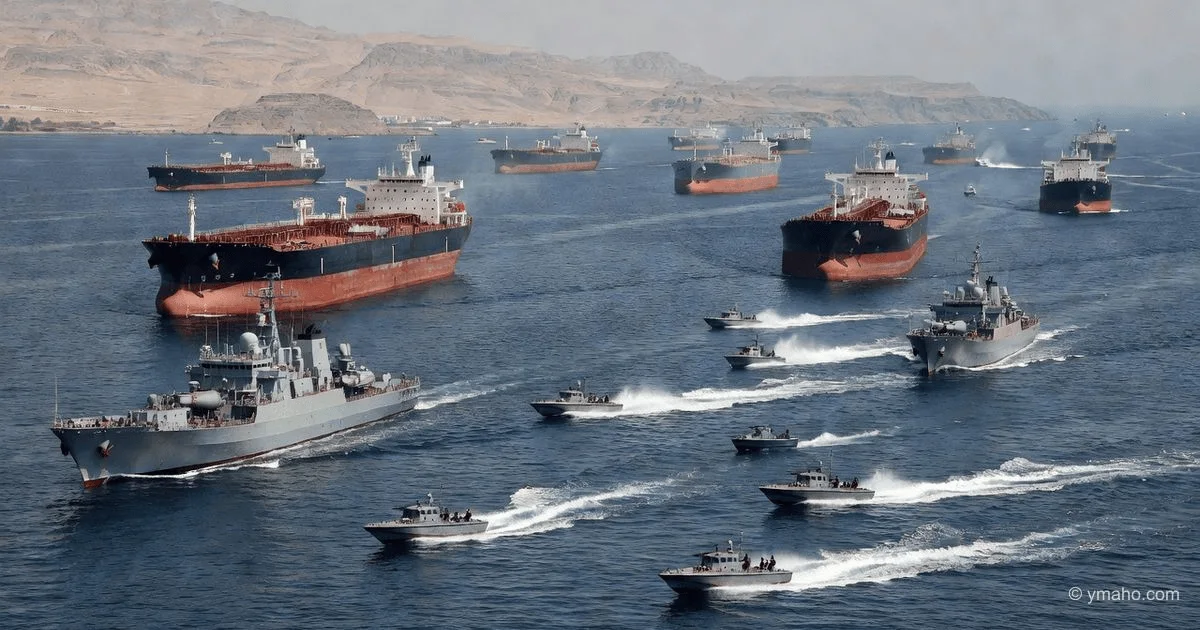
Riyadh proposes creating joint Arab naval forces to protect shipping after attacks on tankers.
Title: Arab League Summit: Arab NATO Against Iran or a Survival Game?
Author: Independent Financial Analyst (Insider Perspective)
Trigger News: Saudi Arabia calls an emergency summit of the Arab League to create joint naval forces to protect shipping in the Strait of Hormuz.
[The Gist]: What Is Really Happening
The official version presented to Western readers sounds like the consolidation of the Arab world against the Iranian threat: "Riyadh is taking the lead in protecting the region." It's a nice story for headlines. But in reality, Saudi Arabia is convening this summit not so much to create a military alliance as to avoid being left alone in the face of disaster.
What is really behind this emergency meeting scheduled for June 9-10, 2026? The economies of Saudi Arabia and its Gulf neighbors are collapsing before our eyes. According to estimates, the combined losses of the six Gulf Cooperation Council (GCC) countries from the blockade of the Strait of Hormuz and Iranian attacks amount to $180-220 billion per month. These are not just numbers—they represent real factory shutdowns, idle tankers, and broken contracts.
The secret that officials are keeping quiet: Saudi Arabia has been unable to export oil through the Strait of Hormuz for three months. Yes, the kingdom has an alternative route—the East-West Pipeline, which runs from fields in the Eastern Province to the port of Yanbu on the Red Sea. But its capacity is only 5 million barrels per day, while Saudi Arabia's normal exports are 7-8 million. That means 2-3 million barrels per day simply cannot leave the country. That's $200-300 million in lost revenue daily.
Prince Turki al-Faisal, former head of Saudi intelligence, stated outright in his column for Al Arabiya that King Salman is "determined to protect Saudi and Arab interests." But behind this rhetoric lies panic. Riyadh understands that if Iran not only blocks the strait but also controls it de facto (as Arab League Secretary-General Ahmed Aboul Gheit said, "the international community will not accept unilateral Iranian control"), it spells the end of the economic model for all Gulf monarchies.
Insider perspective: I spoke yesterday with a former advisor to the Saudi Ministry of Energy (who asked for anonymity). His words: "The problem is not that we can't protect the strait militarily. The problem is that no insurer will enter the strait, even if we install anti-aircraft batteries every kilometer. Lloyd's insurers have already told us: a premium of 5-7% is the minimum, and it won't drop until a peace treaty is signed. And 7% of a tanker's value is $17 million per passage. Who will pay that?"
Timeline and Context
The conflict between Arab monarchies and Iran has lasted for decades, but the current crisis has a specific starting point.
February 28, 2026: The US and Israel launch missile and bomb strikes on Iran (Operations "Epic Fury" and "Lion's Roar"). In response, Iran begins shelling not only US and Israeli military bases but also the infrastructure of Arab Gulf monarchies. Authorities in Tehran announce a blockade of the Strait of Hormuz.
March 8, 2026: First emergency Arab League summit in video conference format. Foreign ministers of 22 Arab countries condemn Iran and demand an end to strikes on Arab states. A statement is adopted calling on the UN Security Council to pass a resolution against Iran.
March 11, 2026: The UN Security Council adopts a resolution demanding Iran immediately cease strikes on Arab countries (Bahrain, Kuwait, Oman, Qatar, Saudi Arabia, UAE, Jordan). Russia and China abstain from voting.
April 2026: The Arab League adopts a resolution demanding Iran pay "massive compensation" for damage from attacks and immediately open the Strait of Hormuz. Bahrain (chair of the Arab League) states that Iran's actions "have disrupted maritime traffic, threaten energy security, and global shipping."
May 24, 2026: The Arab League meets again to discuss Iranian attacks. This time, the League Council condemns strikes on eight Arab countries, including Jordan, UAE, Bahrain, Saudi Arabia, Oman, Qatar, Kuwait, and Iraq. The right of Arab states to individual and collective self-defense is affirmed. Arab League Secretary-General Ahmed Aboul Gheit states that Tehran is "acting irrationally."
June 2026: The situation reaches a critical point. Oil prices have stabilized above $90 per barrel. GCC economies are suffering losses in the hundreds of billions of dollars. Iran continues attacks on tankers and coastal infrastructure.
June 9-10, 2026 (today-tomorrow): An emergency Arab League summit opens in Jeddah, Saudi Arabia. The main agenda is the creation of joint Arab naval forces to protect shipping in the Strait of Hormuz. However, sources note that the agenda was deliberately narrowed to a single item to "not divert attention from the main problem."
Who Wins and Who Loses
Winners:
- USA. Washington has tried for decades to create an anti-Iranian Arab alliance. Now it's happening on its own, without additional effort. The Pentagon already has bases in Bahrain (Fifth Fleet), Qatar (Al Udeid), Kuwait, and the UAE. Joint Arab forces will become a convenient "regional shield," allowing the US to reduce its own military presence without losing control of the strait. It also legitimizes any future US strikes on Iran—they will be presented as "support for Arab allies."
- Defense Contractors. Lockheed Martin, Raytheon, Boeing, Thales, BAE Systems. Building joint naval forces from scratch for six oil-rich states means contracts worth $50-100 billion. Ships, radars, air defense systems, coastal batteries, personnel training—all will be purchased from Western companies. France has already offered the UAE its Gowind-class corvettes. Russia and China may also get a piece of the pie, but the main beneficiaries are Americans and Europeans.
- Insurance Companies (again). News of a military coalition could reduce the war risk premium by 0.5-1 percentage point, as risks to ships decrease. For insurers, this means lower payouts while maintaining high premium levels collected in previous months.
- China. Paradoxically, Beijing is a quiet beneficiary. Arab monarchies, frightened by Iran and disappointed by US indecisiveness (Trump did not send ground troops), are seeking alternative patrons. China has already offered its "peace initiatives" and, without joining the alliance, could gain access to ports and bases in Oman and the UAE for its navy.
Losers:
- Iran. Every Arab soldier joining the coalition is another enemy for Tehran. If the Arabs can protect the strait independently, Iran loses its main bargaining chip—the threat of blockade. Moreover, the coalition legitimizes any future strikes on Iranian targets as "retaliatory measures" by Arab states affected by Iranian aggression. Already, the Arab League holds Iran "fully responsible" for damage and demands compensation.
- Oman and Qatar. These two countries have traditionally maintained neutral or even friendly relations with Iran. Oman served as a mediator between Tehran and Washington. Qatar, despite its conflict with neighbors in 2017-2021, maintained dialogue with Iran. Now they are forced to choose sides. Creating a military coalition undermines their diplomatic sovereignty. Oman, in particular, risks becoming an arena for clashes between Iranian proxies and Arab forces.
- Small Arab States (Bahrain, Kuwait). They lack the military and financial power to defend themselves independently. Joining a coalition led by Saudi Arabia means de facto relinquishing part of their sovereignty. Bahrain, where Shia protests (backed by Iran) are already underway, becomes a prime target for Iranian strikes.
- Global Trade (and Consumers). Yes, a coalition could reduce risks to shipping. But even with a coalition, the strait remains a war zone. Insurance premiums will stay high (at least 2-3%). This means oil will remain expensive for a long time, and global inflation will stay high.
In Limbo:
- Egypt. Egypt has the most powerful army among Arab countries. But Cairo is extremely reluctant to get involved in a conflict that may not bring direct benefits. Egypt's economy is already on the brink (inflation, debt), and war with Iran could finish it off. On the other hand, if Egypt refuses to participate, it will lose influence in the region and generous financial aid from Saudi Arabia and the UAE.
What the Media Isn't Saying
First and most non-obvious point: there is no unity within the Arab camp, and the summit could fail. Yes, all 22 Arab League countries condemn Iran. But that doesn't mean they are ready to fight. Oman and Iraq (where a strong pro-Iranian lobby exists) will not participate in military operations. Algeria, Libya, Sudan, Yemen (itself torn by civil war) have other problems. Morocco and Jordan are far from the Gulf. In reality, only 4-5 countries will rally under the Saudi banner: Saudi Arabia, UAE, Bahrain, Kuwait, and possibly Qatar (under pressure). That's too few for "joint forces."
Second point: this is an attempt by Saudi Arabia to save itself from economic collapse. As I mentioned, the kingdom loses $200-300 million per day on unexported oil. But that's just the tip of the iceberg. The Vision 2030 project (economic diversification) requires trillions of dollars. That money isn't there. The Saudi Public Investment Fund (PIF), managing $700 billion in assets, has already frozen 40% of new projects. If the strait doesn't open within the next six months, the Saudi economy will shrink by 8-10% in 2026. The summit is a cry of desperation, not strategic planning.
Third and most cynical point: creating naval forces is not about protection from Iran, but about control of the strait after Iran. Saudi Arabia and the UAE have long dreamed of taking control of shipping in the strait, bypassing the Americans. Joint Arab forces are a tool for establishing Arab hegemony in the region after the Iranian regime falls or weakens. The only question is when—a year or ten years from now.
Forecast: Next 30 Days and 90 Days
30 Days (until July 8, 2026):
- The Arab League summit on June 9-10 will end with a loud declaration about creating a "joint command" and plans to form a fleet. But there will be no specific timelines or budgets—this will take years. Markets will ignore the declaration.
- Oil prices will remain high ($88-98). Even a hint of an Arab naval fleet won't reduce insurance premiums—insurers need not words, but actual patrolling and security guarantees.
- Iran may launch preemptive strikes on military facilities in Saudi Arabia and the UAE to "punish" them for the summit. Particularly vulnerable are air defense bases and port facilities in the UAE.
- Shares of Saudi Aramco could fall 3-5% as investors see the kingdom getting dragged into a protracted conflict rather than solving the blockade problem.
90 Days (until September 8, 2026):
- If Iran does not agree to a truce (and it won't, because its goal is to destroy the Arab coalition from within), Arab countries will start acting unilaterally. A possible operation to clear the strait of mines by Saudi and Emirati special forces, without US involvement, is extremely risky (casualties will be high), but there is no other option.
- Saudi Arabia will begin secret negotiations with Iran through intermediaries (Pakistan, China), offering security guarantees in exchange for opening the strait. This will be a "Plan B" in case the coalition fails.
- GCC economies will continue to shrink. Unemployment in Saudi Arabia could rise from 6% to 12-15%. This will create social tension, especially among the youth.
- The dollar will strengthen against emerging market currencies as capital flees to safe havens amid uncertainty in the Gulf.
Main risk to my forecast: Turkish intervention. Erdogan has already called Iranian attacks "unacceptable," but Ankara is also hostile to Saudi Arabia (over Qatar, the Muslim Brotherhood, etc.). If Turkey offers its help in protecting shipping, it will create a three-way conflict of interest (US — Saudi Arabia — Turkey). The probability of this scenario is 15-20%.
Editorial Forecast
Asset: Brent crude oil
Direction: sideways with a downward trend of 2-3% in the next 24-72 hours (reaction to diplomatic news)
Key Levels: current level $93-95 — resistance at $96.50, support at $90.00
Confidence Level: low (40-45%)
Main Risk: If Iran perceives the Arab League summit as a declaration of war and launches a massive missile strike on Saudi or Emirati oil terminals, prices will instantly spike to $105-110 per barrel. Watch for statements from the Islamic Revolutionary Guard Corps (IRGC) in the next 48 hours—any threat against "Arab traitors" will be a signal for escalation.
The editorial opinion is not an investment recommendation. All investment decisions are made at your own risk.
— Editorial Team