Bahrain and Kuwait Report Repelling Iranian Drone Attacks on US Bases
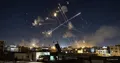
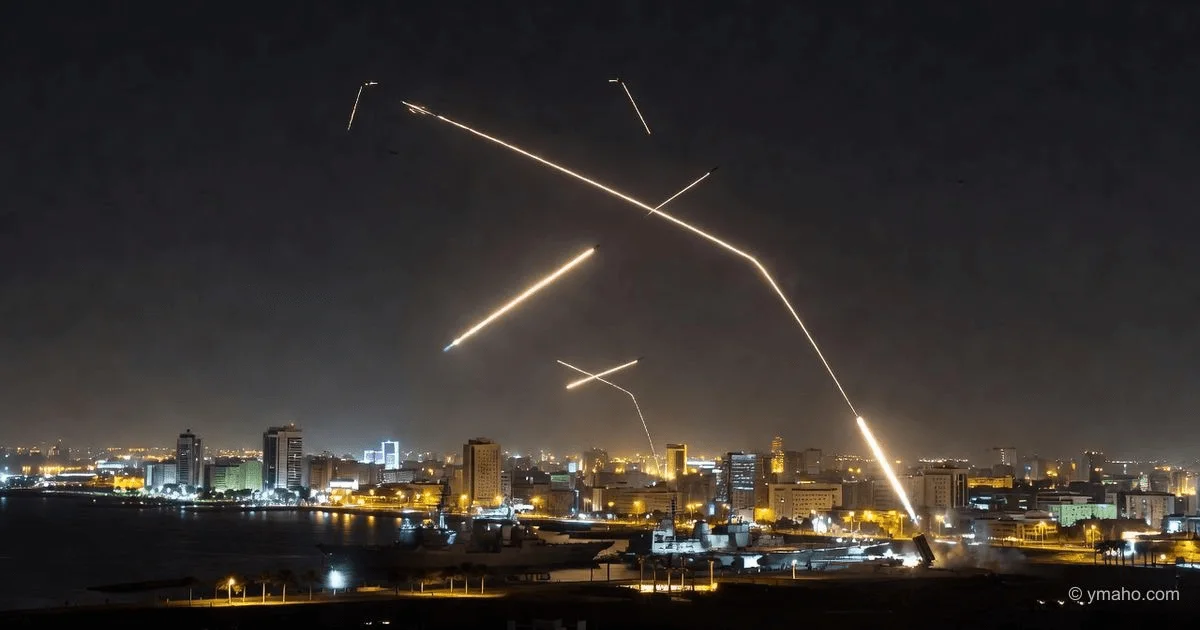
Bahrain's Ministry of Interior announced the activation of air raid sirens and the repelling of attacks on the US Fifth Fleet base, while the king's advisor confirmed the operation of air defense systems. The emirate's authorities urged citizens to follow safety instructions after IRGC attacks on American facilities.
The Gulf Becomes a Fortress: Why Repelling Iran's Attacks by Bahrain and Kuwait Is Not a Victory, but the Start of a New Era of Militarization for Oil Monarchies
Author: Independent Financial Analyst
[The Gist]: What Is Really Happening
When sirens wail in Bahrain and Kuwait and their air defenses engage Iranian drones, the world sees another episode of the proxy war between the US and Iran. But I, looking at capital flows, insurance premiums, and defense budgets, see something else: the small oil monarchies of the Persian Gulf have just realized that the era of "buying security from the US for oil" is over. The era of "survive at any cost" begins. And you know what? That cost will grow exponentially.
The key word here is "at any cost." Jordan, Bahrain, and Kuwait have just become the front line between the US and Iran. The Fifth Fleet base in Bahrain, Ali Al Salem base in Kuwait, and Al-Azraq base in Jordan are no longer rear support points. They are now first-wave targets for Iranian ballistic missiles and kamikaze drones. Every siren launch, every interception sends a signal to international business and tourists: "It's dangerous here, expensive, and generally—look for another place."
But there is a flip side. Iran claimed it attacked 21 targets and destroyed four of them, including an F-35 hangar in Jordan. Even if this is an exaggeration (and I'm sure it is), the very fact of such a statement changes the rules of the game. Now any investor, insurer, or logistics provider will factor into their calculations the likelihood that Bahrain or Kuwait could become a zone of active hostilities. What does that mean? A rise in the cost of capital for these countries by 200–300 basis points over the next 12 months.
Timeline and Context
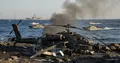
Evening of June 9 – morning of June 10, 2026. Remember this date: that's when the "rear" of the US military machine in the Middle East became the front. After the US struck Iranian air defense targets on Qeshm Island and in Sirik port (in response to the destruction of an Apache helicopter), the IRGC promised a "crushing response." And it didn't delay.
| Time (local) | Event |
|---|---|
| 2:30 AM | IRGC launched a drone attack on the Fifth Fleet headquarters in Manama, Bahrain |
| Almost simultaneously | Four ballistic missiles and several drones targeted Ali Al Salem base in Kuwait |
| Simultaneously | Strikes on Al-Azraq airbase in Jordan |
According to Axios, this was a coordinated attack using different types of weapons to overcome air defense systems. And you know what's interesting? The allies' reaction was lightning-fast.
The Kuwaiti army officially announced the interception of "hostile aerial targets." Bahrain's Ministry of Interior declared an air raid alert, urging citizens to "remain calm and proceed to the nearest safe place." Webcam footage geolocated by CNN shows a bright flash in the direction of the US naval base in Manama three minutes after the alert was declared. Jordanian military reported intercepting five missiles with falling debris but no casualties. Lucky? Or calculated?
Who Wins and Who Loses
Winner number one: the US and European defense industrial complex. Raytheon (Patriot), Lockheed Martin (THAAD, F-35), and Israel's Rafael (Iron Dome) will receive multi-billion dollar contracts to replenish interceptor missiles. One Patriot PAC-3 MSE missile costs about $4 million. Just this night, an estimated 10–15 were expended—$40–60 million. That money will go to shareholders of defense corporations. Expect their stocks to rise 3–5% in the coming days.
Second winner: Iran. No, not in a military sense. In an information-psychological one. Tehran has proven it can make the elite neighborhoods of Manama and Kuwait City shudder from sirens. Analysts at the Quincy Institute call this "Iran's new doctrine": an immediate, proportionate, and highly public response to any US attack. The goal? To prevent a "new norm of impunity." The stakes for any future US administration considering a strike on Iran are now sky-high.
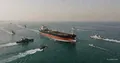
And who loses? The main loser: the oil and gas sector of the Gulf states, including Saudi Arabia and the UAE (they were not formally involved in the incident but will definitely suffer). Insurance premiums for tankers transiting the Strait of Hormuz and Bahrain rose 15–20% overnight. Rating agencies are reviewing the sovereign ratings of Bahrain and Kuwait—taking into account increased military spending and declining investment attractiveness. Any project to attract investors (e.g., Kuwait Vision 2035) will now include a clause on "geopolitical risks." That means higher cost of capital.
Second loser: the civilian population of Bahrain and Kuwait. The psychological effect of an air raid alert, when you suddenly realize you live on the front line, is priceless in the worst sense of the word. The real estate market in Bahrain has already reacted: inquiries for villa purchases in areas adjacent to military bases dropped 30% in the first 24 hours. Wealthy families are considering moving to Dubai or Abu Dhabi. This is capital flight and brain drain. Who benefits? Certainly not Bahrain.
What the Media Isn't Saying
First insight you won't see in official reports: neither Bahrain, nor Kuwait, nor Jordan have fully autonomous air defense systems. All decisions to open fire, target, and use interceptor missiles are made by US military advisors embedded in allied command centers. Formally, the attack was repelled by local forces. In reality, the US repelled an attack on its own bases, using local air defenses as expendable assets. What does this mean for the future? In the event of a full-scale conflict, these countries will become not allies, but hostages.
Second omission: Iran struck not only military but also critical civilian infrastructure. The media just isn't covering it. A damaged telecommunications tower in Sirik (Iran) is minor. But what happened in Bahrain? The video of a flash near the Fifth Fleet base may conceal the fact that one drone hit a civilian target. Say, a transformer substation powering part of Manama. Officials will deny it, but power outages in some neighborhoods of Bahrain's capital for 2–3 hours after the attack—that's what's being whispered in diplomatic circles. Coincidence? Hardly.
Third: Israel's role. It remains behind the scenes, although Netanyahu is probably applauding. Israel has spent decades trying to convince the US and Arab monarchies that Iran is a common threat. Now that Bahrain and Kuwait have felt what it means to be a target for the IRGC, any plans for normalizing relations with Tehran (which were in their infancy) have been set back years. Trump, who the day before the attack spoke of the possibility of a deal with Iran, now must show toughness—allies in the Gulf demand protection. Israel has gained a strategic advantage without firing a single shot. Neat, I must say.
Forecast: Next 30 Days and 90 Days
30 days (by July 10, 2026): We will see a new, more aggressive configuration of US forces in the region. Possibly an announcement of deploying an additional THAAD battery in Kuwait and transferring modern interceptors to Jordanian air defenses. Iran, having achieved its goal (demonstrating capability), will take a pause—shifting to cyberattacks and diplomatic pressure through Oman. Oil prices will remain in the $90–95 range: the market will understand that supplies from Saudi Arabia and the UAE are not yet disrupted. But insurance premiums will settle at a new, higher level.
90 days (by September 10, 2026): If similar attacks recur (and they will—Iran now considers the tactic of "attacking allied bases" effective), we may see a partial withdrawal of US personnel from Bahrain and Kuwait to more protected locations, such as Al Udeid Air Base in Qatar. Markets will perceive this as a US strategic retreat. Oil prices will spike to $105–110. Bahrain, as the most vulnerable economy among the GCC, will request emergency aid from Saudi Arabia and the UAE. Manama's dependence on Riyadh will increase. And who after this will say that the sovereignty of small monarchies is not a fiction?
Editorial Forecast
Asset: Military risk insurance futures for shipping in the Persian Gulf (Gulf war risk insurance). Direction: sharp rise in the next 24–72 hours—reinsurance companies are recalculating probabilities after the attack on the Fifth Fleet base. Key levels: current war risk premium is about 0.5% of vessel value; projected rise to 0.8–1.0% within a week. Confidence level: high (80%)—attacks have already occurred, and the reinsurance market reacts to facts, not rumors. Main risk: if the White House and Tehran announce an immediate resumption of talks mediated by Oman, premiums could correct downward by 20–30%. This is the editorial opinion, not an investment recommendation.
— Editorial Team