Israeli Defense Minister Says Actions Against Iran 'Far From Over'
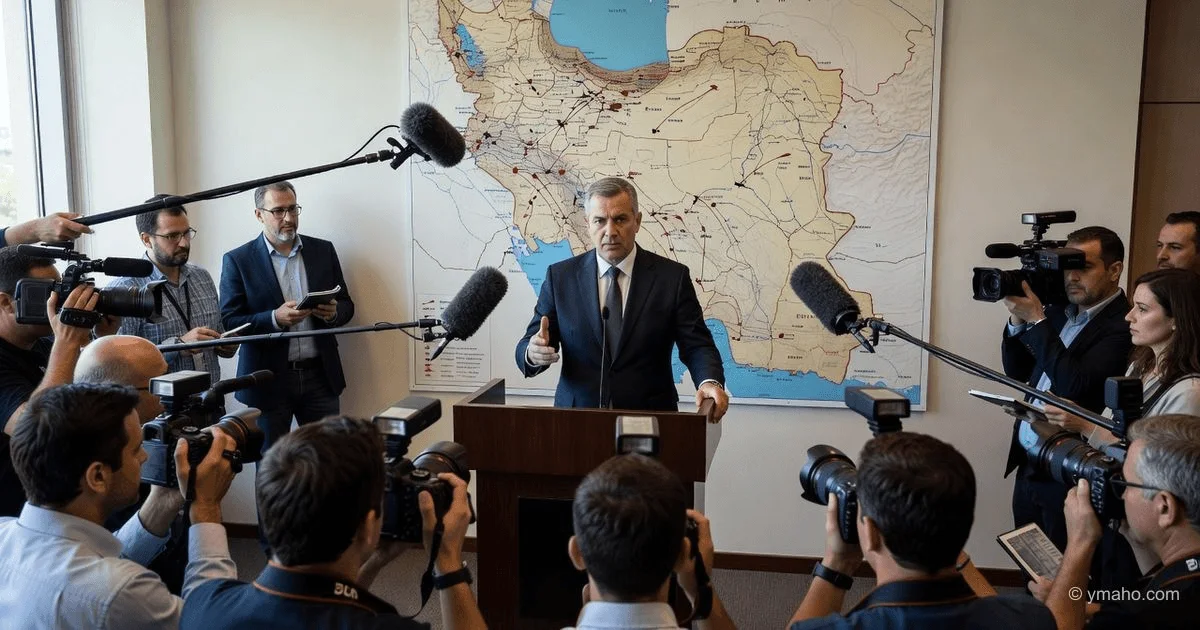
Amid ceasefire negotiations, the Israeli side reports that the army is prepared for strikes on Iran far more powerful than before.
Hawkish Rhetoric or a Deal 'Insurance Policy': Why Israel's Statement Should Not Be Underestimated
Author's analysis for those who realize the Middle East conflict has become a new 'anchor' asset for global markets.
What you see in the headlines—'actions far from over'—is not just militaristic rhetoric. It is a quarterly report to the 'war' shareholders. Right now, while everyone celebrates the cessation of mutual strikes between Iran and Israel (as reported by media on June 7-8), the defense minister suddenly reminds us that the 'deal' with Iran has failed. This is not sabotage of peace.
From the perspective of a financial analyst watching the positions of major hedge funds, this is called bet hedging. US-Iran talks have hit a dead end, Trump threatens Tehran with 'payment,' and Israel declares maximum combat readiness. In reality, the parties have simply split 'assets' into two pools: diplomatic (which we see in the news) and military (which moves the market).
In this article, I will explain why the 'truce' is an illusion for speculators, which asset is quietly shifting from 'safe' to 'toxic,' and why the Israeli defense minister's statement is the best signal to short tech stocks and buy European defense stocks.
[The Core]: What Is Really Happening
Everyone looks at the headline 'Israel Will Not Stop,' but I look elsewhere. According to Reuters and Israeli media, on June 8, Prime Minister Netanyahu, at Trump's request, had already decided to halt attacks on Iran. So what 'continuation' is the minister talking about? About a possible scenario already priced into oil options until September.
This is a classic diplomatic game: the US tries to bring Iran to the negotiating table by threatening a 'price,' while Israel says, 'We are ready to strike harder than before if diplomacy fails.' This creates a so-called 'military risk premium' in the market that is not removed even when a truce is announced. In effect, we are entering a phase of 'managed chaos': the parties fight just enough to keep oil from falling below $85, but not enough to fully block the strait and destroy the global economy.
The truth the media hides: the military objectives of the campaign have not been achieved. Former Defense Minister Gallant, who actually designed the attack plan ('Operation Roaring Lion'), stated: 'We achieved huge military gains but failed the strategic step. We are in a worse position than before the war.' Why? Because Iran's nuclear program has not been stopped. Uranium enriched to 60% is still on Iranian soil. As long as it is there, Israel must keep its powder dry. The minister's statement is a signal to the market that the war for the nuclear bomb is not over.
[Timeline and Context]
To understand where the money is going, you need to see the time gaps between political decisions and market realities. I have compiled key dates and asset reactions into a table to show: price shocks overlay technical levels.
| Date | Event (Politics/War) | Market Reaction (Figures and Assets) | Analytical Conclusion |
|---|---|---|---|
| May 2026 | Cessation of shelling. Israel declares 'victory' | Oil stabilizes at $85-90. Volatility declines. | Market prices in Scenario #3 (short escalation). |
| June 2-7 | Iran strikes Israel. Israel responds. New round. | Nasdaq falls 4.18%. FTSE falls 0.27%. Oil Brent > $97 (+4.84%). | Tech in crisis (Fed rates + war). Oil in uptrend. |
| June 8-10 | Trump requests ceasefire. Media reports truce. 'Negotiations deadlocked.' | Asian markets fall: Kospi -8%. Dow Jones -1.35%. | Investors flee Asia (Korea, Japan) into USD and US bonds. |
| June 11 (Forecast) | Israel's statement on readiness for 'powerful strikes.' | Expected rise in EU defense stocks and oil volatility. | Shift from 'peace' to 'conflict freeze.' |
Data from June 7-8 shows a classic 'flight to safety,' but with a caveat: the dollar rose, but gold did not. The Dow Jones fell 1.35%, while the high-tech Nasdaq crashed 4.18%. This is key: the market is now punishing growth stocks (tech) and rewarding value + commodities. Japan's Nikkei lost 3.85%—it is extremely sensitive to energy prices.
[Who Wins and Who Loses]
There are five scenarios, but we are currently in the 'Long Proxy War' (probability ~25%) and 'Black Swan' (10%) scenarios—but the market is hedging precisely for the 'Black Swan.'
Winners: US Defense Contractors (Lockheed Martin (LMT), RTX, General Dynamics (GD))
Paradox: Israel fights, but US companies get the money. The Iron Dome and David's Sling air defense systems are produced in the US. Each intercepted Iranian missile (and there were many on June 8) means millions in profit for RTX and Lockheed. After Israel's statement about preparing 'more powerful strikes,' the Pentagon will accelerate replenishment of Israel's arsenals and its own bases in the region.
Winners: Oil Speculators and Dollar Bulls
WTI crude will aim for $100, Brent for $105 in the next 30 days. Even if the truce formally holds, the risk of a strike on Iranian facilities or a retaliatory strike on Saudi tankers keeps prices up. The dollar (DXY index) will rise as everyone needs liquidity to pay for expensive oil.
Losers: Cryptocurrencies (Bitcoin) and Tech Stocks (Nasdaq)
Counterintuitive but true: while missiles fly, capital flees high-risk assets. Bitcoin correlates with Nasdaq. Nasdaq fell 4%—Bitcoin is under pressure. Bitcoin's 'digital gold' status does not help when every institution sells everything except oil and defense contracts.
Spoiler: Loser... Israel Itself (Economically)
Investors often think war is good for the local economy. No. The Israeli shekel (ILS) will weaken. The tourism sector is destroyed. Government debt is rising. For international investors, Israeli tech (Hi-Tech) is the same as Nasdaq stocks, which are currently falling.
[What the Media Leaves Out]
Insight #1: The Fed's War of Attrition
The Federal Reserve is in a trap that newspapers do not write about. High oil prices due to the conflict stoke inflation (in March, energy was up +12.5%). The Fed cannot cut rates, or inflation will soar. But it cannot raise them either, or it will crash markets. In effect, Israel and Iran, through their conflict, have paralyzed US monetary policy. The market prices in 'higher for longer,' which kills tech stocks.
Insight #2: The 'Deal' Worth 67 Million Barrels
Remember the 67 million barrels of Iranian oil stuck at sea due to the blockade? That is Trump's main leverage. If the negotiations (which are deadlocked) collapse completely, those 67 million barrels will never reach the market. The market has already begun to price this in. Israel's statement about 'readiness to strike' is a signal to investors: do not count on Iranian oil for the next six months. This adds +$10 to Brent right now.
Insight #3: Aluminum and the 'Hidden Shock'
The media talks about oil but stays silent on aluminum. The war has hit plants in the UAE and Bahrain (Al Taweelah, Aluminium Bahrain). The price of aluminum has soared to $3,500 per ton. This will hit the auto industry (Tesla, Ford) and packaging. Investors buying shares of aircraft manufacturers (Boeing) or automakers do not account for their rising costs due to the 'Iran factor' and falling sales due to war fears. A double blow.
[Forecast]: Next 30 Days and 90 Days
30 Days (July 2026): Phase of 'Nervous Truce.' Markets will be volatile. Every statement from the Israeli defense minister will trigger a 3-5% oil spike. I expect the VIX volatility index to stay above 25 points. Shares of Rheinmetall and Leonardo will rise another 10-15% on news of new arms supply contracts to Europe 'in case of a big war.' My recommendation: enter oil on pullbacks to $92.
90 Days (September 2026): Two Scenarios. Either US-Iran talks miraculously succeed (20% probability) and Brent falls to $70-80, or the conflict escalates into direct clashes in the strait. The second scenario (50% probability) means Brent > $130 and panic in stock markets, with the S&P 500 falling 10-15%. Currently, I see 'smart money' preparing for the second scenario: they are buying call options on oil with a strike of $150 and selling Nasdaq. Israel's statement is the trigger for this strategy.
Editorial Forecast
Asset: Gold (XAU/USD).
Direction: Up after a bounce from support.
Key Levels: Resistance $2,380 / Support $2,320.
Confidence Level: Medium.
Main Risk to Forecast: Despite geopolitics, gold has been weaker than the dollar in recent months. A rise is possible only if the dollar starts to fall. But if Israel's statements lead to actual strikes on Iran within the next 48 hours, gold will instantly break $2,400. I bet on a short-term upward impulse with targets of $2,360-2,380 within 72 hours, as institutions will start moving out of risky assets into 'physical metal.'
— Editorial Team