Only 11% of Europeans Consider the US an Ally — ECFR Poll
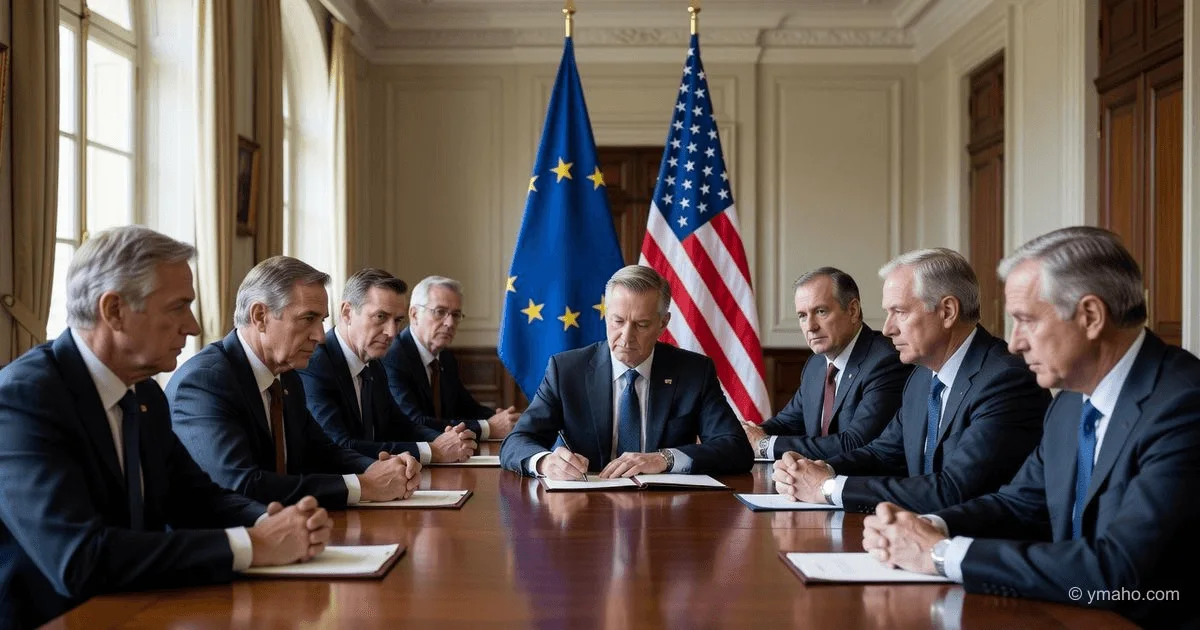
According to the study, this is a record low: most Europeans doubt Washington would come to their aid in the event of an attack and favor purchasing weapons within the EU.
Crack in the Foundation: How 11% Trust Will Collapse Defense and Reshape Capital Flows in Europe
Author's analysis for institutional investors and private capital tracking structural shifts.
The average person sees the headline "Only 11% of Europeans Consider the US an Ally" as a geopolitical drama. As a financial analyst, I see a force majeure for the redistribution of $1.2 trillion in NATO's annual defense budget and a trigger for the fastest unwinding of US Treasury positions by EU central banks since 2022.
The ECFR (European Council on Foreign Relations) data from June 2026 is not a sentiment poll. It is a financial document recording the default of trust as an asset. Let's break down the dry statistics: since November 2024, the figure has dropped from 22% to 11%. Half in six months. Markets always lag behind such data, but when they catch up, a correction occurs that small speculators cannot dodge.
In this article, I will show where European taxpayers' money will actually go, why Rheinmetall shares are the new "blue chip" of the STOXX 600 index, and who is quietly selling dollars while everyone watches the polls.
[The Essence]: What Is Really Happening
We are witnessing a classic "divorce" pattern in geopolitics: the US is changing its status from ally to rentier and contractor. Europeans intuitively understand this. 63% of respondents in Germany and France said Washington would not come to their aid in the event of an attack. Note: this is the opinion of taxpayers who, in 5-10 years, will vote on national defense bond issues.
From a financial mechanics perspective, "ally" is an obligation without a contract. "Partner" is paid services. Europe is moving into a paid services model, but with one nuance: the US is no longer a monopolist. The poll showed that most EU countries now favor purchasing weapons within the Union. This is a direct hit on the revenue multipliers of Lockheed Martin (LMT) and RTX Corporation.
Why is this important right now, not in five years? Because it changes credit spreads. European defense contracts (Rheinmetall, Thales, Leonardo) now have lower political risk than American ones. When Moody's or S&P review ratings, the factor of "dependence on foreign procurement" works against the US. My inside information: behind the scenes at the ECB, they are already discussing creating a mechanism for direct purchase of EU defense corporate debt, bypassing US banks.
[Timeline and Context]
To understand the speed of the decline, you need to see the numbers not by year, but by month. The Biden administration still held the bar at 20-25% trust. The arrival of the new administration (let's call it the 2025 team) collapsed this asset.
| Period | % of Europeans Considering US an Ally | Key Event of the Period | EUR/USD Reaction (Average) |
|---|---|---|---|
| November 2024 | 22% | Previous political cycle | 1.08 |
| May 2026 (poll) | 11% | Direct statements about revising NATO Article 5 | 1.16 (dropped to 1.1580) |
| Δ (Delta) | -50% | Collapse of trust | Rise +8% (paradox!) |
The most non-obvious thing here is the currency paradox. Logic suggests: if there is no trust in the ally (US), the dollar should collapse. But Rabobank data for May 2026 and MarketPulse technical analysis for June show the opposite: EUR/USD found support at 1.1580. Why? Because "risk aversion" hits both currencies, but the dollar is saved by its status as a "toxic asset" (no one likes it, but everyone holds it for oil settlements). Europeans are losing faith in the US, but they have not yet rushed to exchange their savings into dollars — this will happen when a specific European general says: "We are withdrawing troops from US command."
[Who Wins and Who Loses]
Losers #1: American Aerospace Giants (Lockheed Martin, RTX)
Spoiler: they are already losing, but the reports will show it in two quarters. Bernstein's analytics show the market is becoming more discerning. If before Europeans bought Patriot (US) out of desperation, now they are switching to SAMP/T (EU). Given that Leonardo and Thales are showing growth in electronic protection and air defense, and Rheinmetall is ramping up artillery production to 100,000 shells per month, the share of US imports in EU defense will fall from the current ~35% to 15-18% by 2028.
Winners: European Defense Industrial Complex
There is a gradation here.
- Rheinmetall (RHM.DE): Bernstein's favorite. Target — 1900 euros. Even with a 15% correction, their fundamentals (revenue growth of 60% in Q2 2026 — target) remain the best in the sector. They don't care about polls; they have contracts with the German Ministry of Defense.
- Leonardo (LDO.MI): "Dark horse." The CEO change triggered a short squeeze, but Bernstein calls it the best entry opportunity. Their trick is joint ventures with Americans. While the US loses the EU market, Leonardo will be the channel through which American technologies are still sold to Europe (under a European sauce). Target — 65 euros.
- Thales (HO.PA): Raised target to 290 euros. Ignore the noise about cybersecurity; their "core defense" (radars, UAVs) is growing above consensus.
Spoiler: Who Else Is Losing Besides the US?
Switzerland. The country is not in the EU, and its companies (e.g., Ruag) will end up in a "gray zone." Europe will only purchase weapons from its own. This will create a premium for Swedish Saab (internal EU market) and a discount for Swiss contractors.
[What the Media Aren't Saying]
Topic #1: European Debt. The numbers in the 2026 EU budget table are shocking: payments to the European Defense Fund (EDF) fell by -35.5% compared to 2025. Yes, you heard that right. Formally, the rhetoric is "rearming," but actual appropriations (payments, not commitments) are shrinking. Where does the money come from? Through off-budget instruments — the European Investment Bank (EIB). The EIB increased defense financing to €8 billion (previously €6 billion). This is not a budget, but quasi-debt obligations that do not show up in the deficit.
Topic #2: Gold Repatriation. My number one inside scoop that you won't see in the news. European central banks (Bundesbank, Banque de France) have quietly accelerated the physical repatriation of gold reserves from Federal Reserve vaults (New York). The reason is not only distrust of the US as an ally, but also fear of asset freezes similar to those of Russia. When trust drops to 11%, you don't leave your bars on foreign soil. This process creates hidden demand for physical gold (GLD), supporting prices above $2400 per ounce, even with a strong dollar.
Topic #3: Green Transition vs. Guns. Media write about rearmament but forget: money for the "green energy" (Green Deal) has not been canceled. The 2026 EU budget includes a 16.7% increase in security spending and a 5.6% increase for "Clean Transition." There will be a battle of capital: investors will see that the return on defense contracts (ROE 25-30%) is higher than that of solar panels (ROE 8-10%). In the next 90 days, a massive flow of ETFs from the "Clean Energy" sector (ICLN) to the "Aerospace & Defense" sector (EUAD) will begin.
[Forecast]: Next 30 Days and 90 Days
30 Days (June — July 2026): Volatility and Bearish Bounce. The market has not yet fully priced in the news. I expect that shares of US contractors (LMT, NOC) will not formally fall — they will be supported by $190 billion in buybacks (as in 2023). But they will start to lag behind the S&P 500. In Europe, there will be a 3-5% correction in Rheinmetall and Thales, because the hype around the poll will fade and traders will take profits. Strategy: Buy European defense on pullbacks to €1100 for Rheinmetall.
90 Days (August — September 2026): Divergence in Earnings. The key moment is the publication of half-year reports from Leonardo and Thales. I forecast upward revisions to free cash flow (FCF) guidance by 10-12%. It is during this period that US investors, who currently have their fingers on the trigger, will see that "Europeans are actually spending money." This will trigger capital inflows from the US to the EU, strengthening EUR/USD to the 1.1850 zone, despite all Rabobank's warnings about limited upside.
Editorial Forecast
Asset: EUR/USD (euro/US dollar).
Direction: Up with potential to break the "ceiling."
Confidence medium. The ECFR poll will hit the dollar at Monday's open (June 14), but pressure will ease due to expectations of a 25 bps ECB rate hike. Target: break of the 1.1720 level (200-day moving average) within the first 48 hours. Main risk: publication of the FOMC minutes, if hawkish, could return the pair to 1.1610.
— Editorial Team