Israel Threatens to Derail Trump's Deal with Iran and Return to Full-Scale War
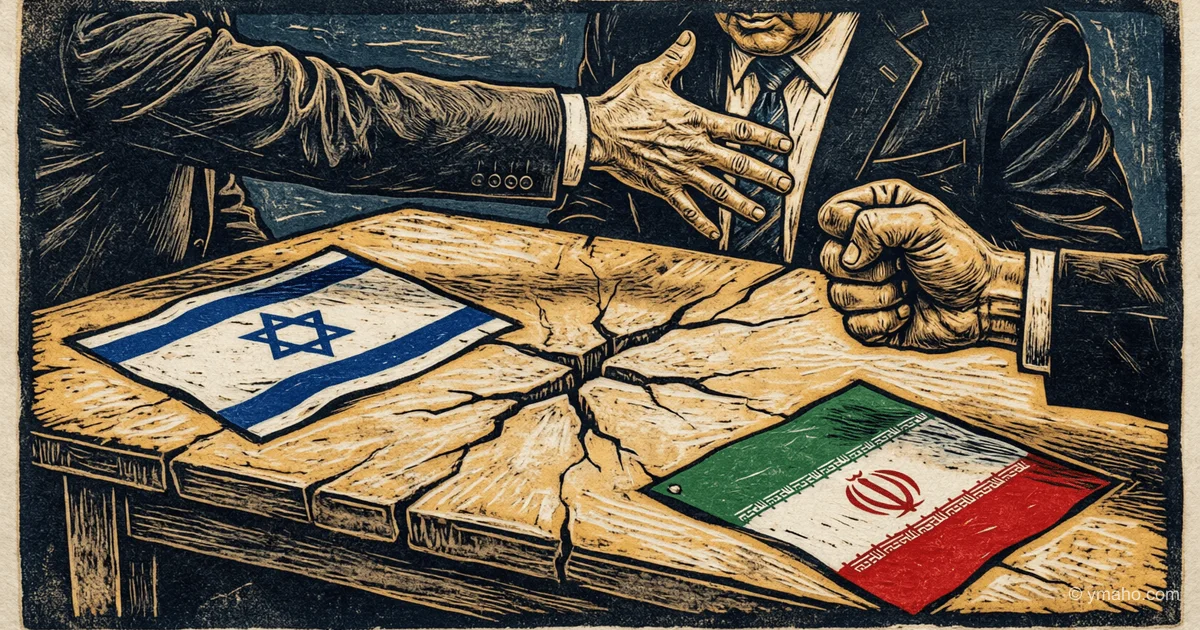
Israel's National Security Minister Itamar Ben-Gvir said his country will not allow the US and Iran to reach an agreement he called a "bad deal." He also called for cutting off electricity in Lebanon and returning to full-scale combat operations in the south of the country.
[The Gist]: What's Really Happening
Itamar Ben-Gvir didn't just "threaten" to derail the deal. He declared Israel an independent player that no longer agrees to be a junior partner of the US. His statement is not a spontaneous emotion but a planned ultimatum coordinated with other "hawks" in the Israeli cabinet—Bezalel Smotrich and part of the military command.
The reality is this: Israel has been left out of negotiations that will determine its security for decades to come. According to leaks in The New York Times, Washington has not only sidelined Tel Aviv from dialogue with Tehran—the Israeli side doesn't even receive updated information on the progress of talks. This is a humiliating blow to Netanyahu, who promised Israelis "regime change" in Iran and now has to watch as Trump negotiates with the same regime.
Ben-Gvir demands that Netanyahu "bang on Trump's table." But behind this bravado lies panic: Israeli "hawks" understand that Trump's deal with Iran will be signed within the next 5-7 days, and they have almost no time left for sabotage.
Timeline and Context
- May 19, 2026: Fox News sources report that the framework agreement between the US and Iran is 95% ready. In it, Iran lifts the blockade of the Strait of Hormuz, the US lifts the naval blockade and some sanctions. The nuclear issue is postponed.
- May 20: The Wall Street Journal publishes an editorial calling the deal "treacherous." Republican Senator Lindsey Graham joins the criticism.
- May 24, morning: Israeli military warns 10 villages in southern Lebanon to evacuate ahead of strikes. The army prepares to expand ground operations.
- May 24, evening: Ben-Gvir posts on social media a call to "return to war in Lebanon," cut off electricity in the country, and capture the Zahrani area in the south.
- May 25: Finance Minister Smotrich echoes Ben-Gvir, calling for bombing Beirut: "For every explosive drone—10 destroyed buildings in Beirut." He approves a special budget of $692 million for developing counter-drone measures.
- May 26: Trump first says the deal is "largely agreed," then hours later writes on Truth Social: "the deal is fully not agreed." Secretary of State Rubio gives diplomats "a few more days," threatening to "find another way" if it fails.
Key detail missed by the media: Israel is forced to rely on regional allies and their spy networks to track the movements of Iranian leadership. The country's own intelligence has been unable to gather data because the US cut off information-sharing channels—punishment for Israel's attempts to sabotage the talks.
Who Wins and Who Loses
Winners:
- Iran. Tehran gets sanctions relief and legitimization of its regime without real concessions on the nuclear program. Trump's deal, according to The Guardian experts, is even weaker than Obama's 2015 agreement, which Netanyahu then called a "historic mistake."
- China and Russia. Beijing and Moscow used the three-month conflict to strengthen their influence in the region. Iran will be less dependent on Russian weapons after the deal, but strategically, Beijing gains access to Iranian energy resources at reduced prices.
- Trump personally. The US president gets an election trump card: he "ended the war in the Middle East" in 90 days, unlike his predecessors. Even if the deal is bad, it sounds like a victory to the average American.
Losers:
- Israel. The country spent about $25 billion in direct military expenses on the war with Iran and Hezbollah (estimate by the Institute for National Security). Supreme Leader Ali Khamenei is dead, but the regime in Tehran has survived—moreover, it emerges from the crisis as a legitimate negotiator. Israel lost over 3,100 civilians in Lebanon and about 400 military personnel, and did not achieve its strategic goals.
- Benjamin Netanyahu. The prime minister is in a political trap. If he supports the deal, he loses the far-right (Ben-Gvir and Smotrich leave the coalition, the government collapses). If he sabotages it, he falls out with Trump 4 months before the US elections. Polls show that more than a third of Israeli Jews are "very or somewhat dissatisfied" with the ceasefire.
- Residents of Lebanon. The country has already lost 3,123 people killed since the start of the conflict. The escalation demanded by Ben-Gvir and Smotrich means new bombings of Beirut, power cuts, and a humanitarian catastrophe.
What the Media Isn't Saying
Non-obvious insight: Ben-Gvir's threats to "derail the deal" are not just rhetoric. Israel has a real leverage: it can launch a preemptive strike on Iranian nuclear facilities in Natanz or Fordow before the agreement is signed. Such a strike would create a "fait accompli," after which Trump could not sign the deal—it would look like capitulation to the Israeli ultimatum.
According to intelligence sources, the Israeli Air Force has already conducted two training missions over the Mediterranean with aerial refueling—standard preparation for a long-range strike. Target: destroy centrifuges in Natanz without hitting US facilities in the region. Possible strike date: June 1-4, 3-4 days before the expected signing of the deal.
Second insight: Ben-Gvir and Smotrich are demanding escalation in Lebanon not so much to defeat Hezbollah, but to create a pretext for Netanyahu to tell Trump: "We cannot cease fire until Hezbollah is disarmed. First finish with them, then sign the deal with Iran." This is an attempt to shift the agenda: divert attention from Iran to Lebanon, where the Israeli army has a tactical advantage.
The $692 million budget for counter-drone measures approved by Smotrich is not about real defense. It's a political signal: "We are preparing for a long war, not a truce." Half of this amount will go to contracts with Israeli defense industries, which are important sponsors of Smotrich's party.
Forecast: Next 30 Days and 90 Days
30 days (until end of June 2026):
- Trump will sign a framework agreement with Iran between June 5 and 10. The deal will include: lifting the naval blockade, opening the Strait of Hormuz, unfreezing $6 billion in Iranian assets in exchange for a 5-year freeze on uranium enrichment above 3.67%. A full nuclear agreement is not signed—this is a "first-stage arrangement."
- Netanyahu will publicly support the deal under pressure from Trump, but with caveats ("Israel reserves the right to self-defense"). Ben-Gvir and Smotrich will leave the coalition, plunging the government into crisis.
- Israeli "hawks" will attempt to strike Iranian facilities before the signing—probability 40%. If this happens, the deal collapses, and Trump threatens to cut military aid to Israel (about $3.8 billion per year).
90 days (until end of August 2026):
- Early elections will be held in Israel (August-September). Netanyahu will lose the premiership, replaced either by Yair Lapid (centrist) or someone from the military (e.g., former Chief of Staff).
- Hezbollah will intensify attacks on Israeli territory, using the pause in talks to regroup. The conflict in southern Lebanon will enter a low-intensity phase with periodic shelling—up to 20 rockets per week.
- The US will begin a gradual reduction of its military presence in the Persian Gulf: two aircraft carriers (USS Truman and USS Roosevelt) will be recalled to the US for scheduled maintenance. This will create a power vacuum that China (naval base in Oman) and Turkey (expanding presence in Qatar) will try to fill.
- The Iranian economy will get a short-term boost: GDP will grow by 4-5% in the second half of 2026 due to resumed oil exports (up to 1.5 million barrels per day). But structural problems (inflation 35%, unemployment 22%) will persist.
Editorial Forecast
Asset: Israeli shekel (USD/ILS), direction—moderate weakening in the next 24–72 hours amid political uncertainty. Key levels: current rate 3.75, nearest resistance 3.82 (breakout opens path to 3.88). Confidence level: medium, as the market has already priced in some risk of the far-right leaving the coalition, but the full scale of the government crisis is not yet reflected. Main risk: if Ben-Gvir and Smotrich do not leave the government immediately but continue bargaining, the shekel could strengthen back to 3.70. This is the editorial opinion, not investment advice.
— Editorial Team