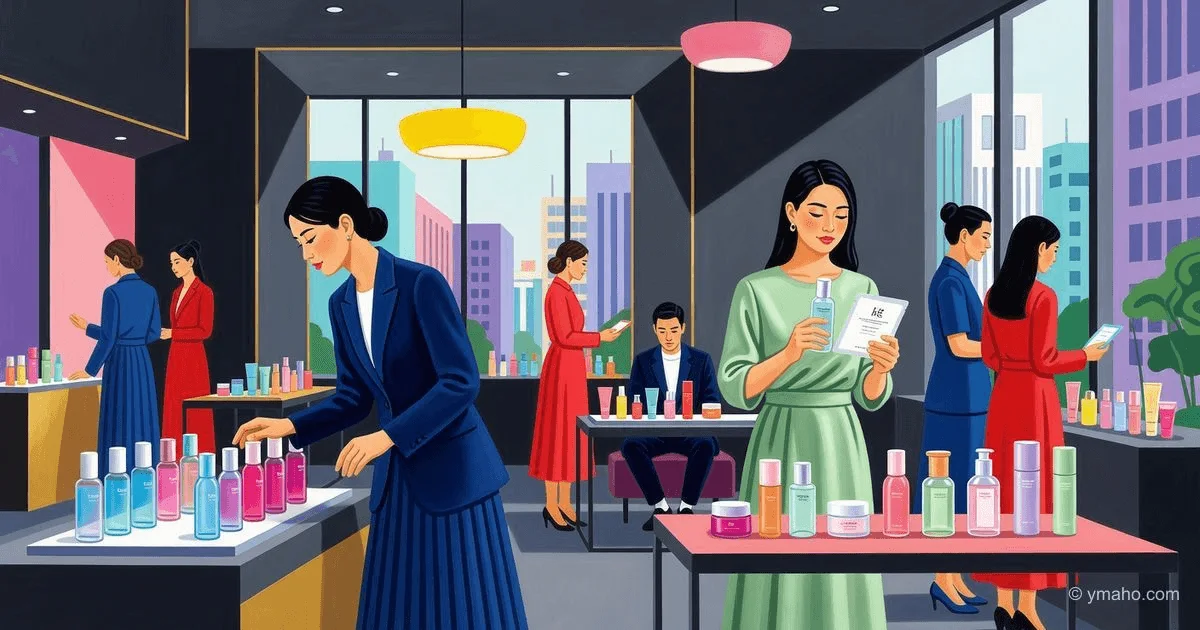
June Pop-Up Event: J-Beauty and K-Beauty Unite in Tokyo
From June 6 to 18, Maison KOSE Ginza hosts an exclusive collaborative event "Seoul Life," featuring rare Korean brands. The event offers a unique cross-border beauty experience in the heart of Japan.
Analytical Digest: "Seoul Life" at Maison KOSE — Why the Japanese Giant Opens Its Doors to Korean Competitors
The beauty industry is witnessing an event that seemed unthinkable five years ago. What press releases call a "collaborative event" is actually a strategic pivot by one of Japan's largest conglomerates. KOSE, an 80-year-old pillar of the Japanese cosmetics industry, is opening its flagship store in Ginza to dozens of Korean brands, including those not even available on the Japanese market.
The key insight that Western media miss: this is not a "cute pop-up for beauty bloggers." It is an acknowledgment that the classic model of "Japanese quality vs. Korean marketing" no longer works. KOSE is not just renting out shelves — it is integrating K-beauty into its long-term "Beauty Consortium" strategy. This means the war between J-beauty and K-beauty is officially over. The era of hybridization has begun.
[The Gist]: What Is Really Happening
The event, launching June 6, 2026, at Maison KOSE Ginza, is the fourth iteration of the "Seoul Life" pop-up, but for the first time it is held not in the trendy Shibuya district but in the heart of the establishment — Ginza. The previous three events attracted over 10,000 visitors in 9 days. This is not just a success — it is proof that K-beauty has become mainstream for Japanese consumers.
Behind the scenes, something more important is unfolding. KOSE is not just renting space — its subsidiary KOSE Provision acts as the organizer, while the Korean side is represented by creative agency GYSEOUL. This is a symmetrical partnership where the Japanese giant pays for access to Korean trends and audiences, and Koreans gain access to legendary infrastructure and the trust of the Japanese market.
But the real essence is the concept of "beauty without borders." Visitors can freely move between the Maison KOSE zone (luxury Japanese brands) and the Seoul Life zone (K-beauty novelties), comparing and mixing products. This is a marketing move with deep implications: consumers should perceive K-beauty not as a "cheap alternative" but as an equal element of a premium beauty routine. And it works — 81.6% of Japanese consumers are willing to spend more on skincare, and KOSE wants to capture that budget regardless of brand origin.
Timeline and Context
The journey from competition to cooperation took about three years and passed through several key stages that most observers ignore:
- 2023-2024 (Korean Expansion): K-pop and K-drama create unprecedented demand for Korean cosmetics in Japan. The head of Cosmax Japan warns: "If we don't act, K-beauty growth in Japan will slow by 2026." Japanese retailers begin to notice their traditional shelves emptying.
- 2025 (Tipping Point): "Seoul Life" launches in Shibuya — a DIY pop-up by Korean creative agency GYSEOUL. In a few days, it attracts thousands of visitors and goes viral. Japanese giants (KOSE, Shiseido) watch and take notes.
- Late 2025 – Early 2026 (J-Beauty Response): KOSE announces the "Your Lifelong Beauty Partner" strategy and "Beauty Consortium" — an open innovation program where competitors become partners. Kao launches Bioré in the Korean market with ambassador Stray Kids. This is a mirror strike: Japanese brands enter Korean territory.
- May 2026 (Event Announcement): On May 12, Kstyle and other media publish details of "Maison KOSE × SEOUL LIFE." In response, eBay Japan announces the launch of K-beauty corners in Seven-Eleven stores across Japan. The market enters a phase of total hybridization.
- June 2026 (Current Moment): The event starts. Simultaneously, the trend for caring for "third parts" of the body gains momentum, and pop-up participants actively sell scalp ceramides and oral probiotics.
Who Wins and Who Loses
Winners #1: KOSE. The company gains access to a wave of K-beauty innovations without needing to develop them in-house. This is an "open innovation warehouse" right in its flagship. Moreover, KOSE positions itself as a "mature mentor" that curates and validates Korean brands for Japanese consumers. This boosts trust in K-beauty and reduces consumer risk.
Winners #2: Korean Brands (especially small and medium-sized). Entering the Japanese market has traditionally been extremely difficult due to strict laws (Pharmaceutical Affairs Law) and the requirement for "nemawashi" (prior consensus with all chain participants). By getting a "pass" from KOSE, these brands gain legitimacy and access to distribution. Participation in "Seoul Life" is literally a "fast track" to Asia's second-largest market.
Winners #3: Consumers. They get the opportunity to compare side-by-side and create hybrid routines: "Japanese base" + "Korean toner" + "Japanese sunscreen." This creates a new level of customization.
Losers: Mid-tier Japanese brands (outside the KOSE consortium). For them, this is a disaster. While KOSE integrates Koreans into its "garden," other Japanese brands (not in the alliance) remain isolated. Korean marketing, speed of new product launches, and aggressive pricing will push them off the shelves. If K-beauty becomes "part of the routine" for Japanese consumers, then traditional Japanese brands become "niche" or "for the elderly."
What the Media Aren't Saying
Insight #1: "Seoul Life" is a pilot project for "trend crowdsourcing" in retail.
Media write about a "pop-up." Analysts see a living lab. KOSE doesn't know which Korean brands will take off in 2026. Instead of hiring expensive consultants or risking millions of units of untested product, they open their doors and watch.
What happens over 13 days? Visitors vote with their wallets. Which brands draw crowds at the booth? Which formats (serums, pouches, toners) sell out? This is real-time consumer demand data. KOSE collects this data and then decides which brands to take on for permanent distribution, which ingredients to copy in their own R&D. It's genius and cheap — product testing funded by visitors who also pay for entry (through purchases).
Insight #2: This is a "marriage of convenience" against the Chinese threat.
While Japan and Korea were fighting, China quietly built a giant cosmetics industry. Brands like Perfect Diary and Florasis are already catching up in quality and surpassing in production scale. KOSE and GYSEOUL are joining forces to create "Premium Asia Beauty" — a barrier against the invasion of cheap and mid-range Chinese mass-market products.
The head of Cosmax Japan stated outright: "If we don't act in the first half of 2026, K-beauty growth in Japan will slow, and Japanese brands with good price-performance ratios could flood the market imitating K-beauty." "Seoul Life" is not about friendship. It is a tactical alliance of two neighbors to avoid being eaten by a third player. Demand for K-beauty in Japan has soared, and Japanese consumers want convenient access. KOSE provides that access, but under its control.
Forecast: Next 30 Days and 90 Days
Next 30 Days (June 2026):
Over the two weeks of the pop-up, we will see a wave of unboxings and reviews from Japanese beauty influencers. The main content will revolve around the concept of "mixing." Expect viral videos like "Korean toner + Japanese cream + Korean tint."
Also, within the next 30 days, KOSE will announce the results of "Seoul Life": it will name the brands that, based on sales and reviews, will get a permanent spot at Maison KOSE (or online). This will be a signal for the rest of the market: these brands are ones to watch.
90 Days (by Fall 2026):
The "Seoul Life" model will be replicated in other locations. Success in Ginza will prompt other Tokyo districts (Shinjuku, Shibuya) and other cities (Osaka, Fukuoka) to request similar events. KOSE will scale the model into a roaming pop-up format.
We will see the first official joint J-Beauty + K-Beauty product: for example, a Korean toner texture in a Japanese bottle with Japanese preservatives, developed under the consortium's auspices. This will be a symbolic event proving that hybridization is possible not only at the retail level but also at the production level.
Final forecast: By the end of 2026, KOSE's "Beauty Consortium" model will be copied by Shiseido and other players. Open innovation will become the standard. Consumers will stop asking "Is this J-beauty or K-beauty?" They will ask "Is this Asian Beauty?" And the answer will be "yes." Because brands that haven't learned to dance together will be left off the dance floor.
— Editorial Team