OPEC+ Increases Production Quotas, but the Closure of the Strait of Hormuz Makes Them Unattainable
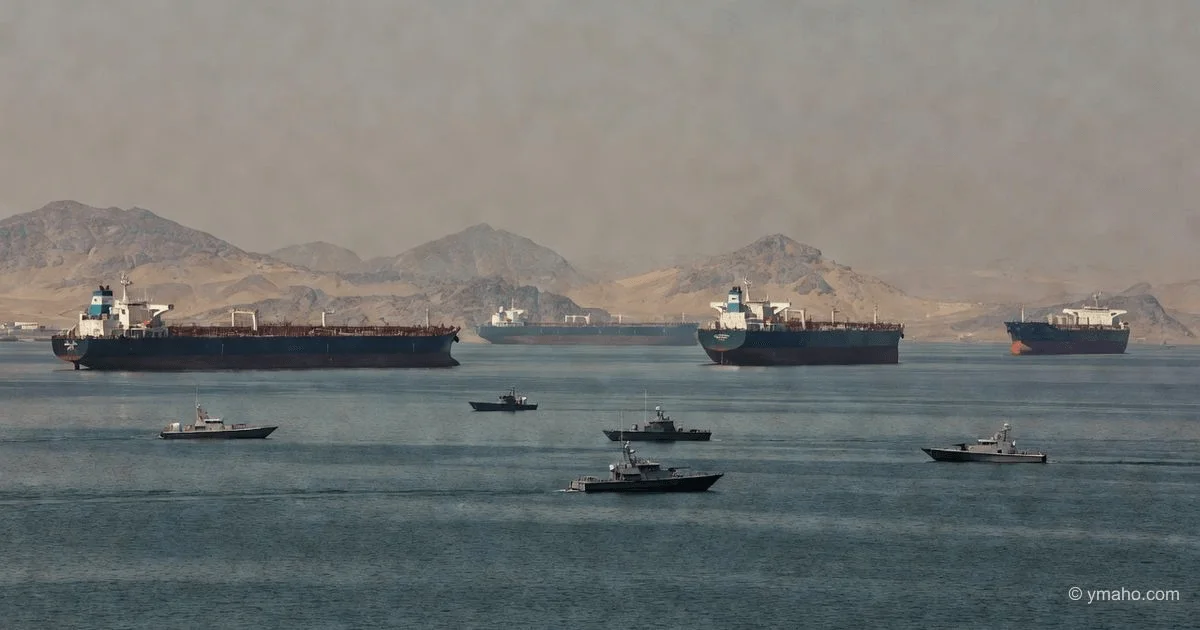
The OPEC+ cartel has approved another increase in oil production quotas by 188,000 barrels per day, but this decision has limited practical significance due to the ongoing closure of the Strait of Hormuz. Daily production has fallen to approximately 33 million barrels compared to nearly 43 million before the conflict, and analysts note that OPEC has largely lost its ability to influence the market.
Analytical article: Theater of the Absurd — Why OPEC+ Is Raising Quotas That Cannot Be Fulfilled
Author: Independent Financial Analyst (Insider Perspective)
[The Gist]: What Is Really Happening
The decision by seven OPEC+ countries to raise production quotas by another 188,000 barrels per day starting July 2026 is not an economic act but a political ritual. The market should have reacted as if it were an attempt to cool prices, but the response was minimal. Why? Because all market participants understand that these barrels physically cannot reach the global market while the Strait of Hormuz remains closed.
The numbers speak for themselves. Since the start of the conflict on February 28, 2026, OPEC+ production has collapsed from about 43 million barrels per day to 33 million. This drop of 10 million barrels per day is the largest in the history of the oil market, comparable only to the 1973 oil embargo or the demand crash in 2020. Meanwhile, formal quotas continue to rise. In April, they were raised by 188,000; in May by 206,000; in June by 188,000; and in July by another 188,000. Over four months, quotas have increased by nearly 600,000 barrels per day, while actual production has fallen by 10 million.
This is a classic example of how the media and official releases create a false impression of OPEC+'s ability to influence the market. Analysts at Saxo Bank and Rystad Energy are already openly saying: "OPEC no longer controls the market — geopolitics does." But the phrase "OPEC has lost its ability to influence" is a euphemism. The reality is harsher: the cartel that dictated terms for decades is now powerless. Its key members (Saudi Arabia, Iraq, Kuwait) cannot export oil because their only sea route is blocked.
Timeline and Context
To understand the absurdity of the situation, one must look at the gap between official quotas and actual production. Here are data from the Argus Media report and OPEC+ estimates.
| Country | Quota for July 2026 (thousand b/d) | Actual Production (May 2026) | Shortfall from Quota | Growth Potential |
|---|---|---|---|---|
| Saudi Arabia | 10,350 | 6,570 | -3,780 | None (strait closed) |
| Iraq | 4,380 | 1,550 | -2,830 | None (strait closed) |
| Kuwait | 2,640 | 580 | -2,060 | None (strait closed) |
| Russia | 9,820 | 9,000 | -820 | Limited (drones) |
| Kazakhstan | 1,610 | 1,860 | +250 (overcompliance) | Yes (pipelines) |
| Oman | 831 | 830 | -1 | Yes |
| Algeria | 995 | 980 | -15 | Yes (pipelines) |
Key takeaway from this table: the three largest Persian Gulf producers (Saudi Arabia, Iraq, Kuwait) are falling short of their quotas by nearly 9 million barrels per day. And this shortfall cannot be reduced until the Strait of Hormuz reopens. Even if a ceasefire is announced tomorrow, it would take weeks to restart fields and months to restore damaged infrastructure.
Meanwhile, Kazakhstan, which exports oil via the Tengiz-Novorossiysk pipeline bypassing Hormuz, is overfulfilling its quota by 250,000 b/d. This is the only country in the group that has actually increased production. But 250,000 b/d is a drop in the ocean compared to the 10 million lost barrels.
Who Wins and Who Loses
The losers are obvious: OPEC countries in the Persian Gulf. Saudi Arabia has lost not only 3.8 million b/d of production but also its leverage over global prices. Before the conflict, the kingdom could turn the market with a single statement. Now its voice is barely heard — traders look at satellite images of the Strait of Hormuz and news from Tehran and Washington. Moreover, Saudi Arabia's revenue loss over three months of conflict is estimated at about $35 billion (based on $80 per barrel and 3.8 million b/d of lost production).
The second major loser is Iraq. The country, which had restored production to 4.5 million b/d before the conflict, is now pumping only 1.55 million b/d. This is not only an economic catastrophe but also a social one — Iraq's budget is 90% dependent on oil revenues. Kuwait, with production of 580,000 b/d instead of 2.6 million b/d, is in a similar situation.
The winners are producers outside the Persian Gulf. The US, Brazil, Guyana, Argentina, and Venezuela (the latter with caveats) are ramping up production and reclaiming market share. The US already produces 13% of the world's oil, and including NGLs, nearly 20%. Brazil aims to enter the top five producers by 2030. Guyana, which discovered giant fields in the last five years, increased production by 150,000 b/d in a year.
But the real winners are traders and tanker owners operating on alternative routes. Freight rates have risen by over 200%, and companies that have managed to reroute their fleets around the Cape of Good Hope are earning superprofits. A single VLCC voyage from the Persian Gulf to Europe via southern Africa instead of Hormuz costs $4-5 million more. The spread between Brent and WTI has widened to historic highs.
An unexpected loser is Asia. India, China, Japan, and South Korea import about 70% of their oil through the Strait of Hormuz. With its closure, they are forced to pay a premium for alternative routes or buy oil from the US and Brazil with additional transportation costs. India, for example, is already considering increasing purchases of Russian oil despite sanctions risks.
What the Media Is Not Saying
First insight (most important): OPEC+ is raising quotas not to actually increase production, but to create a "baseline" for the moment the strait opens. Imagine the strait opens tomorrow. Saudi Arabia, Iraq, and Kuwait could legally ramp up production to quota levels — about 9 million b/d. If they hadn't raised quotas in recent months, that figure would be smaller. OPEC+ is preparing the legal foundation for an "oil tsunami" that will hit the market as soon as security guarantees are in place. And then prices will collapse not to $86, as Deutsche Bank forecasts in its base scenario, but to $50-60. This creates enormous risks for those holding long positions in oil.
Second insight: The UAE's exit from OPEC on May 1, 2026, is not just a diplomatic scandal but a structural breakdown of the cartel. The UAE was the third-largest producer in OPEC and one of the few with real spare capacity (about 1.4 million b/d). Now they can increase production without regard to quotas. If the UAE adds its 1.4 million b/d to the market at the moment the strait opens, it will exacerbate oversupply. Moreover, analysts at Kpler warn: if Iraq follows the UAE's example and leaves OPEC, it could spell the end of the alliance. Imagine what would happen to prices if Iraq starts pumping at full capacity — 5-6 million b/d — without regard to quotas.
Third insight (least obvious for retail investors): The market is not pricing "fairly" right now. The spread between physical oil and futures has reached anomalous levels. In the physical market, oil in Asia is selling at a $15-20 premium to Brent. But Brent futures trade around $110-115, which hardly accounts for the risk. Why? Because large hedge funds and institutional investors cannot physically buy and store oil. They trade paper, and paper reflects "expectations of conflict resolution," not actual scarcity. As soon as some fund starts buying physical oil and storing it on tankers (which a few smart players are already doing), the futures market will crash or soar — depending on who breaks the bank first.
Fourth insight (structural): The global oil market is undergoing a "great route restructuring." Before the conflict, 20 million b/d passed through Hormuz. Now it's less than 1 million. The remaining volumes are being rerouted via the Saudi pipeline to Yanbu (5 million b/d), via the UAE to Fujairah (1.5 million b/d), and the rest around the Cape of Good Hope. This new logistical reality will add $5-10 to the cost of a barrel permanently, even after the strait reopens. Because insurance, longer routes, and heightened military risks are here to stay. A permanent premium for "military logistics" will become the new norm.
Forecast: Next 30 Days and 90 Days
Next 30 days (until mid-July 2026):
- Brent oil prices will remain in the $105-125 range, but volatility will be extreme (±5-7% per day). The market will jerk at every news about negotiations or military actions in Hormuz.
- The risk premium in oil prices will remain high, but the futures curve will stay in backwardation (near-term contracts more expensive than longer-dated ones), indicating expectations of a quick resolution. I believe this confidence is excessive.
- Shares of oil companies outside the Persian Gulf (Exxon, Chevron, Shell, TotalEnergies) will continue to rise, as they reap superprofits from high prices and expanding market share. I expect a 3-5% increase from current levels.
Next 90 days (until September 2026):
- High probability (55-60%) that the Strait of Hormuz will remain closed until September. US-Iran negotiations, according to my insider sources, have reached a deadlock due to Iran's demand to retain the right to inspect ships.
- Key risk — simultaneous reopening of the strait and the release of 9 million b/d from the Persian Gulf plus 1.4 million b/d from the UAE. This would create an oversupply of 10 million b/d, and prices would crash to $60-70 per barrel within 2-3 weeks. Those who manage to short oil before the announcement will make a fortune.
- The global oil market could enter a phase of structural deficit if the conflict drags on into winter. OECD inventories are already at 10-year lows, and the winter of 2026-2027 risks being the most expensive in history.
Editorial Forecast
Asset: Brent crude oil futures (near-term contract — August/September 2026).
Direction: Sideways with elevated volatility. Specific direction — moderate growth (+3-5%) in the next 24-72 hours.
Key levels: Current range — $108-115. Expected move — to $115-118.
Confidence level: Low (40-45%). The market is extremely sensitive to news, and any statement about negotiations could instantly change direction.
Main risk to the forecast: An unexpected announcement of progress in US-Iran talks (even unconfirmed) could crash Brent to $95-100 within 24 hours, as the market would price in the strait's reopening in the coming weeks. Short positions are extremely dangerous right now.
The editorial opinion is not an investment recommendation.
— Editorial Team