Rebellion Brewing at Goldman Sachs Against Powell's Indefinite Tenure
Fed Governors Bowman and Waller demand a one-month limit on the interim chair's term. A rift is growing within the regulator under White House pressure
Revolt in the Marble Palace: How Two Trump Appointees Are Trying to Decapitate Powell in One Month
Jerome Powell officially lost the chair on May 15—but not his power. The Fed Board of Governors immediately appointed him acting chair until Kevin Warsh takes office. And right away, two Trump appointees—Michelle Bowman and Steven Miran—issued a joint statement demanding that Powell's "interim" tenure be limited to one month. The clock is ticking.
This is not a procedural squabble. It is a frontal attack on the power structure within America's most secretive institution. While Warsh awaits formal swearing-in, Powell retains access to the levers of monetary policy, and Trump's people want to wrest them from his grasp as quickly as possible.
The Acting Chair Maneuver: A Polite Strangulation
Formally, it all looks routine. The Fed announced that appointing the outgoing chair as interim head "is consistent with past precedents during leadership transitions." No coup, just bureaucratic smoothness.
But behind the facade lies fierce bargaining. Bowman, the vice chair for supervision, and Miran agreed to Powell's temporary stay—but with a hard condition: the term must be at least one week and at most one month. Any extension would require a new board vote.
Why does this matter right now? Because Warsh is not yet in the building. The Senate confirmed his nomination on May 13, but he has not been sworn in. Every day of delay is a day Powell continues to run the Fed apparatus, with access to all information, committees, and—critically—communication with markets.
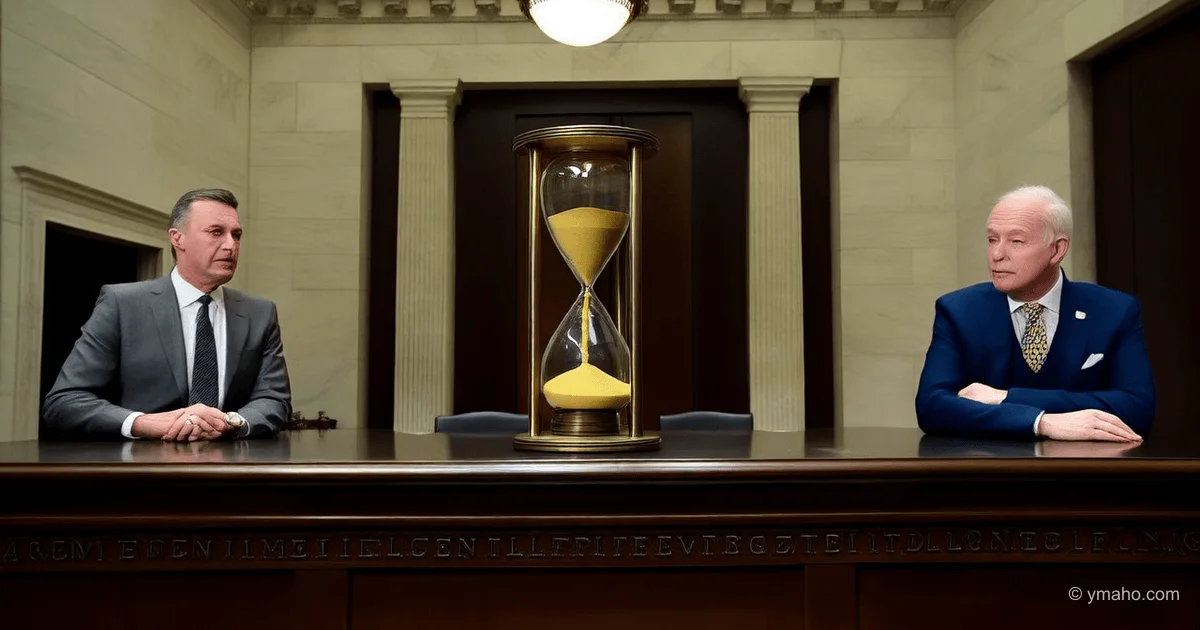
Bowman and Miran demand that this bridge be not just temporary but strictly limited. They want to put a timer on Powell's desk. When the sand runs out, the board must reconvene and vote—by name, publicly—on extending his powers.
The Legal Mine Laid in April
The conflict did not come out of nowhere. Powell laid this mine himself in late April, when he announced he would remain a Fed governor after his chair term expired on May 15. His governor mandate runs until January 2028, and he refused to step down.
This is a direct break with unwritten tradition. Previous chairs—Bernanke, Yellen—left the board after handing over power to avoid creating an alternative center of influence. Powell decided otherwise. He publicly explained it as a response to "unprecedented legal attacks" on the central bank by the White House—the Justice Department investigation into budget overruns on Fed building renovations he called a tool of political pressure.
Powell's decision created new math on the Board of Governors. Had he left entirely, Warsh would have taken his seat, giving Trump a majority: four loyalists against three independence defenders. Powell stayed—and the power balance froze at four to three in favor of independence supporters.
The only vacancy through which Warsh can enter the board is Miran's seat, whose full term expired in January 2026. Miran occupies the seat of Adriana Kugler, who resigned months before her formal term ended—rumor has it she was subtly threatened with criminal prosecution. Now Warsh must take that exact seat. But until the Senate confirms him as Miran's replacement, he cannot become a governor—and therefore, chair.
Three Doves and the Presidential Club
This conflict has a backstory that began not in May but in autumn 2025. At that time, a stable wing of three people formed in the FOMC, ready to vote for rate cuts at almost every meeting: Christopher Waller, Michelle Bowman, and Steven Miran. All three were appointed by Trump.
Their votes are not enough for a majority in the 12-member rate-setting committee—besides the seven governors, four regional bank presidents vote, who are not appointed by the president and usually do not cater to the White House. But on the Board of Governors, the power balance has long-term significance: through personnel policy, committee appointments, and agenda control, the Fed's course can be changed for years.
Trump does not hide his goals. He wants a rate around 2%—half the current range of 3.5–3.75%, which the Fed maintained at its April meeting. Powell refused to accelerate. Moreover, his last decision as chair—keeping rates unchanged—was accompanied by hawkish rhetoric. The statement became "more hawkish," and at the press conference Powell directly said the executive branch was undermining the central bank's independence.
The White House response was immediate. The Justice Department investigation into Fed building renovations—an overspend of about $700 million—became a legal club. Powell called it an attack on the Fed's ability to "set rates based on facts and economic conditions, not political pressure." But he did not back down. On the contrary, he dug in as a governor until 2028.
The Market Between Two Fires
The stock market hates uncertainty about the Fed's composition. Investors are already pricing a premium into long-term Treasury bonds. Goldman Sachs in January shifted its rate cut forecast—now expecting two 25-basis-point moves in June and September instead of starting in March.
Jan Hatzius, the bank's chief economist, publicly stated that the investigation against Powell would not change monetary policy: "Decisions will be made based on employment and inflation." But the market is not so calm. The dollar is weakening, long Treasury yields are rising—a classic symptom of fear of central bank politicization.
Brian Jacobsen from Annex Wealth Management warned back in January that Powell could stage a "sit-in" on the Board of Governors, depriving Trump of the ability to appoint an additional member. That is exactly what happened. And Republican Senator Tom Tillis threatened to block confirmation of any Fed nominees until the investigation is complete.
Two groups benefit from this uncertainty. First, holders of short-term Treasuries, who get higher yields while the rate stays above 3.5%. Second, Kevin Warsh, who enters the game not as a "Trump dove" but as a centrist with his own agenda. He favors rate cuts but simultaneously pushes for shrinking the Fed's balance sheet—meaning he is ready to tighten monetary policy through another channel.
Losers are holders of rate-sensitive stocks, especially in the tech sector. If the conflict drags on, uncertainty over Fed leadership becomes an independent market drag. UBS already warns that fears for central bank independence could shift policy in a more hawkish direction—an ironic twist for Trump, who wants cuts.
Four Weeks That Will Determine the Dollar's Course
The stakes are extremely concrete. Powell sits in the acting chair. Bowman and Miran hold the stopwatch. Warsh awaits swearing-in. And everyone knows: the next 30 days will determine whether the Fed maintains a balance of power between presidential appointees and independence defenders.
If Bowman and Miran push through the one-month limit—Powell will leave the acting post by mid-June, Warsh will join the board and begin building control over the agenda. If the board votes to extend—Powell will remain at the helm indefinitely, and Warsh will be a chair without full control over the Board of Governors. A split in Fed power will become chronic.
Meanwhile, Trump continues to pressure through Miran—the only FOMC member who voted for a rate cut at each of the last meetings. But Miran's term has expired, and the Senate will not confirm him for a full term. He is a lame duck with a dwindling calendar. Every day until Warsh is confirmed as his replacement is a day Trump loses a vote on the committee.
The hardest scenario: Powell stays on the board until 2028, Warsh chairs but must bargain for every decision with a bloc of four governors not loyal to the White House. The FOMC splits into factions. Communication with the market becomes contradictory. The dollar gets a chronic "chaos premium"—and Trump gets exactly the opposite of what he wanted: rates do not fall because no one wants to appear politically motivated.
The irony of this May is simple. The president spent years trying to bend the Fed to his will. But the man he himself appointed in 2018 built such a defense system that even after leaving the chair, he stayed in the building. And now two Trump appointees are trying to show him the door with a timer in hand. When the counter reaches zero, we will find out who really controls the dollar.
— Editorial Team









