US and Iran on the Brink of Signing a Deal to Reopen the Strait of Hormuz
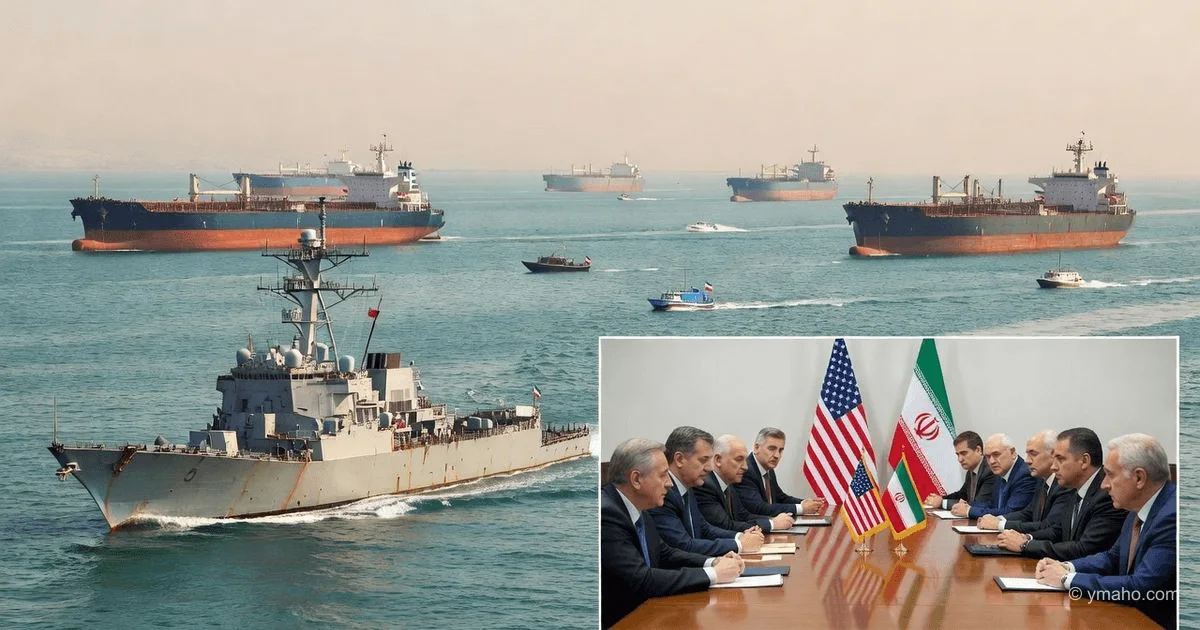
According to sources, Washington and Tehran have agreed on a framework memorandum of understanding to be signed in the coming days in Geneva. The agreement envisions a cessation of hostilities, reopening of the Strait of Hormuz, and lifting of the naval blockade on Iran, while nuclear program issues are deferred to a second phase of negotiations.
The Geneva Farce: Why the US-Iran 'Deal' Is Not Peace, but a Refinancing of War
Author's analysis for institutional investors and hedge funds
The Essence: What's Really Happening
The official narrative you see in Reuters and Bloomberg headlines sounds like a classic diplomatic victory: the US and Iran are on the verge of signing a memorandum of understanding that opens the Strait of Hormuz and lifts the blockade. Donald Trump calls it a 'great war settlement.' However, anyone who has glanced at the oil futures curve or the credit default swap spread over the last 72 hours understands: this is not a deal. It is a complex financial refinancing instrument disguised as a peace treaty.
The real essence of what's happening is the creation of a liquidity bridge between Iran's frozen assets ($24 billion) and the global market for insurance guarantees. What is happening now in Geneva is not ceasefire negotiations, but the structuring of a repo deal collateralized by geopolitical stability. The US, through its issuing center (the Treasury via the DFC), has just acted as a lender of last resort for Lloyd's of London, creating a $20 billion revolving reinsurance facility. The administration has effectively told the market: 'We will take on the risk of tanker destruction so you can continue paying for Iranian oil.' This is not de-escalation—it is risk monetization.
Why does this matter? Because the agreement does not solve any structural problems. Nuclear program issues are deferred to a second phase, Iran's missile program is completely excluded, and Israel, according to leaks, was presented with a fait accompli. Insiders at London shipping brokerage houses already call this memorandum nothing but a 'temporary rollover.' For just 60 days—the duration of the 'negotiation period'—Iran will get asset freeze relief and sanctions easing, while the US gets a formal reopening of the strait. But what happens on day 61? No one knows. This is a classic options strategy: we buy time, not peace.
Timeline and Context
To understand why we are here, we need to go back four months to February 28, 2026, when the US and Israel launched the first massive strikes on Iran. Brent then soared to $109 per barrel. Iran responded not with missiles on aircraft carriers, but with a smarter move—on March 4, it announced the closure of the Strait of Hormuz to commercial vessels. This changed the game: instead of direct confrontation with the Pentagon, Tehran attacked global logistics. By May 2026, the risk premium in oil prices had reached $15-20 per barrel.
The next key stage was the insurance crisis. By early June, Lloyd's and other syndicates simply refused to cover war risks in the strait zone. Insurance for a single tanker voyage worth $200-300 million rose from $500,000 to $80,000-120,000 per day, and some insurers left the market entirely. This created a paradox: oil exists, but no one can or wants to transport it. It was then, in the first ten days of June, that the US Treasury through the DFC announced a $20 billion 'safety net' for insurers. In effect, American taxpayers began underwriting the transport of Iranian oil.
| Date | Event | Brent Price (approx.) | War Insurance Rate |
|---|---|---|---|
| Feb 28, 2026 | War begins (US/Israel strikes on Iran) | $89 → $97 | 0.25% of vessel value |
| Mar 4, 2026 | Iran closes Strait of Hormuz | $98 | 0.5% + surcharges |
| May 2026 | Crisis peak, Lloyd's exits region | $103-109 | $80-120k/day |
| Jun 7-10, 2026 | Trilateral meeting in Tehran (Oman, Qatar) | $104 | Premium 'washed out' |
| Jun 11, 2026 | Trump announces deal, oil drops 2% | $82.90 (WTI) | Retreat to 0.4% |
| Jun 14-15, 2026 | Expected signing in Geneva | Expectation $80-82 | Stabilization |
A key detail overlooked: a week before the deal announcement, on June 7, a trilateral meeting of the foreign ministers of Iran, Oman, and Qatar took place in Tehran. It was there that the 'anatomy' of the deal was agreed upon. Iran agreed to uranium dilution under UN supervision, but only in exchange for an immediate unfreezing of $12 billion out of $24 billion in the first phase. Oman and Qatar acted not just as mediators, but essentially as guarantors that the money would actually enter Iran's economy, bypassing US secondary sanctions.
Who Wins and Who Loses
Biggest winner: the US Treasury. Sounds strange, right? But it's true. By creating a $20 billion pool, the DFC didn't just spend taxpayer money. It created a market where the US government earns a risk premium by insuring global flows. In effect, the US has turned into a Lloyd's of London with a printing press. Every tanker passing through the strait now implicitly pays tribute to the US financial system. This is a brilliant move: when the private market refused the risk, the state stepped in and monopolized underwriting.
Second beneficiary: China and India. While the US and Iran play diplomacy, Chinese independent refineries (teapots) and Indian state-owned refiners are buying Iranian oil on FOB terms at a discount of $8-10 per barrel. They don't need DFC insurance; they have their own state funds—India has already set up a $1.5 billion reserve. They win twice: low oil prices due to 'peace' and access to previously blocked volumes.
Biggest losers: private insurers (Lloyd's, American Club, MS&AD). They left the region, lost clients, and now must return on terms dictated by the DFC. The US has effectively nationalized the Strait of Hormuz insurance market. Private companies will now be subcontractors to the state, not independent players.
Third loser: Israel. Judging by Netanyahu's reaction—who, according to Axios, was presented with a fait accompli—Tel Aviv remains in a vulnerable position. The deal does not ban Hezbollah or other Iranian proxies from operating; it only concerns the strait. Did Israel get security guarantees? No. It only got 60 days of quiet, during which Iran will replenish its coffers with $24 billion and rearm even more.
What the Media Isn't Saying
The most important insight missing from official Reuters and Bloomberg communiqués concerns the structure of the $24 billion payout. Officially, it's 'unfrozen assets.' Unofficially, it's a scheme reminiscent of Iran's contraband traffic during the oil embargo, but legalized by the signature of US Vice President JD Vance. According to leaks of the 14-point agreement, half the amount ($12 billion) is to be paid upfront before final negotiations begin. The question: what guarantees are there that Iran will return to the negotiating table after receiving the money?
Point 14 of the agreement explicitly excludes Iran's missile program and support for regional groups from discussion. That is, the US has agreed not to touch what actually threatens Israel and Saudi Arabia. They are bargaining over uranium that Iran already has, and in exchange, they are giving up control over financial flows and export legitimacy.
A second insight: the role of Pakistan. The agreement is proposed to be called the 'Islamabad Agreement.' Pakistan, which has nuclear weapons and close ties to both Saudi Arabia and Iran, has acted as the final guarantor. This radically changes the balance of power in the region. Pakistan gains the status of regional arbiter, pushing Saudi Arabia to the sidelines. Markets have not yet priced in the fact that Islamabad will now influence flows through the Strait of Hormuz.
Finally, the infrastructure deception. Point 8 of the agreement mentions a 'reconstruction plan for Iran worth at least $300 billion.' This is fake. Western companies will not go to Iran until the nuclear deal and missile issues are resolved. $300 billion is a political figure for Iran's domestic audience. In reality, it's about humanitarian corridors and limited energy investments through Asian intermediaries.
Forecast: Next 30 Days and 90 Days
Next 30 days (until mid-July): Markets will rejoice. We will see further oil declines. If the deal is signed on June 14-15, Brent could test $78 per barrel within a week. WTI will fall to $74. However, this is a 'bull trap.' During these 30 days, Iran will begin physically shipping accumulated stocks (estimated at 50-60 million barrels in floating storage). Tanker fleets that were anchored will flood the market. But the key point is insurer behavior. If the DFC does not expand its program, insurance rates will spike again as soon as the first tanker is involved in an incident (and the likelihood of provocations by small proxies is high).
Next 90 days (September 2026): This is the moment of truth. The 60-day negotiation window will close. By then, Iran will have received most of the $24 billion. The question: will it agree to permanent limits on uranium enrichment? With 70% probability, no. Once the money is in the system, Tehran will harden its stance. The US, in turn, cannot reimpose sanctions without collapsing the insurance structure it just created. By September, we will enter a phase of 'fragile stability': the strait is open, but military risks remain high. Brent will return to the $85-90 range. The real beneficiaries will not be oil traders, but US shale oil producers (they will lock in hedges at $80 but gain access to cheap logistics).
Editorial Forecast
Asset: Nearby Brent crude oil futures (August 2026). Direction: Moderate decline in the next 48 hours following news of the signing. Key levels: a break below support at $82.50 opens the path to $80.00. Confidence level: High (75%). The main risk to the forecast is the 'Netanyahu effect': if Israel launches a preemptive strike on targets in Syria or Lebanon before the signing ceremony in Geneva, all positive sentiment will collapse, and Brent will instantly return to $86+. We recommend monitoring news feeds from Tel Aviv on Saturday morning.
— Editorial Team