Workplace Wellbeing: Corporations Implement Mental Health Programs
Employers are beginning to actively invest in employee mental health, moving away from a formal approach. The partnership between MIMHC and Claritee Group aims to create a healthy culture and prevent burnout in the business environment.
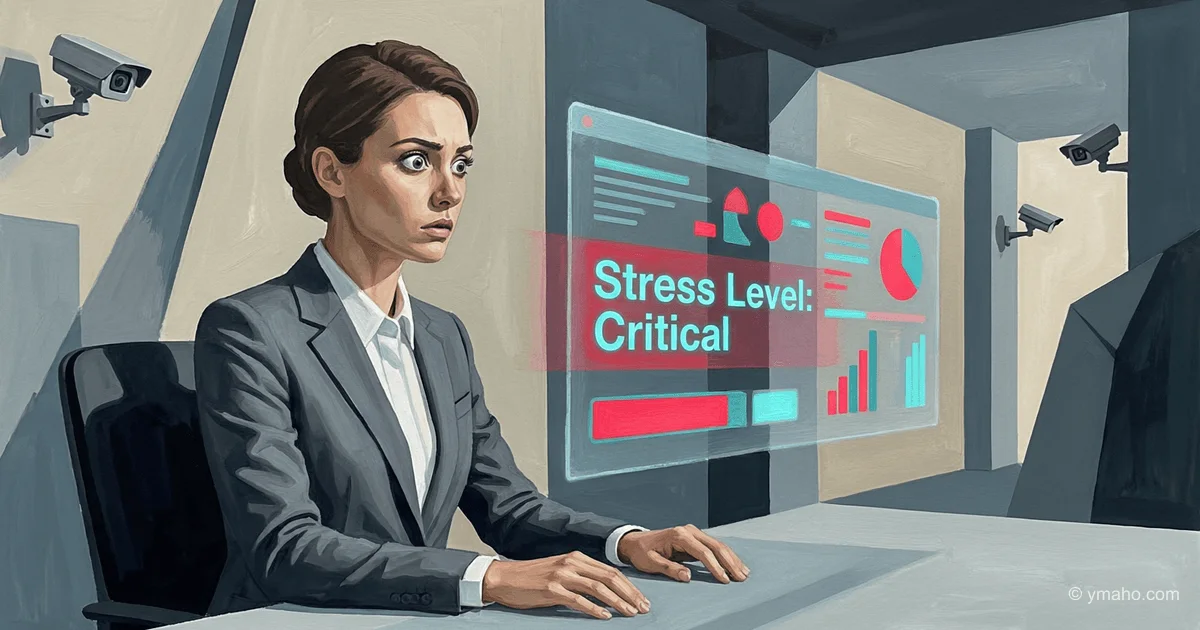
Insight: Corporate mental health programs are not about care, but a new form of control.
[The Gist]: What's Really Happening
The partnership between MIMHC and Claritee Group, officially announced on May 25-26, 2026, is presented as a "natural alignment of goals" and a step toward creating a "healthy culture" in the workplace. But behind the nice phrases about "alcohol-free events," "inspiring conversations," and "practical tools" lies a fundamental shift in the nature of corporate power.
The true essence of what's happening: wellbeing is becoming a tool for controlling productivity, not a gift to employees.
The global workplace stress management market has already reached $12.63 billion in 2026, growing at a CAGR of 12.1%, and will reach nearly $20 billion by 2030. This is not philanthropy. It's a giant business where the employee is not a recipient of care, but a source of data and an object of behavioral engineering.
Non-obvious insight: The growth of corporate programs coincides with the implementation of AI in the workplace — and this is no coincidence. According to the Global Wellness Institute, 40% of workers worldwide in 2026 experience anxiety due to automation, and 62% believe that management underestimates the psychological impact of AI. Companies are implementing "mental health support" not because they suddenly became more humane, but because a frightened and burned-out employee is an unproductive employee. Wellbeing has become insurance against a productivity collapse in an era of technological shock.
Timeline and Context
The situation has been escalating over the past two years, but critical mass accumulated precisely in the first half of 2026.
February 2026 — a study by hh.ru showed that 69% of Russian companies plan to develop emotional health support programs, although only a third of employers actually have such programs. The gap between intentions and reality is 36 percentage points. This is not "care," it's a race to follow the trend.
April 2026 — the Global Wellness Institute publishes a report identifying seven key trends: from integrating wellbeing into corporate infrastructure to healthy longevity as a talent strategy and menopause support as a business priority.
May 25-26, 2026 — official announcement of the MIMHC and Claritee partnership. This is a specific event in the UK mortgage industry, but it reflects a global trend: moving from "awareness" to "proactive change."
Simultaneously, the international conflict (Iran-USA-Israel, escalating in late February 2026) caused a global spike in workplace anxiety. Studies show that even in regions far from the conflict zone, workers experience sleep disturbances and a sense of threat. Corporations responded by accelerating the implementation of mental health services — but this was a reaction to a crisis, not a strategic decision.
Who Wins and Who Loses
Winners:
- Digital wellbeing platforms (Headspace, Calm, BetterUp, and similar). The market is rapidly shifting to a SaaS model: companies buy subscriptions for employees to mental health services. The global workplace stress management market is already $12.63 billion, and digital players are capturing a growing share.
- Organizational design consultants. Companies that help redesign work processes for psychological safety (ISO 45003, psychosocial risk standards) are becoming indispensable.
- Femtech and specialized menopause support providers. By 2030, over 1.2 billion women will be in peri- or post-menopause. Companies offering solutions for this segment are at the epicenter of growing demand.
- AI platforms for mental health screening. Technologies that analyze employee behavior (tone of voice, message frequency, work patterns) and provide "early signs of burnout" are a new gold mine. Mentions of AI in wellness vendor offerings grew by 340% between 2024 and 2025.
Losers:
- Small companies without HR budgets. They cannot compete for talent with corporations offering "mental health packages." Wellbeing is becoming a new divide between large and small businesses.
- Traditional EAPs (Employee Assistance Programs). Old models of "hotline + 3 sessions with a psychologist" are becoming obsolete. Clients want integration with HR analytics, personalization, and proven effectiveness.
- Employees themselves in the long run. Paradox: programs designed to help create a new source of stress. The employee must not only work but also demonstrate "correct consumption" of wellness resources — otherwise they fall into the "risk" category.
What the Media Isn't Saying
First: wellbeing programs as a screening tool for "unreliable" employees.
When an employer gains access to data on the use of mental health services (even if anonymized), they get a map of the team's vulnerabilities. An employee who frequently sees a psychologist becomes a "potential risk" in the eyes of HR. In a culture where mental health is stigmatized, even anonymous participation in a program is a signal. The PROSPERH study from May 1, 2026, shows that organizational interventions only work in a culture of real support — not in a culture of covert surveillance.
Second: programs don't treat causes; they treat symptoms.
A systematic review published in the International Archives of Occupational and Environmental Health showed that organizational interventions can improve mental health, but the evidence is "limited and uneven across sectors." The strongest effect is in healthcare, where studies show a reduction in burnout. But in construction, telemarketing, and other sectors, there is almost no data.
Companies are not redesigning work processes. They are not reducing workloads. They are not removing deadlines and toxic management. Instead, they give employees "resilience tools" — that is, they teach them to tolerate bad conditions rather than change them.
Third: financial anxiety is the main issue, but it's not addressed.
A PwC study shows that 60% of employees experience financial stress, and it is directly linked to anxiety and reduced productivity. But most wellbeing programs focus on breathing exercises and meditation, not on raising salaries or providing financial counseling. A company is willing to pay for a meditation app at $10 per month per employee, but not to raise salaries by $100. This is cheap wellbeing.
Forecast: Next 30 Days and 90 Days
Next 30 days:
A wave of skeptical articles will appear in the professional press. HR directors who implement programs without changing working conditions will face internal resistance. The first internal investigations will emerge: employees will start complaining that "wellbeing programs are used to assess loyalty."
Digital wellbeing platforms will ramp up marketing in the SMB segment, offering "out-of-the-box solutions" for $500-2000 per month per company. The market will begin to fragment into luxury (integration with HR analytics) and budget (meditation only).
Next 90 days:
The first major scandal will occur: a large corporation (likely from the tech or finance sector) will be accused of using data from wellbeing apps to fire "psychologically unstable" employees. This will trigger a wave of regulation: the EU will start developing a directive on the protection of mental health data in the workplace.
The market will respond with the emergence of "wellbeing auditors" — independent companies that will assess the real effectiveness of programs and the absence of "dark patterns" in data collection. This will become a new standard for responsible employers.
Main forecast: In 90 days, a split will become evident between companies that use wellbeing as a real redesign of work (reducing workload, flexibility, financial support) and those that use it as a placebo (apps, lectures, "mental health days" once a quarter). The latter will lose the battle for talent.
The partnership between MIMHC and Claritee is a step in the right direction. But without changing KPIs, workload, and management culture, it will remain just another "tick box" in the ESG report. And employees see that.
— Editorial Team