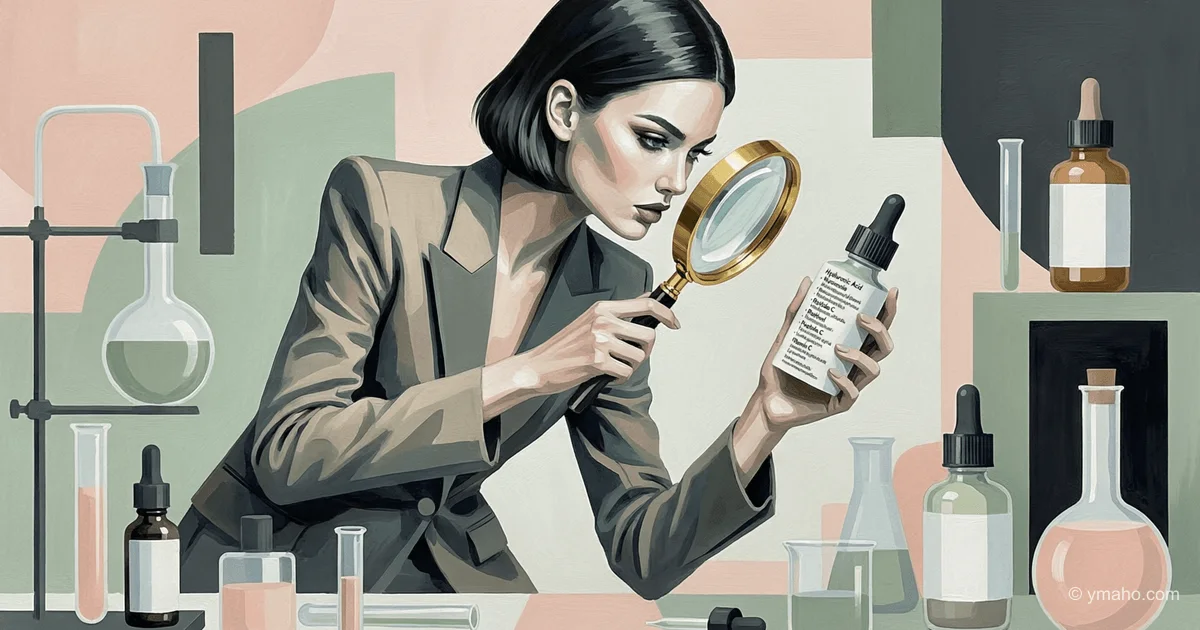
“The Science of Beauty”: Consumers Choose Cosmetics Like Rational Investors
The trend toward conscious consumption in the beauty industry is gaining momentum. Consumers no longer give in to impulse purchases; instead, they carefully analyze a product’s effectiveness and value, making a “rational choice.”
Insight: “Scientific rationalism” in cosmetics is not mindfulness—it’s the collapse of marketing myths.
[The Gist]: What’s Really Happening
Behind the loud headlines about the “rational consumer” and “investment approach” lies a much more alarming reality for the industry. This is not the triumph of the enlightened buyer. It is a systemic crisis of trust that brands are trying to disguise with stories about “conscious consumption.”
The key phenomenon analysts miss: consumers no longer trust brands at all. They trust only third-party verification. According to data from the Russian Perfume and Cosmetics Association presented at InterCharm in April 2026, 44% of young consumers (Gen Z) require real reviews before purchasing, and product card informativeness matters more to them than discounts.
The true essence of the trend is the death of emotional storytelling. Ten years ago, we sold a cream through a story about a French castle or a Japanese ritual. Today, a customer hits “back” at the first “scientifically proven” without a PubMed link. She has become an “ingredient skeptic,” but not an “ingredient expert.” She doesn’t know how retinol works, but she knows that if the manufacturer doesn’t specify its concentration and release form, it’s a scam.
Non-obvious insight: We are witnessing the “premium cannibalization effect.” According to the latest data from May 2026, the prestige and mass segments of cosmetics are growing at almost the same rate. This contradicts the logic of an economic downturn. The explanation is simple: the customer redistributes her budget within the same basket. She will buy an expensive serum with clinical trials for $120, but immediately add a mass-market cleanser for $8. Why? Because she rationally decided that a complex formula matters for the face, but water and surfactants for washing do not. This is not mindfulness. It is financial engineering of beauty.
Timeline and Context
The shift to this model had been brewing for several years, but the trigger was 2025–2026, when information overload peaked. According to Euromonitor International, 66% of consumers worldwide are now looking for ways to simplify their lives, and 58% live in a state of daily stress.
In Russia, the process followed its own trajectory. An Adventum study (April 2026) showed: 47% of shoppers make a purchase under the influence of discounts, but at the same time, 43% are influenced by “good mood.” That is, the decision is made on the edge of “benefit” and “emotion,” but in the end, the customer demands accountability. Adventum CEO Evgenia Grunis summarizes: “Buyers have become more rational: they are not willing to overpay, but they also do not want to compromise on quality.”
The key moment was the statement by InterCharm Organizing Committee Chair Anna Dycheva-Smirnova on April 8, 2026. She bluntly stated that the market has shifted to a “rational consumption” model and has become “less forgiving.” The quote that spread across the industry: “The consumer wants a clear justification: why should I buy this, what am I paying for... And that is an exact indicator that the person is inquisitive.”
At the same time, Euromonitor records a global shift toward “Radical Authenticity”: 50% of consumers buy only from brands they fully trust. And 49% are willing to pay 10% more for cosmetics with scientific backing.
Who Wins and Who Loses
Winners:
- “Smart” marketplaces and review aggregators. Platforms like Amazon (where 50% of product searches already start) and Russian marketplaces (62% of Russians buy cosmetics there) become the main beneficiaries. They provide the very “comparative analytics” the customer craves.
- Brands with transparent clinical data. Not those that have a “study,” but those that publish raw data. The Ordinary, The Inkey List, and now CeraVe, La Roche-Posay are at the epicenter. Their growth in the “dermocosmetics” segment in 2026 shows double-digit figures.
- Asian innovators (especially Korea and China). According to Euromonitor’s forecast, China’s cross-border e-commerce sales will reach $139.5 billion in 2026. Asian brands were the first to implement AI skin diagnostics and “scientific” packaging design. 83% of Russian women already believe that in 10 years, AI will manage skincare.
Losers:
- “Premium aesthetic” brands without science. Companies that sold “a feeling of luxury” and beautiful packaging but had no R&D department. Their era is over. The customer is willing to overpay for a molecule (glucosamine, peptide), but not for a bottle.
- Network direct marketing (Avon, Oriflame, and legacy giants). Their model was built on “consultant advice.” Today, 23% trust bloggers, 58% trust only themselves. Trust in the “neighbor consultant” has collapsed.
- “Green” brands without proof. The clean beauty market is growing at 12.5% and will reach $9.02 billion in 2026. But paradoxically, 89% of Russians believe that eco-friendliness raises the price, but they are not ready to pay for it. Marketing “without parabens” no longer works if there is no clinical effect.
What the Media Aren’t Saying
First—“rationality” is a cognitive bias. Researchers have long known: when a person says “I choose scientifically,” they are actually choosing what confirms their previous experience or brand preference. The customer creates an “illusion of control.” She looks at the ingredient list but doesn’t understand 80% of the ingredients. She looks for reviews but falls for fake ones. The media sell this story as “evolution,” but in reality, it is choice fatigue.
Second—the death of loyalty. Previously, a brand could retain a customer for years. Now, every month is a new tender. 47% buy on discount. This means brands are forced to constantly undercut. Margins are falling. The only way to survive is to hook the customer on a subscription model for serum, but in Russia and Europe, this market still lags behind the US.
Third—the paradox of “the poor buying expensive.” The logic of the “rational investor” leads to people with low incomes buying one tube for $80, considering it “profitable per gram of active ingredient,” while they could have bought three budget products. This is the minimalism trap. The media praise the “capsule wardrobe” for the makeup bag but do not write that it is most often an excuse to buy a single, exorbitantly expensive product.
Forecast: Next 30 Days and 90 Days
Next 30 days:
A wave of scandals with “fake reviews” will begin. Marketplaces will tighten moderation, and many “rational” brands with a 4.9 rating will lose up to 30% of conversions when it is revealed that 50% of reviews were bought. We will see the first major lawsuit against a manufacturer that failed to confirm its “clinical trials” in the lab. A checklist “How to Read INCI Correctly” will go viral on social media, but 90% of users will not use it.
Next 90 days:
Distribution consolidation will occur. Marketplaces will start creating their own “trust laboratories” and private labels under the “Expert’s Choice” brand. This will kill the mid-price segment ($15–30). Only mass-market at $5 or clinical premium at $50+ will remain.
And most importantly: the market will split into “adults” (35+) and “young” (Gen Z). Adults will go into total science—peptides, stem cells, biotech. The young (20–25) will tire of this rationality race and swing to the opposite trend—“chaotic irrationality”: buying cosmetics for a funny name or a viral video on TikTok Shop without studying the ingredients. Right now, we are at the peak of rationality. What follows is only a pendulum swing back. The louder the cries about “scientific choice,” the closer the era of “stupid beauty” just for fun. Get ready.
— Editorial Team