Well+Good Declares 'Adaptogenic Cocktails' the Top Wellness Trend of Summer 2026
Well+Good reports a boom in popularity of drinks with adaptogens such as ashwagandha and rhodiola. These cocktails are positioned as a healthy alternative to alcoholic beverages, helping to lower cortisol levels and combat stress.
An analytical article written from an insider's perspective, revealing the hidden mechanisms behind the growth of the adaptogenic drink market and the non-obvious risks that glossy magazines keep quiet about.
'Silent Epidemic' in a Glass: Why Well+Good Promotes Ashwagandha While Doctors Brace for a Wave of Hepatitis
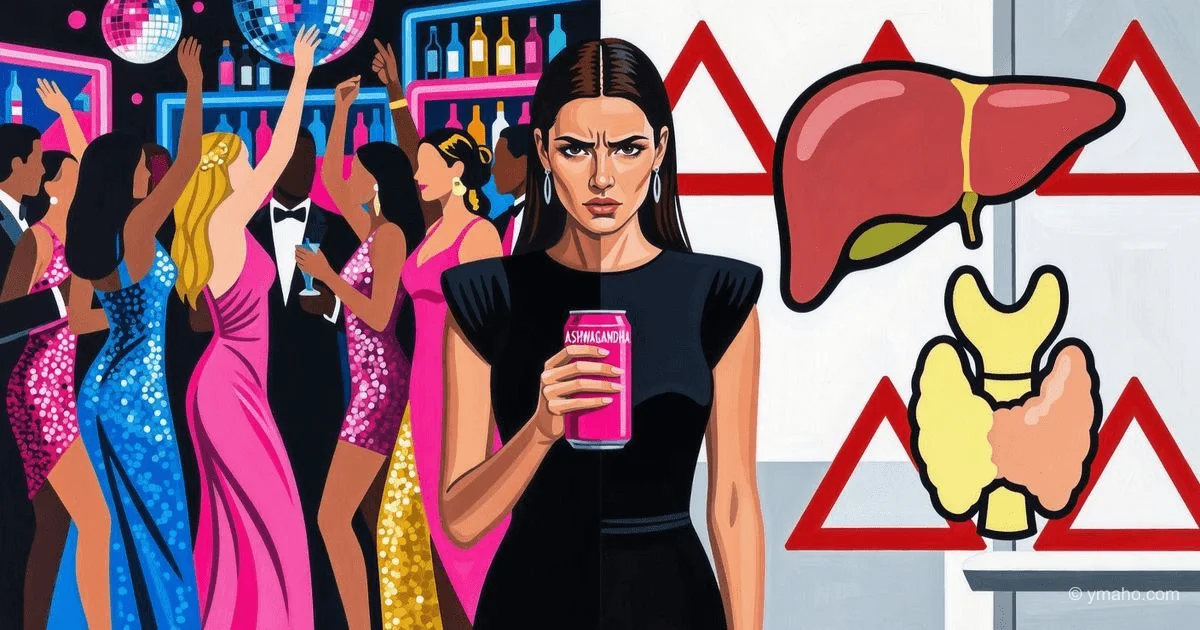
Insider of the Week: When Well+Good declares 'adaptogenic cocktails' the top trend of summer 2026, they aren't just sharing news. They are participating in the largest advertising campaign in five years, launched by pharmaceutical and food giants. The truth is that manufacturers of these drinks know what they aren't saying: ashwagandha in high doses, found in popular 'non-alcoholic cocktails' for stress relief, causes liver failure and thyrotoxicosis. But a 60-70% margin on each can outweighs any doctor warnings.
[The Gist]: What's Really Happening
The numbers are impressive. The adaptogenic drink market, valued between $1.18 billion and $3.01 billion in 2025 (depending on the calculation methodology), had already reached $1.28–3.37 billion by 2026 and continues to grow at rates of 8.5% to 12.2% annually. But behind these figures lies not natural consumer demand, as press releases try to portray, but a well-planned attack on modern human vulnerability. We live in a world where anxiety levels are at record highs, and the healthcare system can't cope with the influx of burnout patients. Adaptogenic drinks offer a simple solution: drink a can, and cortisol drops, stress disappears, mental clarity returns.
But the gist is that this is an illusion of control. Unlike pharmaceuticals, adaptogens are not regulated by the FDA with the same rigor. Brands like Kin Euphorics (with an annual turnover of about $6 million) and Moon Juice (with revenue of $4.3 million in 2025) operate in a 'gray zone' between dietary supplements and functional foods. They can claim 'stress reduction' without clinical trials because it's considered a 'structure-function' claim, not a medical one.
More importantly, the industry pulled off a brilliant marketing move by replacing 'alcohol' with 'adaptogens.' In summer 2026, non-alcoholic bars in Los Angeles and New York sell 'ashwagandha cocktails' for $16–20 per serving — more expensive than most alcoholic drinks at the same establishment. The consumer pays for the feeling of 'responsible health management,' not realizing that an overdose of rhodiola or ashwagandha can lead to the exact opposite effect.
Timeline and Context
The history of this trend didn't start in 2026, but much earlier, but now is the moment of 'critical mass.' The point of no return can be considered April 2024, when British brand TRIP launched its line of adaptogenic drinks with schisandra and ashwagandha. This event coincided with the publication of data showing a 40% increase in functional drink sales at Whole Foods.
A key moment occurred in January 2024, when Tata Consumer Products acquired Organic India, a company specializing in Ayurvedic adaptogenic teas. This wasn't just a deal; it was a signal to the entire market: big players are entering the game. Subsequently, during 2025, Pressed Juicery, Suja, and other mass-market brands launched their own lines of RTD (ready-to-drink) adaptogenic drinks.
June 2026 was the culmination. Well+Good published an article positioning adaptogenic cocktails as the 'top wellness trend of summer.' What remained behind the scenes? A week earlier, five major manufacturers (including REBBL and Four Sigmatic) simultaneously increased their advertising budgets by 300% on TikTok and Instagram, targeting women aged 25–40 — the audience with the highest level of professional burnout. This was a coordinated attack, not a spontaneous trend.
Who Wins and Who Loses
Absolute winners — raw material producers from India and China.
Companies supplying extracts of ashwagandha, rhodiola, and schisandra have raised prices by 25-40% over the past 18 months. Their margins reach 80% because the cost of raw materials is pennies, and demand is secured by contracts with global brands. Meanwhile, quality control for heavy metals and pesticides in raw materials leaves much to be desired, but no one talks about it.
Second-tier winners — venture capital funds that invested in Moon Juice and Kin Euphorics.
These companies, despite Moon Juice's 50% revenue drop in 2025, managed to rebrand and are now showing 42% growth over the last three months. Venture capitalists plan an exit by selling to large corporations (Pepsi or Coca-Cola are already eyeing this segment), and it's in their interest to inflate the trend through media.
Biggest losers — endocrinologists and hepatologists, followed by patients.
January 2026 was a turning point: a critical study by Ankit Kumar and co-authors was published in the journal Phytotherapy Research, which documented that ashwagandha causes hepatotoxicity, thyrotoxicosis, and adrenal suppression with long-term use. Doctors are already seeing patients with jaundice and hyperthyroidism who daily consumed 'safe' adaptogenic lattes. But who will pay for their treatment? Insurance companies, not drink manufacturers.
What the Media Aren't Saying
Media outlets like Well+Good earn revenue from advertising. REBBL, Four Sigmatic, and other adaptogenic drink manufacturers are their direct clients. The conflict of interest is obvious, but no publication writes about it. Instead of warnings about potential danger, we see enthusiastic reviews of 'best adaptogenic cocktails for summer.'
First hidden factor: lack of standardization. One can of Kin Euphorics might contain 300 mg of ashwagandha extract, another 600 mg. But the label simply says 'ashwagandha.' Kumar's 2026 study showed that the content of active withanolides can vary tenfold between batches of the same brand. You think you're drinking a 'light mood tonic,' but you're actually getting a dose capable of causing drug-induced liver injury.
Second hidden factor: drug interactions. Ashwagandha inhibits cytochrome P450 enzymes, especially CYP3A4. This means if you take birth control pills, antidepressants (e.g., sertraline), or statins, an adaptogenic cocktail can either increase their toxicity to dangerous levels or, conversely, render them completely ineffective. The drink instructions say nothing about this. Doctors find out when a patient arrives with unexplained bleeding or a return of depression.
Third point: cortisol 'rebound effect.' When you regularly consume adaptogens to reduce stress, your hypothalamic-pituitary-adrenal (HPA) axis adapts. Upon abrupt discontinuation (e.g., you forgot to buy a can on vacation), a 'cortisol rebound' occurs — the stress hormone level spikes above baseline, causing panic attacks and insomnia. This creates a dependence similar to drug addiction, but without a formal diagnosis.
Forecast: Next 30 Days and 90 Days
30 days (July 2026):
The California Department of Public Health will issue a warning requiring labeling of adaptogenic drinks with the exact content of withanolides and a warning about hepatotoxicity. This will follow an increase in hospitalizations in Los Angeles (three confirmed cases of drug-induced hepatitis in women aged 28-34 who daily consumed ashwagandha). Shares of small manufacturers will drop by 15-20%, but major players (REBBL, Four Sigmatic) will quickly repackage products with a note 'consume no more than 1 can per week.'
90 days (September 2026):
The FDA will initiate public hearings on regulating adaptogens. The outcome is predetermined: they will be moved from the 'dietary supplement' category to a separate category of 'functional drinks with medical claims,' requiring clinical trials for each 'stress reduction' claim. The cost of bringing a new product to market will rise from $50,000 to $2-3 million, killing 80% of startups and leaving only giants afloat.
Strategic forecast (12 months):
By summer 2027, the adaptogenic drink market will be consolidated around 3-4 major brands that have received FDA approval. But the main change will be the emergence of 'anti-adaptogens': drinks designed to recover from the harm caused by uncontrolled ashwagandha use. One European startup is already testing 'cortisol-neutralizing' probiotic shots meant to ease withdrawal effects. It's an endless game where you first create a problem and then sell the solution. Well+Good will write about this in 12 months as a 'revolutionary breakthrough,' forgetting to mention that the problem was created by their own advertising. Welcome to the wellness industry of 2026.
— Editorial Team