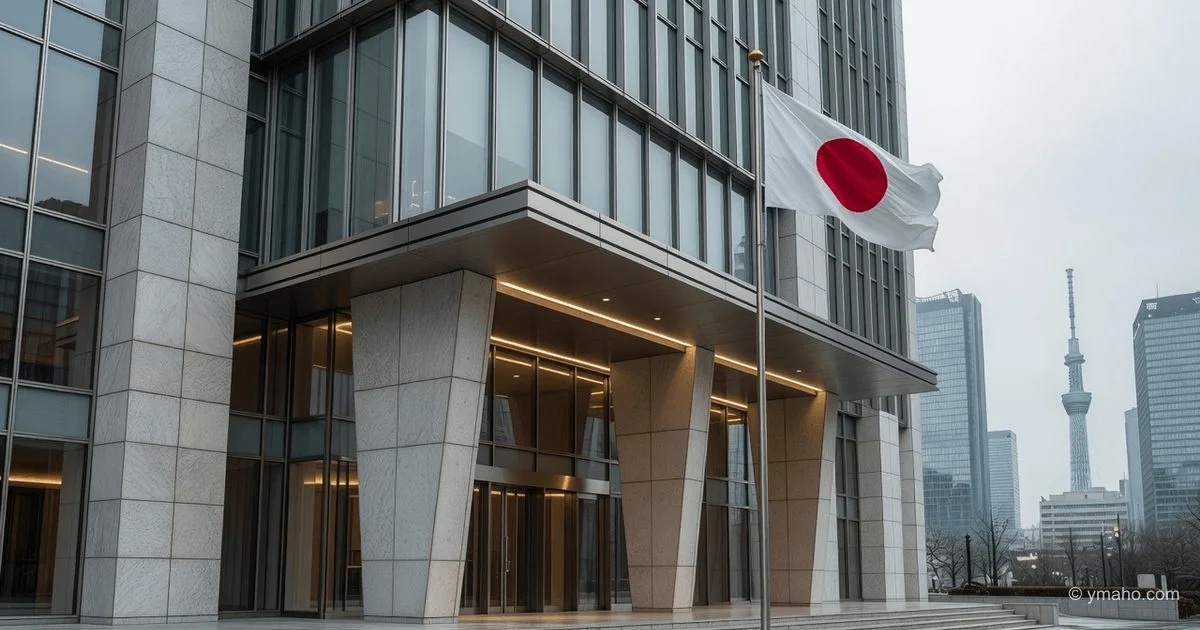
Bank of Japan Prepares to Raise Rate to 1% to Support the Yen
The Bank of Japan is expected to raise its key interest rate by 25 basis points to 1% at its upcoming meeting. This would be the highest level since 1995, as the regulator tries to combat the weakening national currency and persistent inflation.
Analytical article: Bank of Japan's Rate Hike to 1% — Why It Won't Save the Yen but Will Crash Global Markets
[The Gist]: What's Really Happening
Markets are fixated on the number: 1%. Yes, it will be the highest key rate from the Bank of Japan since 1995. Yes, it's a symbolic threshold. Yes, markets are pricing in a 72-80% probability of a hike at the June 15-16 meeting. But all of this is a superficial view. The real drama is unfolding where the media isn't looking.
The main non-obvious insight missing from public discourse: raising the rate to 1% is not a solution but an admission that the Bank of Japan has already lost the battle for control. The yen has weakened to levels near 160 yen per dollar — a psychological mark that in the past triggered currency interventions. The Iran war has driven up energy prices, and Japan, as the largest importer of energy resources, finds itself vulnerable. Inflation, which they tried to ignore for years, has not only returned but threatens to spiral out of control.
But the most interesting part is the historical analogy warned about by former Bank of Japan board member Makoto Sakurai. In an interview with Reuters, he explicitly said: Japan risks repeating the mistake of the late 1980s, when the central bank kept policy too loose for too long and then was forced to raise rates aggressively, leading to the bubble burst and three decades of stagnation. Now the Bank of Japan is "one step away from repeating the same mistake."
Raising to 1% is not the end of normalization. It's only the beginning. ING forecasts that by mid-2027, the key rate will reach 1.50%. And the yield on 10-year Japanese government bonds (JGBs) could rise to 3.0%. This means a tectonic shift for the global bond market, which hasn't even begun to grasp the scale of changes.
Timeline and Context
The situation has been brewing gradually, but the last month has been critical. The Iran war, which started in May, became the trigger that destroyed all attempts by the Bank of Japan to delay normalization. Energy prices skyrocketed, and even with government subsidies on electricity, core inflation is forecast to accelerate to 3.5% by autumn.
Below is a timeline of key events leading markets to the June 15-16 meeting:
| Date | Event | Market Reaction | Source |
|---|---|---|---|
| May 22 | Start of conflict with Iran, strikes on US targets | Oil above $90, yen weakens | |
| May 31 | Former BOJ board member Sakurai states: "Not raising rates in June is unthinkable" | Markets raise probability to 80% | |
| June 2 | BOJ Governor Ueda signals a hike if inflation risks outweigh | Nikkei 225 falls 0.8% | |
| June 9 | Board members Masu and Koeda support a hike | Three "hawks" already on the committee | |
| June 10 | ING: hike to 1% in June, then to 1.50% by mid-2027 | JGB yields start rising | |
| June 15-16 | Bank of Japan MPC meeting | Hike to 1% expected | |
| June 24 | Publication of MPC members' opinions summary | Key to understanding next steps |
An important point many commentators miss: despite all the "hawkish" signals, inflation in May was only 1.4% — well below the 2% target. But this figure is distorted by government subsidies on utilities and a high base from last year. The Bank of Japan looks at underlying inflationary pressure, which is intensifying due to the weak yen and rising energy prices.
Kazuo Ueda, Governor of the Bank of Japan, has publicly referenced the oil shocks of 1973 and 1979-1980 as examples of how exogenous price shocks can destabilize the economy. But he omits a more frightening example — the Japanese economic bubble of the late 1980s, when the Bank of Japan kept policy too loose for too long and then was forced to raise rates aggressively, leading to a crash.
Who Wins and Who Loses
At first glance, winners are yen holders. The USD/JPY pair is trading near 159.40, approaching the psychological level of 160. A rate hike will narrow the interest rate gap between Japan and the US, which should support the yen. But this is only a temporary effect. Japan's fundamental problems — current account deficit due to energy imports, aging population, debt overhang — won't go away.
The real winners are holders of short positions on Japanese stocks. As Finimize notes, rate hikes put dual pressure on the Nikkei. First, the discount rate for future corporate cash flows increases. Second, yen appreciation reduces the value of exporters' foreign revenue when converted to yen. Tokyo Electron, Advantest, SoftBank — leaders of the recent rally — will be hit.
Losers are Japanese households with mortgages and loans. As Vietnamese outlet Vietnam.vn notes, the rate hike will lead to higher mortgage rates, deposit rates, and corporate loans. This will make borrowing harder, reduce consumer activity, and could negatively impact the economy. Although the Bank of Japan believes the 1% level won't have a significant negative effect, Japanese newspapers warn of recession risks.
A special category of losers: holders of Japanese government bonds (JGBs). The yield on 10-year JGBs, according to ING forecasts, could reach 3.0% by 2027. This means current bond prices will fall. Funds that held Japanese debt as a "safe asset" will face substantial losses.
But the biggest losers are outside Japan. These are holders of risky assets worldwide — from Bitcoin to high-tech stocks. Why? Because of the unraveling of the "carry trade" — a strategy where investors for years borrowed yen at near-zero interest and invested in yield-bearing assets globally. A rate hike to 1% and subsequent yen appreciation will force them to close positions urgently. This will trigger sell-offs across the spectrum of risky assets.
What the Media Isn't Saying
The first and most important untold story is the historical correlation between BOJ rate hikes and Bitcoin crashes. Crypto analysts, including Crypto Rover, have documented a frightening pattern:
| BOJ Rate Hike Date | Bitcoin Drop After |
|---|---|
| March 2024 | -23% |
| July 2024 | -25% to -30% |
| January 2025 | -31% |
| December 2025 | -25% |
In each case, a rate hike was followed by a sharp Bitcoin drop within weeks. The mechanism is the same: the unraveling of the carry trade reduces global liquidity, and Bitcoin, as a high-beta asset, reacts first and most painfully. If the historical pattern repeats, after June 15-16 we can expect another wave of sell-offs.
The second untold factor is the paradoxical link between the energy shock and BOJ actions. On one hand, the war with Iran and rising oil prices fuel inflation in Japan, giving the BOJ formal grounds to raise rates. On the other hand, this same energy shock undermines the Japanese economy, worsening terms of trade and the current account. The Bank of Japan is caught between two fires: if it doesn't raise rates, inflation spirals out of control; if it does, it could trigger a recession.
The third omission is political pressure from Prime Minister Sanae Takaichi. According to ING, the government may resist further rate hikes, fearing for economic growth. However, if the Bank of Japan pauses its bond purchase reduction from April 2027, it would weaken opposition from the Prime Minister. This is a delicate political balance that markets are not yet factoring in.
Finally, the fourth hidden factor is the technical picture of USD/JPY. The pair is trading within a long-term upward channel, approaching strong horizontal resistance at 159.70. Meanwhile, volatility is compressing, and the RSI is in overbought territory (72.58), which usually precedes an explosive move. The question is only the direction: will the pair break through 160 or crash after the BOJ decision?
Forecast: Next 30 Days and 90 Days
Next 30 days (until mid-July 2026). The key date is June 15-16. Base scenario (75% probability): The Bank of Japan raises the rate by 25 basis points to 1%. The vote may not be unanimous — at least three members already support a hike.
Unexpected twist: even after the hike, the yen may not strengthen. The market has been pricing in the hike for weeks, and the "buy the rumor, sell the fact" effect could work against the yen. If Ueda in his press conference signals that further hikes are not inevitable, the yen could even weaken.
In the first 48 hours after the decision, I expect extreme volatility. USD/JPY could experience a "roller coaster": first a sharp drop to 155-156 on the news of the hike, then a rebound back to 158-159 if Ueda's rhetoric is not sufficiently "hawkish." The Japanese stock market will likely fall 2-4% within a week of the meeting.
Next 90 days (until mid-September 2026). Here the main variable is the BOJ's further actions. ING expects the rate to reach 1.50% by mid-2027. This means the June hike is not a one-off event but the start of a tightening cycle. The next hike could come as early as late 2026 or early 2027.
If the Bank of Japan begins aggressive normalization, the consequences for global markets will be severe. The unraveling of the carry trade will continue to drain liquidity from risky assets. Bitcoin, based on historical patterns, could fall 20-30% from current levels. Japanese stocks will also come under pressure — especially exporters hurt by yen appreciation.
However, there is also an optimistic scenario. If a ceasefire with Iran is reached (and Trump has mentioned the possibility of an agreement in the coming weekend), oil prices will crash, inflationary pressure in Japan will ease, and the BOJ could take a more "dovish" stance. In that case, USD/JPY could stabilize in the 150-155 range, and the Nikkei could even rise on hopes of a halt to tightening.
Editorial Forecast
Asset: USD/JPY pair. Direction: short-term decline (yen strengthening) in the first 24-48 hours after the BOJ decision, then a possible rebound. Expect a test of the 155-156 level. Key levels: resistance — 160.00 (psychological and intervention level), support — 155.00 (50-day moving average). Confidence level: high (75% for the hike itself, medium for the direction of movement). Main risk: unexpectedly "dovish" rhetoric from Ueda or a delay of the hike to July — in that case, USD/JPY could surge above 161.00, triggering an emergency intervention by the Ministry of Finance. Watch the June 15-16 meeting and Ueda's press conference immediately after the decision.
— Editorial Team