Fighting between Israel and Hezbollah Intensifies in Lebanon Despite US Mediation
The conflict between Israel and Hezbollah escalated in May: attacks from both sides increased by 10%, and Israeli forces advanced north of the Litani River. Hezbollah launched a record number of strikes (over 260) against Israeli forces, while Israel expands its ground presence and control over strategic heights such as the Beaufort Ridge.
Analytical Article: Litani and Beaufort — Why the 'Quiet Annexation' of Southern Lebanon Is Changing the Balance of Power in the Middle East
Author: Independent Financial Analyst (Insider Perspective)
[The Core]: What Is Really Happening
When Israeli Prime Minister Benjamin Netanyahu publicly stated on May 30, 2026, that he had ordered the military to "take in deeper and wider pincers" the Lebanese areas held by Hezbollah, most media outlets interpreted it as another round of escalation. But a professional perspective requires a fundamentally different lens: this is not just an "intensification of hostilities." It is a systemic breakdown of the "yellow line" established after the ceasefire in April 2026, and a transition to a phase I call "quiet annexation."
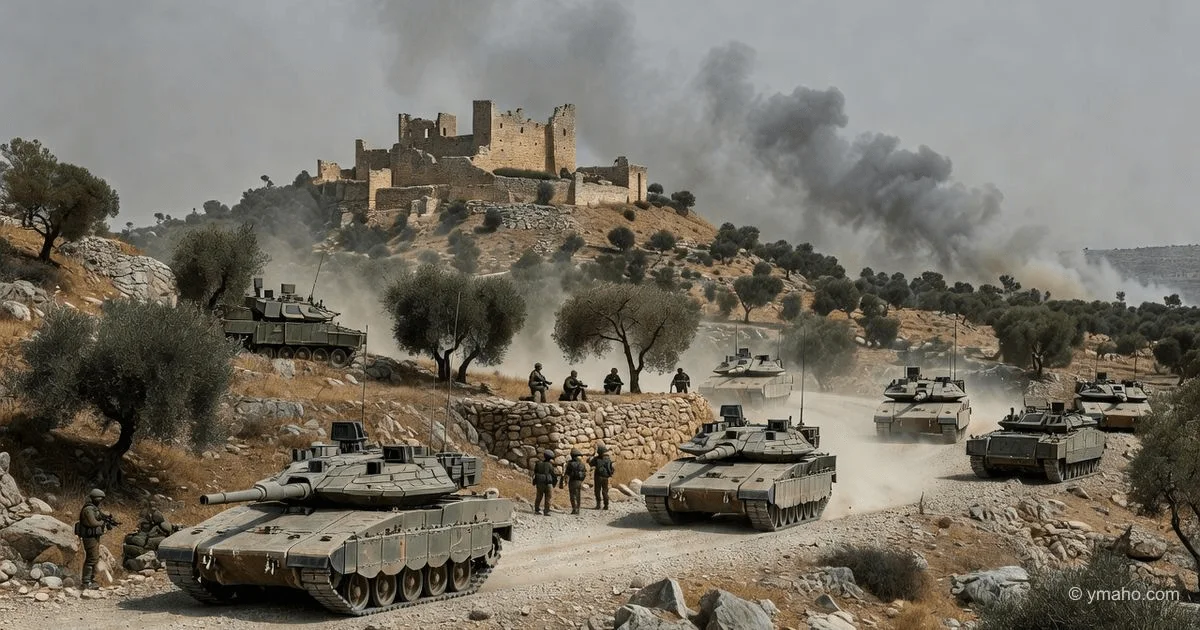
Geography speaks for itself. Israeli forces of the IDF's 36th Division crossed the Litani River — a strategic milestone that had been considered a "red line" for decades. They captured the Beaufort Ridge with its medieval fortress at the summit, raising the Israeli flag there. This is the deepest Israeli military advance into Lebanese territory in 25 years. And all this is happening against the backdrop of a "ceasefire regime" brokered by the US in mid-April 2026.
But here is what truly matters and what most commentators miss: this is not about temporary occupation. Israel is building outposts, fortifying positions, and, according to reports from The Jerusalem Post, has discovered an extensive network of Hezbollah tunnels under the Beaufort Ridge containing maps of Israeli border settlements. These tunnels, capable of housing hundreds of fighters, are equipped with living quarters, plumbing, electricity, and arsenals of anti-tank and anti-aircraft weapons. Their discovery and clearance is not a "counter-terrorism operation" but preparation for a long-term presence. Israel has no intention of leaving these heights.
The media often speaks of "ceasefire violations" as a political fact, but ignores the economic underpinnings. Every day Israel remains on Lebanese territory, it strengthens its control, and Hezbollah loses the ability to rebuild infrastructure. This is a war of attrition, and it is playing out according to Israel's script. In May 2026, Israeli forces struck over 70 Hezbollah targets in just 24 hours, destroying launchers, buildings, and tunnels. Hezbollah, in turn, launched a record number of strikes — over 260 in a month. But the asymmetry is clear: Israel is entrenching itself on the ground, while Hezbollah responds with rocket fire that cannot reclaim lost positions.
Timeline and Context
To understand the systemic nature of what is happening, we need to look at the timeline of events starting from the establishment of the "ceasefire regime."
| Date | Event | Significance for the Balance of Power |
|---|---|---|
| Mid-April 2026 | Ceasefire between Israel and Hezbollah comes into effect, brokered by the US | "Yellow line" established, positions of both sides fixed |
| May 14, 2026 | Third round of Lebanon-Israel talks in Washington | Discussion of maintaining the truce, but Hezbollah refuses to discuss disarmament |
| May 25, 2026 | Lebanese President Joseph Aoun states that negotiations "will not be an act of surrender" | Lebanon tries to save face, but control over the south is slipping away |
| May 26, 2026 | Israeli troops advance toward the Litani River, fighting along the strategic line | First serious violation of the "yellow line" |
| May 28-29, 2026 | Meeting of US, Lebanese, and Israeli military delegations at the Pentagon | Lebanon asks the US to pressure Israel — to no avail |
| May 30-31, 2026 | Netanyahu orders expansion of the operation; capture of Beaufort Castle | Advance north of the Litani, control over strategic height |
| May 29-30, 2026 | One of the most intense days of Hezbollah shelling of northern Israel | Retaliation, but without changing territorial control |
| June 2026 | IDF continues clearing tunnels under Beaufort, maps of Israeli cities discovered | Evidence of Hezbollah's long-term infiltration plans |
The key takeaway from this timeline: the "ceasefire regime" de facto ceased to exist by the end of May. The US, acting as mediator, held meetings at the Pentagon and scheduled a fourth round of talks for June 2-3, but its influence on Israeli actions proved minimal. The Lebanese delegation expected the US to "intervene and pressure Israel," but that did not happen. Washington, preoccupied with its own conflict with Iran and negotiations over the Strait of Hormuz, left the Lebanese front without effective oversight.
From a financial analyst's perspective, this creates a "risk premium" that will only grow. Markets have not yet fully priced in the likelihood that the Israeli presence in southern Lebanon will become permanent. But every new kilometer the IDF advances north of the Litani increases the cost of "returning to the status quo" and reduces the likelihood of a diplomatic solution.
Who Wins and Who Loses
Loser number one — Lebanon's economy. Lebanese Finance Minister Yassin Jaber made a shocking statement in a Reuters interview on May 21, 2026: the country's economy could contract by 7-10% in 2026 due to the ongoing conflict, with total direct and indirect losses potentially reaching $20 billion. For comparison, the previous war in 2024 cost Lebanon $8.5 billion, according to World Bank estimates. The current conflict is twice as destructive.
But that's not all. Jaber noted that the Lebanese government had hoped to achieve a budget surplus in 2026, but instead was forced to allocate $50 million from the budget to support over 1 million people displaced by the war. International aid, which previously amounted to $700 million, has so far raised only about $100 million of the requested $300 million. This means Lebanon is left alone to face the catastrophe — and its financial system, already shattered by the 2019 crisis, is on the brink of collapse.
Second loser — Hezbollah. No matter how loud their claims of record shelling, the reality is: they are losing territory. Israeli forces advanced north of the Litani and entrenched themselves on strategic heights from which Hezbollah had for years planned attacks on northern Israel. The discovery of tunnels under Beaufort with maps of Israeli settlements is not just a military find, but proof that Hezbollah's plans for deep infiltration into Israeli territory have been thwarted. Moreover, the Lebanese publication Lebanese Forces Intishar claims that Hezbollah's military wing is de facto "finished": it is exhausted by daily strikes, is not responding to attacks, and will not risk starting a new adventure.
Winners — arms and defense infrastructure manufacturers. The conflict in northern Israel requires new munitions, missile defense systems, and tunnel-clearing equipment. Lockheed Martin, RTX, Elbit Systems — all are receiving contracts. But there is a less obvious winner: contractors building border fortifications. Israel is not just fighting — it is building. Outposts on the Beaufort Ridge, fortifications along the Litani, observation towers — these are billions of dollars in construction contracts.
Unobvious winner — the cement and steel industries of Israel and Turkey. Any long-term military presence requires concrete and rebar. Shares of Israel's Nesher (the country's largest cement producer) and Turkish steel companies (which can supply materials through third countries) could rise 10-15% in the coming months.
Loser no one talks about — the tourism sector of the Eastern Mediterranean. Lebanon is losing the summer tourist season of 2026 — that's $6-8 billion that usually came from the diaspora and tourists from Gulf countries. Cyprus, located 200 km from the conflict zone, is also feeling a drop in tourist flow: tourists do not want to take risks, even if it is formally safe. Shares of hotel chains in the region (e.g., securities tied to real estate in Limassol) could fall 5-10%.
What the Media Leaves Out
First insight (most important): "Demilitarization of Southern Lebanon" is a euphemism for permanent occupation. Israel officially states that its goal is to create a "security zone" along the border to protect northern cities from rocket fire. But look at the map: the Litani River is 20-30 km from the border. Control over the Beaufort Ridge gives Israel the ability to observe all of southern Lebanon as far as the Beqaa Valley. This is not a buffer zone. It is a springboard for projecting force deep into Lebanese territory for decades to come.
Second insight: The US knew about Israel's plans and did not stop them. The meetings at the Pentagon on May 28-29, where the Lebanese delegation asked for pressure on Israel, ended with nothing. Moreover, the US continues to act as a mediator in negotiations, but its position is clear: it will not restrain Israel as long as the Iranian threat is active. For Washington, weakening Hezbollah is a strategic priority, even at the cost of Lebanon's sovereignty. This sets a dangerous precedent: American mediation is no longer perceived as neutral, meaning any future negotiations will be even more difficult.
Third insight (least obvious for retail investors): The gap between "negotiations" and "reality on the ground" creates an arbitrage opportunity. Shares of companies that depend on regional stability (Lebanese banks, Israeli airlines) are currently trading with a "peace premium" — that is, the market is pricing in a quick diplomatic solution. But on the ground, the exact opposite process is underway: the Israeli presence is expanding, and a return to the status quo is becoming less and less likely. This means that current prices for some assets are inflated, and a correction is inevitable when markets realize that "peace" will not come before the end of 2026.
Fourth insight (structural): The conflict in Lebanon is becoming "eternal," like the conflict in Gaza. Neither side has an incentive to stop hostilities. Hezbollah cannot cease fire because it would be seen as capitulation to Israel and betrayal of Iran. Israel cannot stop because it sees expanding control as the only way to ensure the security of the north. The US cannot stop because it has no leverage over either side. This means investors must factor in a "regional risk premium" as a permanent, not temporary, factor for the next 2-3 years.
Forecast: Next 30 Days and 90 Days
Next 30 days (until mid-July 2026):
- Israel will continue clearing tunnels under the Beaufort Ridge and strengthening positions north of the Litani. The number of attacks by Hezbollah may temporarily decrease as the group regroups after losing key command heights.
- The fourth round of talks in Washington (early June) will end without concrete results. The US will announce "progress," but nothing will change on the ground.
- Global oil prices could get an additional boost ($5-7 per barrel) if Hezbollah, in response to the Israeli advance, begins attacks on Israeli energy facilities in the Mediterranean, or if Iran uses the Lebanese front as leverage in negotiations over the Strait of Hormuz.
Next 90 days (until September 2026):
- High probability (65-70%) that the Israeli presence north of the Litani becomes permanent, with the establishment of military bases and observation posts. This will be presented as a "necessary measure to ensure security," but de facto it will be annexation.
- The Lebanese economy will enter a tailspin. A GDP contraction of 7-10% in 2026, as warned by the finance minister, is just the beginning. If the conflict continues through the end of the year, the contraction could reach 12-15%, and the Lebanese pound (which has already lost 90% of its value since 2019) could collapse another 50-70%.
- Hezbollah may attempt a symbolic strike on Israeli territory (e.g., on Haifa or Tel Aviv) to demonstrate that it is not broken. This would trigger a harsh Israeli response and could lead to an escalation that even American mediators cannot contain. I assess this scenario at 30-35%.
Editorial Forecast
Asset: Lebanese pound (LBP) on the black market (the official rate is fixed but does not reflect reality).
Direction: Further catastrophic decline.
Key levels: Current black market rate is around 1,500,000 LBP per USD. Expected movement to 2,000,000-2,200,000 LBP per USD in the next 90 days.
Confidence level: High (75-80%). Lebanon's economy is collapsing before our eyes, and international aid is not coming.
Main risk to the forecast: If the US and Saudi Arabia unexpectedly announce a large aid package for Lebanon (e.g., $5-10 billion in exchange for reforms), the pound could temporarily stabilize. However, this is extremely unlikely: the Saudis tie aid to Hezbollah's disarmament, and Hezbollah will not agree to that. Thus, the fundamental trend is only downward.
The editorial opinion is not an investment recommendation.
— Editorial Team