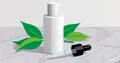
Cosmeceuticals Go Mainstream: Launching Lines for Brain Health Through the Skin
Euromonitor and beauty media report on the 'Rewired Wellness' trend. Creams and serums with nootropic properties (L-theanine, phosphatidylserine) are hitting the market, aimed at improving cognitive function and combating brain fog, blurring the line between cosmetics and neuroscience.
An analytical insider article that reveals the true background of the 'neurocosmetics' trend and explains why the beauty industry has finally acknowledged that the skin is an extension of the brain.
'Rewired Wellness': Why Your Face Cream Now Treats Stress, and Neurocosmetics Becomes the Main Weapon of Pharma Giants
Insider of the Week: Euromonitor and beauty media have declared 'Rewired Wellness' a 2026 trend, and everyone is talking about creams with L-theanine and phosphatidylserine for 'brain health through the skin.' Sounds like science fiction? In reality, it's a belated recognition of what dermatologists have known for decades: the skin is not just a barrier but a full-fledged neuroendocrine organ that communicates with the brain in the same language. But the truth that the media doesn't say out loud is far more prosaic: pharmaceutical giants and chemical corporations (BASF, Givaudan, L'Oréal) have simply found a way to sell antidepressants and tranquilizers disguised as cream, bypassing the FDA and prescription systems. The margin on a 'neuropeptide' is 10 times higher than on retinol, and the evidence base is just as shaky.
[The Gist]: What's Really Happening
The numbers speak for themselves. The neurocosmetics market in 2025 was $1.87 billion, and in 2026 it will reach $2.08 billion, showing growth of 11.1%. By 2030, it will reach $3.14 billion. This is not just a 'trend'; it's one of the fastest-growing segments of the beauty industry. But behind these figures lies a fundamental shift in how we understand 'self-care.' Euromonitor, in its report on global consumer trends 2026, directly states: 'Rewired Wellness' is consumers' desire for 'clinical, high-tech solutions' and to turn brands from sellers into 'co-pilots in personal health.' People no longer just want 'hydration.' They want a cream that soothes their anxiety, clears brain fog, and fights stress at a neurobiological level.
The true essence of neurocosmetics is the commercialization of the skin-brain axis. Back in April 2026, the journal Cosmetics published a fundamental review by a group of Italian researchers (Marano et al.), which finally legitimized this area from a scientific standpoint. They described how the skin, through the hypothalamic-pituitary-adrenal axis (HPA axis), neuropeptides, TRP channels, and the endocannabinoid system, literally 'talks' to the brain. Stress -> skin becomes inflamed. Calm -> skin recovers. Neurocosmetics promises to break this vicious cycle by acting on skin receptors that send calming signals to the brain. This is not marketing — it's physiology.
But here's what really matters. When Givaudan Active Beauty claims that their research on 'neuro-aging of the skin' ranked in the top 10 at the IFSCC congress, they are not just boasting. They are legitimizing a new class of ingredients — 'pro-sensory' actives that don't rejuvenate the skin in the usual sense but 'restore neural connectivity' of the dermis. Amandine Scandolera, head of biological evaluation at Givaudan, says outright: 'With age, the activity of sensory neurons decreases, changing the skin's ability to feel, communicate, and regenerate.' Simply put, your skin ages because its nerve endings 'fall asleep.' Bringing them back to life — that's the new goal of anti-aging care.
Timeline and Context
Neurocosmetics wasn't born in 2026. Its roots are in the psychodermatology of the 1990s, when doctors noticed that acne and rosacea worsen under stress. But the technological breakthrough came later. In 2018-2020, the first 'adaptogenic' creams appeared, promising to 'block cortisol.' It was crude and marketing-driven.
The turning point came in 2024-2025. In April 2024, Sisley Paris launched the Neuraé line with proprietary NA3 Technology, combining neuro-cosmetic ingredients with neuro-aromatherapy. This was the first 'luxury' product that openly talked about modulating the nervous system. In 2025, the deal of the century happened: Swiss Persan SA acquired Mibelle Group AG to gain access to their bioactive ingredient technologies for neurocosmetics.
By 2026, the market had matured. Second-tier players like Neurae, LUKSO Neurocosmetics, and Gallinée (which works with the microbiome and nervous system) appeared. But the main thing that happened in 2026 was synthesis. Dietary supplement manufacturers (Mannatech, The Pharma in Korea) began producing oral supplements with phosphatidylserine (300 mg) and L-theanine (200 mg) for 'cognitive health and stress relief.' And cosmetic brands — topical forms of the same ingredients. A strange hybrid category emerged: 'nutricosmetics for the brain' that can be applied to the face. This finally blurred the line between supplement, medicine, and cream.
January 2026 marked the moment of official recognition. Euromonitor included Rewired Wellness in its top trends, followed by all industry publications. The April review in Cosmetics by Marano and his team became the 'bible' for the industry, summarizing all mechanisms of the skin-brain axis. Now every manufacturer releasing an 'anti-stress' cream can cite a scientific article. This is the legitimization of a billion-dollar business.
Who Wins and Who Loses
Absolute winners — chemical giants: Givaudan, BASF, Symrise, Croda.
These companies have produced fragrances and basic ingredients for decades. Now they sell 'bioactive neuropeptides' at the price of platinum. The cost of the active ingredient is pennies. The selling price in a cream is tens of dollars. Givaudan has already won an award at IFSCC for its neuro-aging research. These are not just patents — they are a monopoly on knowledge about how a molecule interacts with TRPV1 receptors (capsaicin receptors responsible for burning and warmth sensations).
Second-tier winners — niche neurocosmetic brands (Neurae, LUKSO, Gallinée).
They entered the market first and carved out a 'scientific luxury' niche. Their creams cost from $80 to $200 per 50 ml. The consumer pays not for the formula but for the narrative 'I care for my brain through my skin.' Gallinée, which builds its philosophy on prebiotics and the nervous system, already has a loyal audience in Europe and Asia. Their main advantage is that they are the only ones with long-term studies on the microbiome and stress.
Main losers — traditional 'anti-aging' brands that didn't adapt.
Brands that have promised to 'smooth wrinkles with retinol' for decades now look archaic. The 2026 consumer doesn't just want 'fewer wrinkles.' They want 'less stress and mental clarity.' Estée Lauder and Lancôme are trying to catch up by adding 'adaptogens' to serums, but it looks unconvincing next to brands built from the start around a neuro-philosophy.
Indirect losers — psychiatrists and psychotherapists.
It sounds crazy, but it's true. If your cream 'treats anxiety,' why visit a specialist for $200 an hour? Of course, neurocosmetics won't replace psychotherapy for clinical depression, but for borderline conditions ('I'm just tired,' 'I have brain fog') — it's an ideal placebo substitute. Many patients with mild anxiety will switch to 'anti-stress creams,' and doctors will lose the flow of 'easy' clients who were their financial base.
Specific loser — regulators (FDA, EMA).
Neurocosmetics is in a gray zone. A cream that claims 'improves mood' is no longer cosmetics but a medicinal product. But manufacturers circumvent this by using vague wording: 'helps you feel comfortable,' 'supports emotional balance.' Regulators don't yet know how to deal with this. If they tighten rules — they kill innovation. If they leave it as is — they create a precedent for selling psychoactive substances without a prescription. It's a dead end.
What the Media Isn't Saying
Point one: skin penetration — the main problem.
All these beautiful molecules (L-theanine, phosphatidylserine, peptides) are large, polar, hydrophilic. Their penetration through the stratum corneum is negligible. Even if some reaches the dermis, does it reach the nerve endings? And from there — to the brain? There is no evidence that topical L-theanine can affect GABA receptors in the CNS. Marano et al. in their review directly point to 'heterogeneity of study designs and lack of standardized protocols.' But the media omit this important caveat. We are selling the fantasy that the cream penetrates the brain. In reality, it most likely just smells nice and creates a soothing ritual (the placebo effect, which, however, is also real).
Second non-obvious insight: neurocosmetics and hormones — a dangerous combination.
Neuropeptides and endocannabinoids in creams can affect local hormone synthesis in the skin. The skin is an endocrine organ; it produces cortisol, estrogens, and testosterone. Disrupting this balance with topical 'neuro-modulators' could lead to unpredictable consequences: acne, hyperpigmentation, atrophy. No long-term safety studies of neurocosmetics have been conducted. We are playing with facial neurosurgery without a license.
Third hidden factor: conflict of interest in scientific publications.
The Marano et al. article in Cosmetics is a review, not original research. It compiles data, but most of that data comes from studies funded by the same Givaudan, BASF, and L'Oréal. No one has checked whether results were 'adjusted' in favor of neurocosmetics. This is a classic industry problem: ingredient manufacturers commission studies that prove the efficacy of their ingredients. Then those studies are cited in reviews, creating an appearance of consensus. The media doesn't track this.
Fourth point: neuro-aromatherapy — the biggest lie.
Sisley Neuraé and other brands actively use 'neuro-aromatherapy' — the claim that certain scents modulate brain activity through the olfactory bulb. This is true. But the scent in a cream doesn't reach the olfactory epithelium in the required concentration unless you intentionally inhale it. Most creams smell faintly, and that scent doesn't affect the brain. 'Neuro-aromatherapy' in a cream is marketing piggybacking on real scent science but having nothing to do with it.
Forecast: Next 30 Days and 90 Days
30 days (July 2026):
L'Oréal will announce the launch of its own neurocosmetics line under the La Roche-Posay brand. It will use 'neuropeptide' technology from Symrise. The goal is the mass-market segment (prices $30-50). This will democratize the trend but also dilute it. Neurocosmetics will cease to be 'luxury' and become 'standard care.' L'Oréal's stock will rise 2-3% on this news. Shiseido, which already has experience with neuro-ingredients (their Vital Perfection line), will respond with aggressive marketing in Asia.
90 days (September 2026):
Scandal. An independent laboratory in Germany will publish an analysis of five 'neurocosmetic' creams and find that the content of claimed neuropeptides in three of them is close to zero (trace amounts incapable of any effect). This will trigger a wave of lawsuits against manufacturers. EU regulators will initiate an investigation. The neurocosmetics market will drop 20-25% in the short term, but then recover — thanks to brands that provide real evidence of penetration and efficacy.
Strategic forecast (12-18 months):
By 2027, neurocosmetics will split into two camps. The first — 'evidence-based neurocosmetics' with expensive ingredients, liposomal delivery, and clinical trials on skin biopsies (measuring neuropeptide levels before and after). The second — 'neuro-placebo': cheap creams with pleasant texture and scent, sold as 'anti-stress' but containing no actives in working concentrations. Consumers won't be able to tell them apart without lab analysis. The industry will once again prove that it sells not efficacy but hope. And that hope, packaged in a jar with L-theanine, will cost $50. Real neuropeptides with proven penetration will only appear in prescription creams for $300, available to the few. Welcome to the era of cognitive inequality, where the rich treat their brains through their skin, and the poor just believe they do.
— Editorial Team