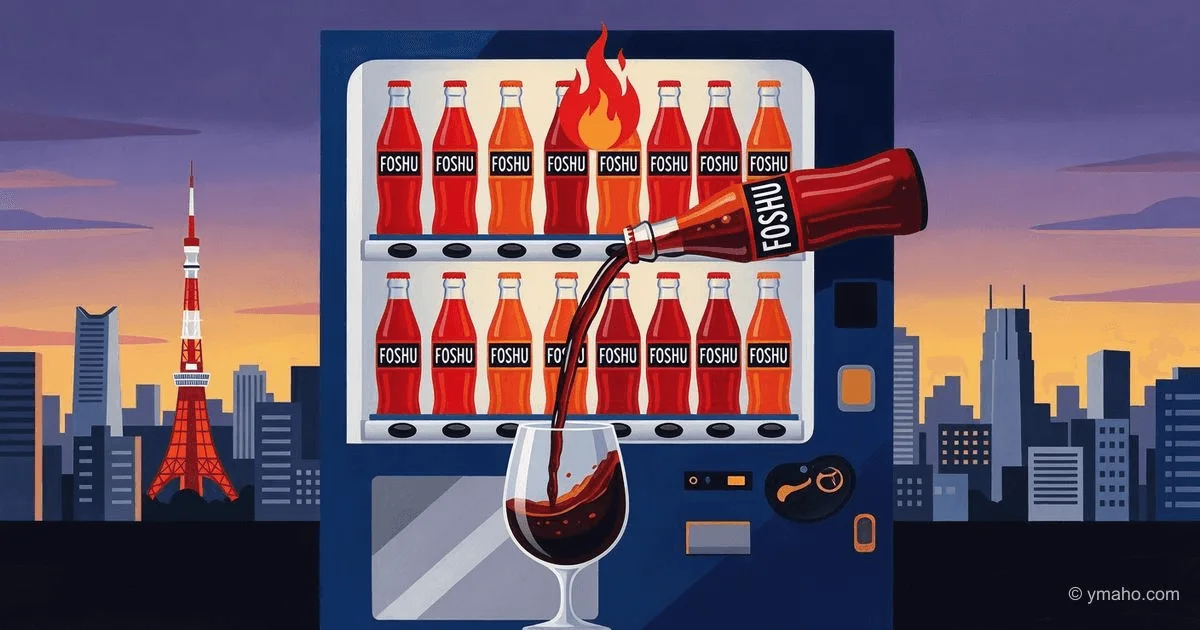
The New Generation of Cola Diets in Japan: Carbonated Drinks with Fat-Burning Function
According to Healthline and Japanese publications, 2026 marks a new wave of popularity for "carbonated" detox. Japan has launched colas with added exotic enzymes and kombucha extract, officially certified as functional foods for weight control.
An analytical article written from an insider's perspective, revealing the true mechanics of the functional beverage market in Japan and explaining why "fat-burning cola" is not magic but a strict engineering and regulatory reality that Western media omit.
"Cola Detox" Japanese Style: Why Healthline Raves About Soda While Pharma Giants and Coca-Cola Divide a ¥5.8 Trillion Market
Insider of the Week: Healthline and Western media report on the "new generation of cola diets in Japan" as a sudden 2026 trend. This is a 10-year mistake. Japan's "fat-burning" soda market has existed since 2017, and in 2026 its volume will reach ¥5.86 trillion (about $45 billion) for the non-alcoholic beverage segment alone, with the "functional" beverage subsegment growing explosively. Western journalists are rediscovering what Japanese people drink every day. But the real news is not the "emergence" of the trend but its mutation: from plain dietary fiber (Coca-Cola Plus) to highly specific molecules mimicking GLP-1 effects (Suntory Tokusui). This is not about soda; it's about a new era of "medicinal" drinks sold in vending machines for $2 but biochemically approaching prescription drugs.
[The Core]: What's Really Happening
The key difference that Western publications never explain is Japan's FOSHU (Foods for Specified Health Uses) system. This is not a marketing gimmick but a government certification comparable in rigor to FDA supplement registration. To obtain the coveted logo (a stylized figure with a raised hand), manufacturers must provide the Japanese government with clinical evidence of efficacy and safety. 2026 became a bifurcation point: the functional beverage market has definitively shifted from "general health" claims to "targeted" ones—reduction of visceral fat, suppression of triglyceride absorption, regulation of postprandial blood sugar.
The essence of what's happening is diversification of mechanisms of action. The first generation of "fat-burning" colas (Coca-Cola Plus, launched in March 2017) worked on a primitive but clear principle: insoluble dextrin (dietary fiber) literally "binds" some dietary fats, preventing their absorption in the small intestine. This is like pipe scrubber mechanics: physical blockage. But as Fuji Keizai data for 2025-2026 shows, consumers are tired of the laxative effect (TikTok users joke about "toilet adventures" after 10 days of use) and want systemic action.
Enter the second generation—"smart" functional beverages represented by Suntory Tokusui. Instead of crude fiber, HMPA (3-(4-hydroxy-3-methoxyphenyl)propionic acid) is used—a metabolite derived from fermented rice bran. HMPA's mechanism is more subtle: it affects gene expression responsible for fatty acid oxidation in the liver and stimulates thermogenesis. Some influencers have already dubbed Tokusui "Ozempic in a bottle" for its ability to reduce visceral (internal) fat, which diet alone cannot eliminate. This is not GLP-1; it's a different pathway, but the result—targeted fat burning—is the same. Admittedly, this is no longer "cola"; it's engineering biochemistry in a PET package.
The third layer of reality is the hidden "arms race" between Coca-Cola Japan and Suntory. In 2025-2026, according to Nikkei and Fuji Keizai, the "functional" beverage segment is growing shamelessly while the overall soda market stagnates. Coca-Cola Japan, sensing the threat, formed a strategic partnership with Kirin Holdings to gain access to live Lactococcus lactis bacteria (LC-Plasma) targeting immunity. Suntory counters with the launch of Tokusui. We are witnessing not a trend but a shift of eras: beverages no longer quench thirst—they perform the functions of drugs approved by MHLW (Ministry of Health, Labour and Welfare of Japan).
Timeline and Context
Officially, the countdown of "functional soda" began in 1991 when Japan introduced the FOSHU system. But for the mass consumer, it all started in March 2017 with the launch of Coca-Cola Plus. It was a shock to the market: Coca-Cola, the symbol of "unhealthy" soda, received a government label of "beneficial for health." In 2018-2019, the market grew slowly—fiber didn't seem "magical."
The COVID-19 pandemic became a catalyst. From 2021 to 2024, Japanese consumers massively shifted to immunity and weight control products. Fuji Keizai data for 2025 shows the non-alcoholic beverage market reached ¥5.8093 trillion (about $44 billion), with the "sugar-free" segment driving growth at 13.5%—a phenomenal leap for a conservative Japanese market. In 2025, a marginal deal occurred: Suntory received approval to sell Tokusui not as "tea" but as "water" with weight reduction function.
2026, which Healthline cites, is not the year of "birth" but the year of legitimization of imitation of prescription drugs. Tokusui is positioned as "water with Ozempic effect" (though officially denied in press releases, consumers vote with their wallets accordingly). Market research forecasts that by 2030-2031, the functional beverage market alone will reach $14 billion, and by 2035, $20 billion. We are now at the transition point from "health function" to "medical device in a bottle."
Who Wins and Who Loses
Absolute winner: Coca-Cola Japan and Suntory Holdings.
Coca-Cola Plus, despite its age (9 years on the market), remains a workhorse, generating billions of yen through brand recognition. But the real golden goose now is Suntory with Tokusui. Suntory achieved what no one else has: selling "water" for up to $4-5 per 600 ml, positioning it as a cure for internal fat. Their ads don't promise instant weight loss—they promise "reduction of visceral fat in 12 weeks," which is legally flawless and clinically proven.
Second-tier winners: chemical corporations producing active ingredients (Kao and others).
Suppliers of HMPA and specific enzymes secured contracts ensuring factory utilization for years. The margins on such ingredients are many times higher than on standard citric acid.
Direct beneficiaries: Japanese convenience store chains (7-Eleven, FamilyMart, Lawson).
Functional beverages have become the most profitable item in the "beverage" segment. A customer coming for onigiri (rice ball) spends 2-3 times more on "medicinal" cola.
Losers: traditional sweet soda producers outside Japan.
In the US and Europe, Western giants (PepsiCo, Keurig Dr Pepper) are asleep at the wheel. They lack the FOSHU system and cannot legally claim "fat burning" for fear of FDA lawsuits. While the Japanese market learns biochemistry, the West continues selling sugar under the guise of Zero. This is a strategic lag of 10 years.
Specific loser: dietitians promoting "water and sleep."
When a patient can buy a drink from a vending machine for $2 that objectively reduces fat absorption or accelerates fat burning, convincing them to drink plain water becomes impossible. Dietitians lose control over obesity therapy; they are replaced by FOSHU labels and viral TikTok videos in Japan.
What the Media Leave Out
Point one: the price—dosage and "loose stools."
Western publications write about "weight loss" but omit the fine print on Coca-Cola Plus bottles. The manufacturer recommends drinking strictly one bottle per day with meals. Two bottles guarantee a diarrheal effect (osmotic load from insoluble fiber). Japanese users on social media write about this openly. Tokusui, though milder, also requires a course—the effect is cumulative, not instant. The "fat reduction" result appears no earlier than 8-12 weeks.
Second non-obvious insight: the carbon footprint of "medicinal" soda and green camouflage.
To produce Coca-Cola Plus, Coca-Cola Japan launched a line of truly eco-friendly PET bottles (from plant-based materials). But the logistics remain carbon-intensive. Your "eco-friendly" fat-burning drink travels from a factory in Tokyo to a convenience store in Hokkaido on diesel trucks. Paradox: you buy "health," but the carbon footprint of your can is higher than that of regular cola.
Third hidden factor: the collapse of "functional" claims outside Japan.
The biggest media lie is extrapolating the Japanese experience to the global market. The FOSHU system only works in Japan. The same Coca-Cola Plus sold in Korea or exported to the US loses its "medicinal" status and becomes just soda with fiber. Western publications, when reporting news, conflate "Japanese functional beverage" with "global trend." But outside Japan, no one can legally write "reduces fat" on a label without risking a lawsuit.
Fourth point: the shift to hyper-personalization.
The next stage, which Yano Research analysts see in consumer surveys, is demand for personalized functional beverages. People don't want "cola for everyone"; they want "cola for my microbiome." The industry is already testing rapid saliva analysis technology in vending machines that will select the right enzyme for you. This sounds like science fiction, but it's the current R&D track of Japanese corporations for 2027-2028.
Forecast: Next 30 Days and 90 Days
30 days (July 2026):
A "third wave" will hit the market—hybrid drinks from Kirin and Coca-Cola Japan with live LC-Plasma bacteria. This will be positioned as "cola for immunity and fat burning." I expect convenience store sales to jump 30% due to novelty. Western media will again write a "sensation," not understanding it's a planned assortment rotation.
90 days (September 2026):
Japan's Ministry of Health will announce an expansion of the FOSHU system to include "beverages for cognitive health" (memory, concentration). This will open the door for "smart" cola with nootropics. Shares of Suntory and Coca-Cola Japan will rise on this expectation. Simultaneously, the first clinical trials of beverages with plant exosomes (the next level after HMPA) will begin.
Strategic forecast (12 months):
By summer 2027, American and European regulators will finally wake up and start developing something akin to FOSHU. But it will be too late. Japanese corporations have staked all patents on key metabolites (like HMPA). They will start exporting not beverages but licenses to produce "functional colas" in the US and Europe, collecting royalties on every can sold in the West. Western giants Pepsi and Keurig Dr Pepper will be forced to buy Japanese technology. Japan will become the Switzerland of the functional beverage world: a small country controlling global standards for "medicinal soda." Do you still think the trend is about bananas in the ingredients? The trend is about turning a soda vending machine into a pharmacy. Welcome to 2026.
— Editorial Team