Vogue: The 'Office Siren' Trend Brings Back the Early 2000s Body Cult with a Healthy Twist
Vogue analyzes the return of the 'corporate siren' aesthetic and the slim figure of the 2000s, but against the backdrop of the popularization of GLP-1 drugs and sports. The main message is 'Strength not Thinness,' where the focus shifts from emaciation to a sculpted, toned form.
An analytical article written from an insider's perspective, revealing the true mechanisms behind the return of the 'office siren' and the role of GLP-1 drugs in this process, which Vogue omits.
'Strength not Thinness': How Vogue Sells the 2000s Body Cult Under the Guise of Feminism, and Pharma Giants Profit from Your Self-Esteem
Insider of the Week: When Vogue writes about the return of the 'corporate siren' aesthetic with a nod to 'Strength not Thinness,' they are either sincerely deluded or consciously participating in the biggest rebranding campaign of the pharmaceutical industry. The truth is that GLP-1 drugs (Ozempic, Mounjaro, Wegovy) have changed the very mechanics of 'slimness.' Women no longer kill themselves with diets and cardio; they simply lose muscle mass along with fat, and then go to the gym to 'make up' the definition. Vogue calls this 'strength.' The fitness industry calls it 'loss correction.' And I call it 'a side effect packaged as a fashion trend.' The truth is that 'Office Siren 2.0' is not about the return of femininity to the office. It's about a new body architecture created by peptides, and about how fashion adapts to bodies that lose weight without effort.
[The Essence]: What's Really Happening
Fashion is a mirror of the economy and science. In the early 2000s, 'heroin chic' and the cult of thinness were dictated by low-calorie diets, cigarettes, and cardio obsession. The heroines were Kate Moss and early Nicole Richie—emaciated, almost bodiless. In 2026, 'Office Siren 2.0' takes the stage, and its body looks different: toned glutes, sculpted shoulders, a thin waist, but without sagging or cellulite. Vogue broadcasts the message 'strength over thinness,' but omits that this body type is practically unattainable without chemical support.
A quiet but fundamental shift has occurred. GLP-1 agonists, originally created to treat type 2 diabetes, have been approved for weight management and revolutionized the market. As of 2026, about 13% of the US population (over 40 million people) use these drugs. In the UK, about 1.6 million adults. Clinical trials have shown that patients lose 15–20% of their body weight over 12–18 months. This means that slimness has ceased to be a marker of willpower, discipline, and a 'healthy' lifestyle. It has become a marker of access to a prescription and health insurance.
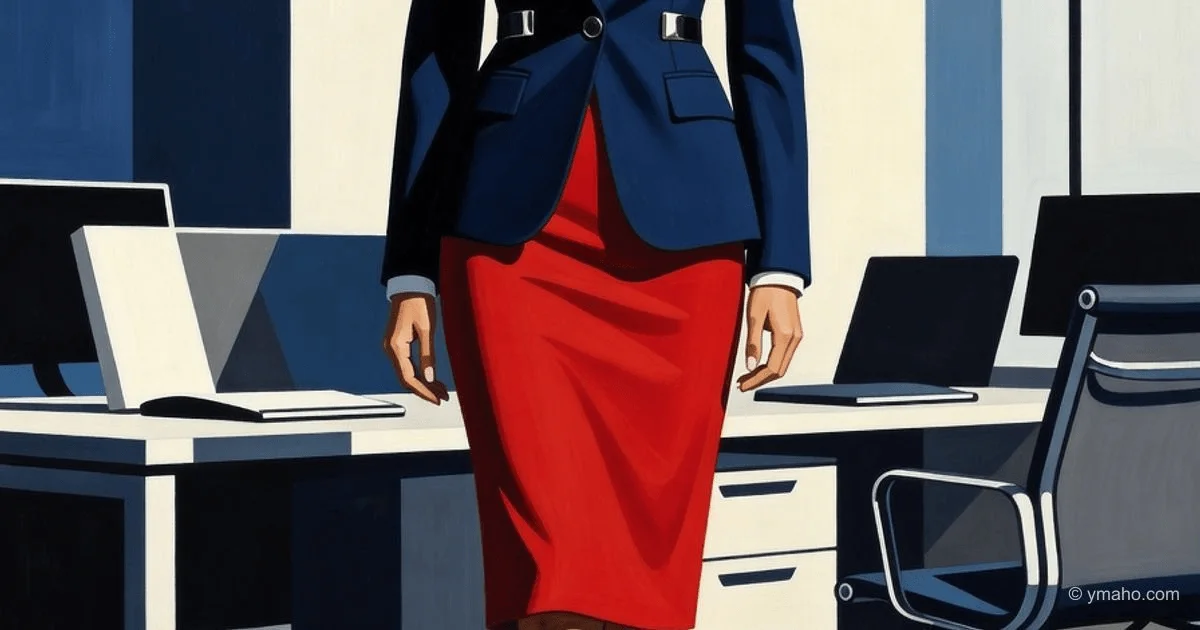
The 'Office Siren' aesthetic—tight pencil skirts, fitted jackets, sheer blouses—is merciless to any imperfection. It requires a 'pressed' silhouette without folds or bumps. Previously, such a silhouette was only available to the genetically gifted or the young. Today, thanks to GLP-1, the average woman aged 35–45 with a corporate salary can afford it. She loses weight quickly, but along with fat, she loses muscle (a phenomenon known as drug-induced sarcopenia). And then the second part of the message—'strength'—enters the stage. She has to hire personal trainers at $150–300 per hour to build up the glutes and shoulders that give the body that 'fitness vibe' which distinguishes the healthy slimness of 2026 from the anorexic slimness of the 2000s.
The real essence of the trend is not clothing. It's the GLP-1 support economy. Clothing brands tailor for bodies that have undergone an 'Ozempic transformation.' Fitness clubs sell memberships for muscle recovery. And cosmetics manufacturers sell 'skinny proteins' (sagging skin after rapid weight loss is their new goldmine). Vogue, by publishing material about 'Office Siren,' essentially legitimizes this new type of female physicality, pretending it arose naturally rather than being designed in the laboratories of Novo Nordisk and Eli Lilly.
Timeline and Context
The roots of 'Office Siren' go back to 2023–2024, when this trend first went viral on TikTok. At that time, it was pure cosplay of the heroines of 'The Devil Wears Prada' and 'Sex and the City': narrow glasses, red lipstick, cigarette pants. But in 2024–2025, reality caught up with fantasy. The GLP-1 pandemic began. People lost weight en masse and returned to offices after the COVID remote work era. Office clothing became relevant again, but bodies had changed.
In spring 2025, the media sounded the alarm: 'Office Siren' is an HR nightmare, a return of sexual harassment in clothing. By summer 2025, the trend seemed dead, giving way to the more comfortable 'resimercial' (home coziness in the office). But by 2026, something unexpected happened: 'Office Siren' returned, but not as the 'office seductress' aesthetic, but as the 'office athlete' aesthetic. Having spent 2025 in gyms, restoring muscles after GLP-1 weight loss, women gained definition.
The spring 2026 runways reacted instantly. Matthieu Blazy at Chanel showed fitted suits, but with a relaxed fit, emphasizing shoulders (the result of barbell pulls) and a narrow waist (the result of GLP-1). Miu Miu and Prada brought back 'glamorous minimalism' with an emphasis on glutes and abs. Vogue, as always, half a year late to the moment, released a summary article in June 2026, recording an already accomplished fact: the new wave of the body cult is here, and it's called 'strength.'
Who Wins and Who Loses
Absolute winners: Eli Lilly and Novo Nordisk.
These Danish and American pharma giants, producing Mounjaro (tirzepatide) and Wegovy/Ozempic (semaglutide), have changed the very concept of 'affordable beauty.' Their stocks have risen 300-400% over the past two years. They don't sell health; they sell bodily conformity. Every woman who today puts on a pencil skirt and feels like an 'Office Siren' is likely spending between $900 and $1,600 per month on injections. And this is not a one-time income—the drug must be taken for years, otherwise the weight returns with 'interest.'
Second-tier winners: the fitness industry and supplement manufacturers.
GLP-1 has created a huge market for 'companion products.' FitTech companies like Future Fit have launched specialized courses for trainers working with clients on GLP-1, explaining how to train muscles in a calorie deficit and with nausea. Sales of protein shakes, collagen (for sagging skin), and B vitamins (for fatigue) have soared by 40%. Brands of 'smart scales' that show muscle mass (InBody, Withings) report record sales.
Main losers: manufacturers of 'diet' products and plus-size clothing.
Weight Watchers (WW) has lost 60% of its market capitalization in two years. Manufacturers of low-calorie frozen meals report a 15-20% drop in sales—why buy diet pizza when you can inject and forget about food altogether? The plus-size clothing market (Torrid, Lane Bryant) is stagnating, while mass-market retailers (H&M, Zara) are urgently reworking patterns for 'drier' figures.
Hidden losers: women who lose weight naturally.
Previously, they were 'heroines.' Now they are outsiders because their bodies look 'flabby' compared to those on GLP-1. Natural weight loss preserves muscle better, but the process is slower. Society, fueled by Instagram influencers who openly talk about 'Ozempic' but do so in the context of 'self-care,' has created a new standard that is impossible to meet without a prescription.
What the Media Doesn't Say
First and foremost: 'Strength not Thinness' is a false dichotomy created to soothe consciences. Vogue writes about strength, but in the photos accompanying the article, we see girls with body fat below 18% (which for a woman borders on amenorrhea), yet with visible abs. Building muscle in a state of deep calorie deficit, which GLP-1 creates, is practically impossible. What is passed off as 'muscles' is simply the absence of fat and glute pumping through filler injections or special protocols with anabolic steroids (which, of course, are not mentioned). Gyms have turned into clinics for correcting 'Ozempic face' and 'Ozempic glutes.'
The second non-obvious insight concerns reproductive health. Medical guidelines clearly state: women taking tirzepatide (Mounjaro) should not rely solely on oral contraceptives due to impaired absorption in the stomach. The news that GLP-1 can cause birth defects (use during pregnancy is contraindicated, data is insufficient, but there is a risk) does not make it into glossy magazines. 'Office Siren' is always the image of a sexy, confident woman. But the paradox is that this confidence is achieved through drugs that make pregnancy risky. No one talks about the fact that the 'strong body' cult of 2026 could lead to demographic problems in 5-7 years.
The third point is the 'yo-yo effect.' The drugs only work as long as you take them. As soon as insurance runs out or a plateau is reached, the weight returns. And it returns in the form of visceral fat, which accumulates around the organs, making the figure 'apple-shaped' rather than 'hourglass.' The industry knows this but stays silent because it guarantees a lifelong customer. First you pay for injections, then for a trainer, then for liposuction to remove the consequences of drug withdrawal. 'Office Siren' is not a lifestyle; it's a subscription business model.
Forecast: Next 30 Days and 90 Days
30 Days (July 2026):
Bloomberg and the Financial Times will publish an investigation into the 'gray market' for GLP-1. It will turn out that 30% of buyers in the US obtain the drugs without a prescription through telemedicine or underground channels. This will trigger the first wave of public condemnation of 'Ozempic culture.' Vogue and other publications will begin publishing cautious articles 'aren't these drugs dangerous?,' distancing themselves from the recent enthusiasm. This won't change demand—it will just drive it underground.
90 Days (September 2026):
Traditional luxury brands (LVMH, Kering) will announce the launch of 'adaptive' clothing lines for bodies that have undergone GLP transformation. We're talking about corset tops with a 'capping' effect for sagging skin and skirts with compression inserts. This will be positioned as 'high-tech fashion,' but in reality, it's orthopedic underwear camouflaged as luxury for $1,500 per piece. Simultaneously, fitness brands will launch a 'Post-GLP Rehab' program—courses on 'natural weight maintenance,' using the fear of rebound as the main marketing trigger.
Strategic Forecast (12 Months):
By 2027, we will see a split in women's fashion into two camps. The first is 'Ultra-Thin GLP-1' (ultra-thin, tight, minimalist, fitted silhouettes). The second is 'Radical Softness,' as a reaction to the first: oversized garments, ethnic styles, refusal to display the body. The middle ground will win, but not in the sense we expect. The market will adapt by creating a 'siren style' for different budgets: cheap fabric and pattern analogs for mass market and medical luxury for the rich. The main thing to remember: behind every trend that Vogue declares as a 'women's choice' lies either a giant advertising budget from a pharma company or a panicked industry reaction to new bodies they don't know how to dress. Welcome to the reality of 2026, where the 'office siren' sings to the rhythm of an insulin pump.
— Editorial Team