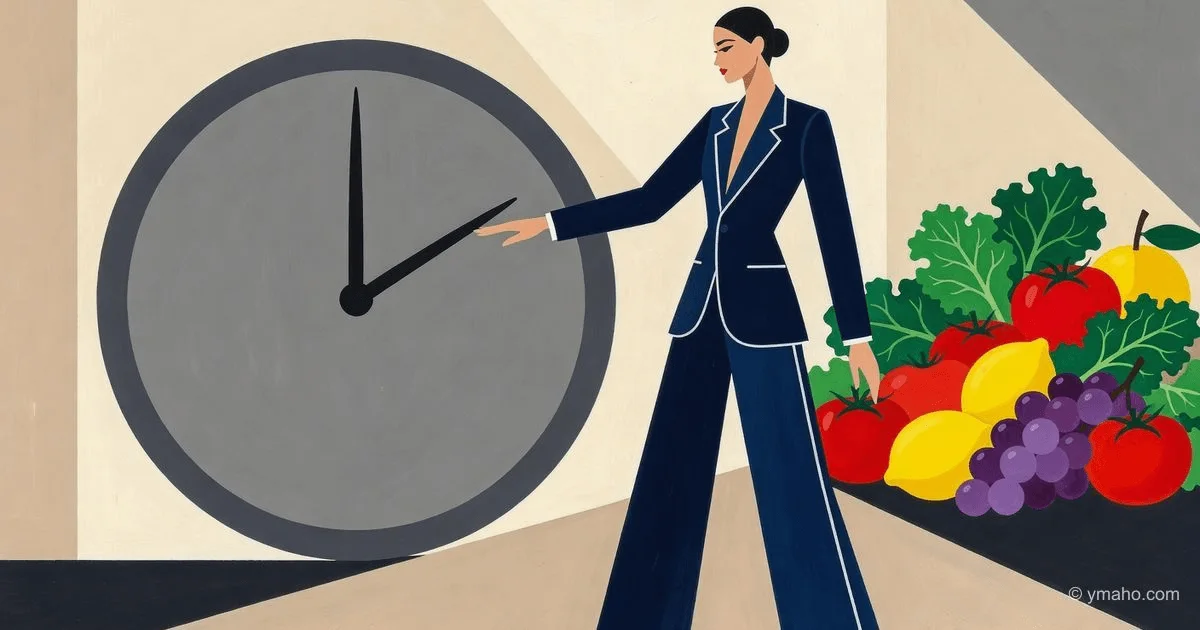
# Moving Away from Intermittent Fasting: "Clean Eating" Overtakes IF in Western Rankings
According to a new nutrition report, intermittent fasting has dropped out of the top diet rankings, giving way to food quality (clean eating) and personalized approaches.
The Collapse of Intermittent Fasting: Why 2026 Buried the "Clock-Based Diet" and What Replaced It
You might think news of intermittent fasting's declining popularity is just another round in the diet wars. Today it's IF on top, tomorrow keto, the day after paleo. That's a superficial take.
What's really happening is far more fundamental. Intermittent fasting hasn't just slipped in the rankings—it has run into what could be called "death by science." In February 2026, the authoritative Cochrane Database of Systematic Reviews analyzed 22 randomized clinical trials involving nearly 2,000 adults and delivered its verdict: intermittent fasting offers no advantages over traditional diets. "Intermittent fasting simply doesn't appear to work for adults with overweight or obesity who are trying to lose weight," said lead author Luis Garagnani.
This isn't an isolated finding. A 2024 review of 99 clinical trials published in The BMJ showed that IF is no more effective than conventional calorie-restricted diets. Then in January 2026, a study in Science Translational Medicine drove the final nail in the coffin: any benefits of IF come solely from reduced overall calorie intake, not from any magical eating windows. The intermittent fasting trend is dead, and it was buried not by influencers or marketers, but by data.
[The Core]: What's Really Going On
A fundamental shift is underway—from "diet tribes" to behavioral flexibility. Analysts at SPINS, a leading aggregator of natural and organic product data, noted an interesting phenomenon in 2026: people no longer identify as "I'm keto" or "I'm an IFer." Instead, they combine behavioral strategies: more protein for satiety, fiber for digestion, clean ingredients for peace of mind.
"Diet identity is giving way to flexible, behavior-based eating shaped by price, health goals, and trust in ingredients," SPINS analysts summarize. IF fell victim to this shift because it was too rigid and ritualized. Sixteen hours of daily fasting isn't just "behavior"—it's a lifestyle that demands the entire daily schedule revolve around it. Today's consumer wants flexibility.
The second key factor is the explosion in popularity of GLP-1 medications (Ozempic and its analogs). As the Expo West 2026 report notes, these drugs have radically changed consumer expectations around food. People on GLP-1 can't eat large volumes due to slowed gastric emptying, so they seek nutrient-dense products—protein, fiber, micronutrients. In this context, an 8-hour eating window loses relevance: what you eat matters more than when.
A less obvious insight: GLP-1 essentially "simulates" the effect of intermittent fasting, but without its downsides. IF reduces appetite through long periods without food. GLP-1 reduces appetite through hormonal regulation. Yet on GLP-1, a person can eat small portions throughout the day, which feels psychologically easier. So those who once endured 16-hour fasts now simply visit a doctor for a prescription. IF loses to pharmacology.
Timeline and Context
The death of intermittent fasting as a dominant trend wasn't sudden but gradual—the result of accumulating scientific data and shifting cultural context.
2023: A Journal of the American Heart Association study of 547 participants found no link between IF and weight loss. At the time it was dismissed as "just one study."
2024: The large-scale BMJ review (99 clinical trials) confirmed: IF is no more effective than traditional diets. Scientific consensus began to form.
February 15, 2026: Publication of the Cochrane review—the "gold standard" of evidence-based medicine. The authors stated that IF "may make little to no difference" in weight loss compared with standard dietary advice or no intervention at all. This was the moment of truth.
January–February 2026: The Science Translational Medicine study showed that IF's benefits stem from calorie reduction, not meal timing. Conclusion: eat whenever you like—the amount and quality matter.
March 2026: At Expo West 2026 (the world's largest natural products trade show), the spotlight was on protein, fiber, clean labels, and metabolic health support—influenced in part by GLP-1—rather than eating windows.
June 2026 (now): Euromonitor International data shows 27% of global consumers deliberately limit processed foods, with clean eating and personalization emerging as the leading trends. IF has vanished from the rankings entirely.
Winners and Losers
Winners:
- Makers of functional products high in protein and fiber. Expo West 2026 attendees witnessed a "protein arms race": protein now appears in snacks, drinks, baked goods, and even desserts. Fiber became a co-star—prebiotic beverages, high-fiber snacks, probiotic yogurts. Both GLP-1 users and health-conscious consumers seek satiety without excess calories.
- Clean-label brands. 34% of global consumers limit added sugar, 29% avoid preservatives, and 28% seek fully natural products. Companies that simplify ingredient lists and explain sourcing win.
- Personalized platforms and AI assistants. As analysts note, "diet tribes" are dying because people want recommendations based on their own biomarkers (glucose levels, sleep quality, recovery). Wearables and AI apps delivering personalized nutrition advice are replacing one-size-fits-all diets.
Losers:
- Books, apps, and intermittent fasting gurus. Businesses built on the "simplicity" of IF ("eat in an 8-hour window and lose weight") collapse when science shows it works no better than ordinary calorie counting. Consumers are no longer willing to pay for a "secret" that turned out not to be one.
- Cafes and restaurants built around an IF audience. Venues offering "windowed" brunches at noon and dinners by 8 p.m. are losing their niche clientele as customers return to standard three-meal patterns.
- Plant-based meat brands (Beyond Meat, Impossible). Paradoxically, the decline of IF indirectly hurts them. Expo West reports show consumers moving away from meat mimics toward whole plant foods (beans, lentils, tofu). IF diets often relied on meat substitutes as a quick option within a narrow window. Now that timing matters less, people are returning to minimally processed foods.
What the Media Isn't Saying
Media outlets report the "death of IF" and the "triumph of clean eating," but they gloss over three factors that will shape the industry's future.
First: intermittent fasting may have been harmful, but that's rarely mentioned. The Cochrane review found that IF can lead to higher dropout rates due to difficulty sticking with the regimen. Dietitians confirm that rigid eating schedules cause people to miss social events involving food. This isn't just "ineffective"—it can be psychologically damaging. Long-term feelings of deprivation and social isolation cancel out any benefits.
Second: the 27% of consumers limiting processed foods is not a majority. Euromonitor analysts warn that despite the noise around clean eating, 73% of consumers still do not restrict UPF. This means clean eating remains an elite trend—accessible mainly to educated, affluent people with time to cook. Retail sales of processed foods are declining, but not dramatically. The mass market has yet to shift.
Third: the clean-label trend creates a new form of exclusion. In the pursuit of "no artificial ingredients" and "no preservatives," manufacturers raise prices. As a result, lower-income consumers who can't afford $15 organic chicken continue buying processed products for $5. This creates "food inequality" that glossy media rarely discuss, yet it is a reality that will require public policy solutions.
Outlook: The Next 30 and 90 Days
Next 30 days (July 2026):
Major outlets (Women's Health, Healthline) will publish "obituary" pieces on intermittent fasting with headlines like "Is Intermittent Fasting Officially 'Over'?" This will be the final wave of coverage before IF settles into the category of "old-fashioned diets"—something popular in the early 2020s.
Makers of functional beverages and high-protein, high-fiber snacks will announce record second-quarter sales. The key driver isn't just GLP-1 (though important) but "diet fatigue" and the move toward flexible, nutrient-dense eating.
Next 90 days (Fall 2026):
Calorie-tracking apps (MyFitnessPal, Lose It!) will roll out updates focused on nutrient quality (protein, fiber, sugar) rather than eating windows. Fasting-time trackers will become niche add-ons rather than core features.
NielsenIQ and SPINS forecast: sales in the "food as medicine" category (functional products supporting metabolic health) will grow 15–20% year-over-year. Manufacturers that quickly reformulated and marketed around clean labels and metabolic support will win. Those still selling "clock-based diets" will lose.
And finally, the most important point: by the end of 2026, the American Heart Association (AHA) and the Academy of Nutrition and Dietetics (AND) will release updated guidelines noting that intermittent fasting is "no more effective than other methods," with warnings about potential risks for certain groups. This will strip away the last remnants of legitimacy from IF as a "revolutionary" diet.
The story's conclusion: intermittent fasting wasn't a "bad" diet. It was a diet that worked for some people through calorie reduction but possessed no magical properties. In an era of GLP-1 drugs, personalization, and evidence-based medicine, that is no longer enough. 2026 became the year the diet industry finally acknowledged there are no secrets. There are only calories, nutrients, food quality, and individual differences. Everything else is marketing.
— Editorial Team